


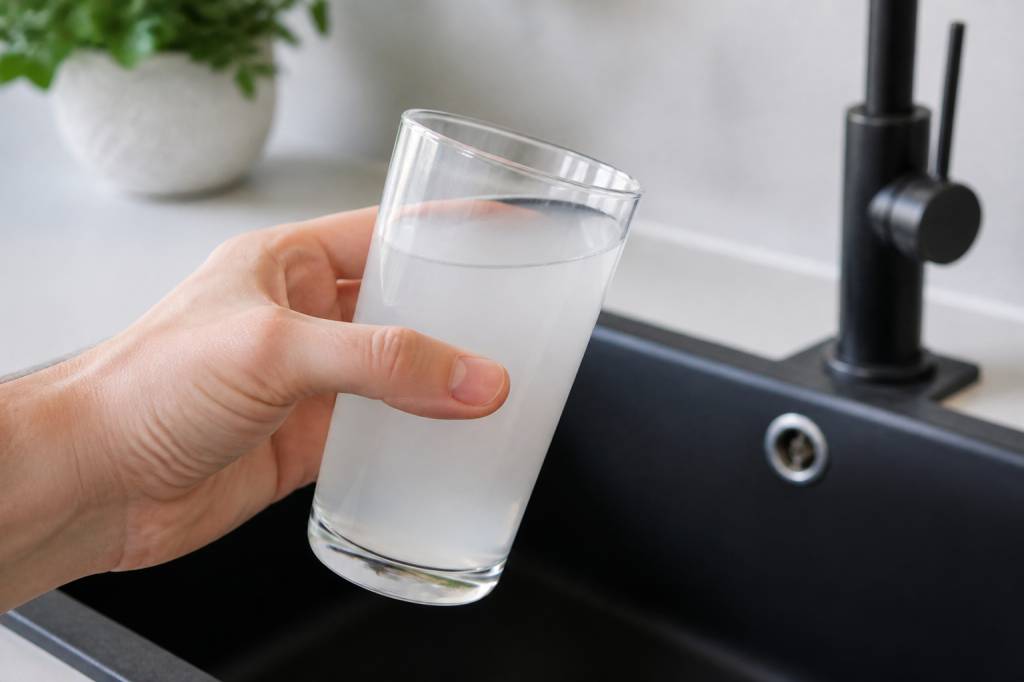
What cloudy water actually means
Cloudy water can look alarming, especially when it appears suddenly at the tap. The good news is that in many cases it is harmless and temporary. The bad news? Not always. A milky, hazy, or “white” appearance can come from trapped air, mineral particles, plumbing issues, or, in some cases, a broader water quality problem that deserves attention.
Before assuming the worst, it helps to identify what kind of cloudiness you’re seeing. Does the water clear after a few seconds in a glass? Does it settle from the bottom up? Does it only happen with hot water, cold water, or both? Those details matter. Water often gives clues if you know how to read them.
In a household context, cloudy water usually falls into one of two categories: air bubbles or suspended particles. Air bubbles are the most common and least concerning cause. Suspended particles, on the other hand, can point to sediment, corrosion, or contamination in the supply or plumbing.
The most common causes of cloudy water
There are several reasons water can look cloudy, and some are much more routine than others. Here are the main culprits.
Air in the water
This is the classic cause of “milky” tap water. If the water looks cloudy when first poured but clears from the bottom up within a minute or two, it is usually just tiny air bubbles. This often happens after maintenance on the water mains, changes in pressure, or temperature shifts.
A simple test helps: fill a clear glass and let it sit. If the cloudiness rises and disappears, you’re likely dealing with air. If it settles, you’re probably looking at particles instead. Not exactly a water mystery worthy of a detective novel, but a useful one.
Cold water can hold more dissolved air than warm water, so cloudiness is sometimes more visible when the system changes pressure or when water has been chilled in pipes. This is typically harmless.
Minerals and sediment
Water can carry fine particles of silt, sand, rust, or scale from pipes and tanks. These particles can make water look cloudy, gritty, or slightly brownish. In areas with older plumbing, mineral build-up and corrosion are common contributors.
If the cloudiness happens after repairs, nearby construction, or a burst main, disturbed sediment may be the reason. Municipal systems can stir up deposits in pipes, and private wells may draw in more sediment after heavy rain or groundwater changes.
Hard water can also contribute indirectly. High levels of calcium and magnesium do not usually make water cloudy on their own, but they can lead to scale, which then breaks loose and enters the water stream.
Corroded pipes or plumbing materials
If your water is cloudy only at certain taps, or only in an older building, plumbing is worth checking. Corrosion inside pipes can release metal particles, creating discolouration or cloudiness. This is more likely where pipes are ageing, water chemistry is aggressive, or plumbing materials are incompatible.
In some cases, the issue is not just appearance. Corrosion can also affect water taste, odor, and metal levels. If you notice cloudy water alongside blue-green stains, metallic taste, or recurring leaks, it is a sign to investigate further.
Hot water system problems
Cloudy water that appears mainly from the hot tap often points to the water heater. Sediment can settle at the bottom of a tank, then get stirred up when the heater runs. A failing anode rod or internal corrosion can also contribute.
If hot water is cloudy but cold water is clear, the heater is a likely suspect. Flushing the tank may help if sediment is the issue, but persistent cloudiness can indicate a need for maintenance or replacement.
Changes in water treatment or supply work
Sometimes cloudy water is linked to changes in the treatment process or distribution network. Utilities may flush mains, adjust treatment chemicals, or conduct repairs that temporarily affect water appearance. These events are often short-lived and may be accompanied by local notices.
If many homes in your area are seeing the same problem, the issue is more likely in the supply network than inside your home. That is useful information when deciding who to contact.
Contamination or pollution
Cloudiness can sometimes signal a more serious water quality issue, especially if it comes with unusual color, odor, or taste. In such cases, the water may contain suspended organic material, algae, fine industrial particles, or chemical contamination.
This is where attention to detail matters. Cloudiness alone does not identify a contaminant, but it can be part of a wider pattern. If you are also dealing with a strange chemical smell, oily sheen, or repeated boil notices, the water should be tested.
For communities concerned about persistent contaminants such as PFAS, cloudiness is not a reliable indicator on its own. PFAS are not visible to the naked eye, and water can look perfectly clear while still containing these “forever chemicals.” That is why appearance should never replace proper testing.
How to tell whether cloudy water is harmless
A quick at-home check can help separate a minor issue from something that needs further action. Start with a clean, clear glass.
- Fill the glass and watch what happens over 30 to 60 seconds.
- If the cloudiness rises and clears from the bottom up, it is usually trapped air.
- If particles settle to the bottom, sediment is more likely.
- If the water stays cloudy or worsens, the cause may need investigation.
- Compare hot and cold water to see whether the issue is linked to the heater.
- Check whether only one tap is affected or whether the problem is throughout the home.
That last point is especially important. One affected tap often suggests a local plumbing issue. Multiple taps, or an entire street, can point to the public supply.
What to do first when your water looks cloudy
The first response should be calm, not panic. Most cloudy water issues are fixable and not dangerous. Still, a methodical approach saves time and avoids guesswork.
Start by letting the tap run for a few minutes. If the cloudiness clears, it may simply be temporary sediment or air after a supply disturbance. If the problem persists, check other taps, cold and hot water, and ask neighbors if they are seeing the same thing.
If your water comes from a private well, the list of possible causes widens. Well water can be affected by rainfall, surface runoff, pump issues, and changes in groundwater quality. In that case, testing becomes even more important, especially after flooding or nearby land disturbance.
When you should test the water
Cloudy water does not automatically mean unsafe water, but testing is the right move if the problem is persistent, recurrent, or accompanied by other warning signs. You should consider testing if:
- the cloudiness lasts more than a day or keeps returning
- there is a strange odor, taste, or color
- only one property is affected and plumbing issues are suspected
- you use a private well
- there has been flooding, construction, or a nearby spill
- you have vulnerable household members, such as infants, pregnant people, or immunocompromised individuals
A basic water test can identify sediment, hardness, metals, and some common chemical indicators. If there is concern about persistent pollutants, including PFAS, a targeted laboratory test is needed. These compounds require specific analysis and are not captured by standard “basic” screening kits.
How to fix cloudy water from air bubbles
If the issue is trapped air, there is usually nothing to “fix” beyond waiting. The water should clear on its own. You can also let the tap run briefly after a disturbance in the network, such as maintenance or a pressure change.
If the problem keeps happening and is linked to pressure fluctuations, the utility may need to inspect the system. In homes with well pumps, pressure tank issues can sometimes contribute to aeration, so a plumber or pump specialist may be needed.
How to fix cloudy water from sediment
When sediment is the cause, the solution depends on where the particles are coming from. If the issue follows a water main flush or repair, running the tap for a short period may clear the line. If sediment continues to appear, the source may be inside the home or the utility network.
Possible fixes include:
- flushing the plumbing line for several minutes
- cleaning faucet aerators and shower heads
- draining and flushing the water heater
- checking for deteriorating pipes or loose corrosion inside the system
- installing a sediment filter where appropriate
In areas with high sediment loads or private wells, a sediment pre-filter can be a practical first line of defence. It is not a cure-all, but it can protect appliances and improve water clarity.
How to fix cloudy water from a water heater
If the hot water is the only problem, inspect the heater. Sediment build-up is common, especially in hard water areas. Flushing the tank may remove loose deposits and restore clearer water.
However, if the heater is old, noisy, or producing rusty water, maintenance may not be enough. Internal corrosion can worsen over time. A plumber can assess whether a tank is worth repairing or whether replacement is the safer option.
It is also worth checking the temperature setting. Water heaters running too hot can increase scaling, while a failing system can stir up more debris than it should.
Can a filter help?
Yes, but only if you choose the right type. A filter that removes sediment will not remove dissolved contaminants, and a carbon filter will not necessarily remove fine particles. The goal is to match the filter to the problem.
For cloudy water caused by particles, a sediment filter is usually the most relevant option. For chemical concerns, different technologies may be needed. Activated carbon can reduce some organic compounds, while reverse osmosis offers broader reduction for many dissolved contaminants. For PFAS, specifically, not all filters are equal, so verified performance is essential.
If you are unsure what is in your water, do not guess based on marketing claims alone. Look for independent certification and performance data. A good filter should solve a known problem, not just look good on a kitchen counter.
When to call the water utility or a plumber
If cloudiness appears across multiple taps, affects neighbors, or follows mains work, contact your water supplier. They can confirm whether the issue is linked to the distribution system and whether any boil notices, flushing, or repairs are underway.
Call a plumber if the problem is isolated to your home, especially if it is limited to one faucet, one bathroom, or only the hot water line. Plumbing issues often become much easier to solve when they are traced early.
If you suspect contamination, do not rely on appearance alone. Request testing and keep a record of when the cloudiness occurs, which taps are affected, and any other changes you notice. That information is surprisingly useful when troubleshooting.
Preventing cloudy water in the future
Not every cause can be prevented, but a few habits can reduce the chances of recurring problems. Regular plumbing maintenance helps catch corrosion and sediment build-up early. Water heaters should be flushed according to manufacturer guidance. Homes with known sediment issues may benefit from filtration and periodic inspection of aerators and valves.
For private wells, routine testing is essential. Water quality can change over time, and a clear-looking sample is not a guarantee of safety. Seasonal changes, heavy rain, nearby land use, and equipment wear can all affect well water.
For households in areas with ongoing environmental concerns, including industrial contamination or legacy pollutants, testing should be part of normal water management rather than an emergency-only response. Clear water is nice. Clean water, verified by data, is better.
The key takeaway
Cloudy water is often caused by harmless air bubbles or sediment, but it can also point to plumbing problems, heater issues, or broader water quality concerns. The first step is to observe carefully: does it clear, settle, persist, or affect only one tap? That simple check tells you a lot.
If the problem is brief and clears quickly, it is usually minor. If it persists, smells odd, tastes unusual, or appears alongside other warning signs, testing and professional advice are the right next steps. In water quality, appearances matter less than evidence, and that is especially true when the issue may involve invisible contaminants.