


Chlorpyrifos is an insecticide with a long history in agriculture and a difficult legacy. Its use on crops has been withdrawn across the UK, but questions remain about residues in food, contamination in soil and water, and the health effects that prompted regulatory action. What does the current evidence say—and what should households and water users know?
One important distinction: chlorpyrifos is not a PFAS. It is an organophosphate pesticide, with different chemical properties and routes of exposure. But its story is relevant to anyone concerned about chemical pollution: stopping an approved use does not instantly remove residues from the environment.
What is chlorpyrifos?
Chlorpyrifos is an organophosphate insecticide that affects an enzyme called acetylcholinesterase. In insects, blocking this enzyme disrupts nerve signalling and can cause paralysis. The same basic mechanism explains why exposure at sufficiently high levels can also harm people and other animals.
For decades, chlorpyrifos was used in agriculture to control pests on a range of crops. It has also had other authorised uses in some countries and periods. In the UK, its use as a plant protection product is no longer permitted. That does not mean every trace has disappeared: residues may persist in certain soils or sediments, and imported goods can still raise questions about pesticide residues.
Why regulators raised health concerns
At high exposure levels, chlorpyrifos can cause acute poisoning by disrupting the normal functioning of the nervous system. Symptoms may include nausea, sweating, muscle twitching, breathing difficulties and, in severe cases, seizures. Such poisoning is most relevant to substantial exposure, for example through unsafe handling of concentrated pesticide—not ordinary contact with a treated food item.
Regulatory concern has also focused on potential effects during early development. The developing brain is particularly sensitive to disruption, and researchers have investigated whether exposure before or after birth could affect children’s neurological development. Studies have reported associations between prenatal exposure and outcomes such as attention or cognitive difficulties. These studies cannot always establish that chlorpyrifos alone caused an observed effect: people encounter mixtures of chemicals, and measuring exposure years later is challenging. Even so, the findings contributed to a more cautious assessment of the pesticide.
The European Food Safety Authority (EFSA) concluded in 2019 that it could not rule out concerns about potential genotoxicity and developmental neurotoxicity, and that the available evidence did not support renewing approval. Those findings informed the EU decision not to renew chlorpyrifos approval. They are not proof that every exposure causes harm, but they indicate why regulators were unwilling to assume that existing controls made all uses safe.
For the public, the practical distinction is between hazard and risk. A chemical’s hazard describes its ability to cause harm; risk depends on how much exposure occurs, by which route, and for how long. A detected trace does not automatically mean a person will become ill. Conversely, uncertainty about low-level exposure is not the same as evidence that every level is harmless.
What happened to chlorpyrifos in UK regulations?
In Great Britain, products containing chlorpyrifos as plant protection products lost their authorisation in 2020, following the withdrawal of approval. The UK’s Health and Safety Executive (HSE) is responsible for assessing and regulating plant protection products in Great Britain. Northern Ireland operates under a different framework for pesticide authorisations, linked to relevant EU rules. In practice, chlorpyrifos is not authorised for use on crops in the UK.
That statement concerns use as a pesticide; it should not be confused with a claim that every possible chlorpyrifos-related product or use is covered by the same legal rule. Different regulatory regimes can apply to plant protection products, biocides, veterinary medicines and imported food. For a specific product or use, the current authorisation and label requirements are the decisive sources.
Food law is a separate part of the picture. Maximum residue levels (MRLs) set the legal limits for pesticide residues in food and feed, including imported produce. An MRL is not a target amount and is not a boundary between “safe” and “poisonous”; it is a legal limit used in monitoring and enforcement, taking account of authorised use and consumer exposure assessments. The relevant rules can differ between Great Britain and Northern Ireland, so importers and food businesses need to check the rules that apply in their market.
For a current check, consult the HSE’s pesticide-register information and the government’s pesticide-residue and MRL guidance. Regulations can change, and an old online summary may not reflect the rules in force today. A product’s country of origin does not by itself determine whether a residue is legal: the applicable UK MRL still matters.
How can chlorpyrifos reach water?
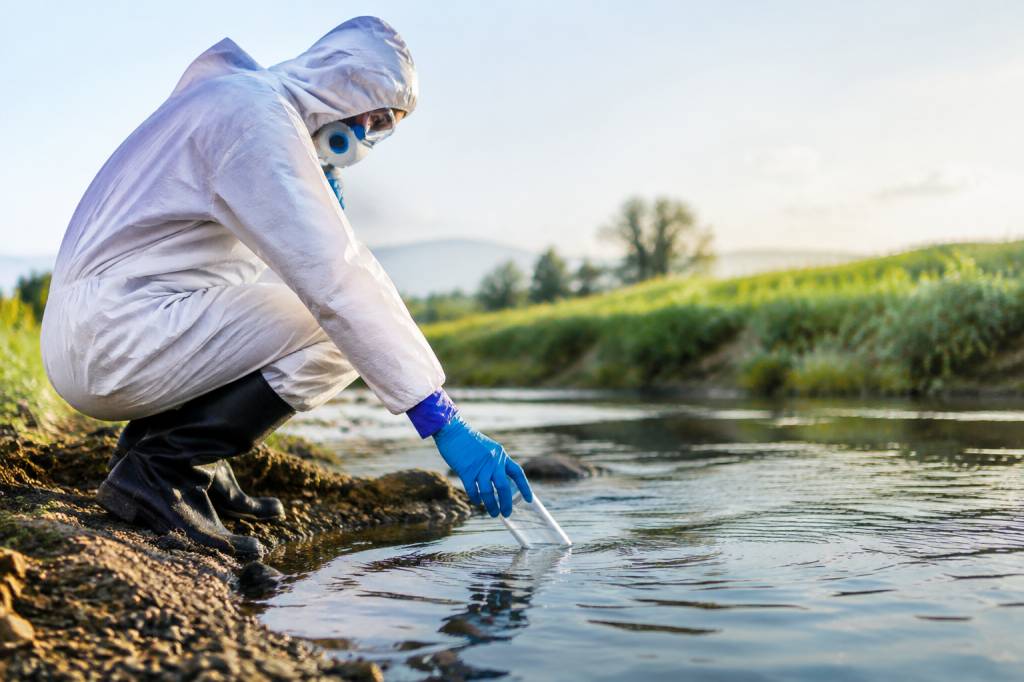
When chlorpyrifos was applied to fields, rain and irrigation could carry some of it from treated land into ditches, streams and rivers. It tends to bind to soil and organic matter, so it may travel attached to eroded particles rather than remaining freely dissolved in water. This creates a pathway into river sediments, where residues can affect organisms living on or near the riverbed.
Like many pesticides, chlorpyrifos can break down through chemical and biological processes. One breakdown product is 3,5,6-trichloro-2-pyridinol, often shortened to TCP. Its behaviour differs from that of the parent pesticide: it can be more mobile in water. The environmental risk therefore depends not only on whether chlorpyrifos itself is present, but also on what it degrades into, local soil and water conditions, and how quickly breakdown occurs.
Because use has ended, current agricultural runoff from newly applied chlorpyrifos should not be treated as an ongoing routine source in the UK. However, legacy contamination can remain relevant at sites with a history of pesticide handling, spills or intensive use. Sediment can also preserve a record of past pollution. Whether this creates a present-day risk depends on local concentrations and exposure, not simply on the fact that chlorpyrifos was once used nearby.
Is UK drinking water at risk?
There is no sound basis for assuming that UK tap water is widely contaminated with chlorpyrifos. Drinking water suppliers monitor water quality under legal requirements, and treatment processes can reduce many contaminants. But the absence of a broad claim about contamination should not be mistaken for proof that every water source, catchment or private supply is identical.
In England, the drinking-water standard for an individual pesticide is generally 0.1 micrograms per litre, with a 0.5 micrograms per litre limit for total pesticides. Similar pesticide parameters apply under the relevant drinking-water rules across the UK, although legislation and responsible bodies differ by nation. These are precautionary regulatory standards for water quality, not a measure of the concentration at which a particular chemical is known to cause illness.
People using a private water supply, especially one close to historic agricultural or pesticide-handling sites, can ask their local authority about testing. If a test detects a pesticide, the result should be interpreted by the authority or a qualified laboratory against the relevant legal standard and the supply’s circumstances. Home filtration should not be treated as a substitute for investigating a confirmed contamination problem; not all filters remove all pesticides, and performance depends on the technology and maintenance.
What does the evidence mean for wildlife?
Chlorpyrifos can affect non-target organisms because the nervous-system enzyme it disrupts is not unique to insect pests. Aquatic invertebrates and other organisms may be exposed through water, sediment or contaminated food. The potential effect varies with concentration, duration, species and life stage. Small concentrations can matter to sensitive organisms even when they are not an immediate human-health concern.
This is one reason pesticide regulation considers more than human dietary exposure. It also assesses risks to ecosystems, including organisms that support food webs and freshwater habitats. Monitoring and targeted investigation around suspected contaminated sites can help distinguish an old pollution footprint from a current source.
What can households and businesses do?
For most households on a regulated public water supply, routine action should be guided by the water company or local authority rather than by alarm over a historical pesticide name. If you are responsible for a private supply or a site with a known pesticide history, practical steps include:
-
Ask the local authority whether the supply has a relevant risk assessment or testing history.
-
Use an accredited laboratory and request analysis appropriate to the suspected pesticide and breakdown products.
-
Keep records of sampling dates, results and any remedial work; a single result may not describe long-term conditions.
-
For food businesses and importers, check current MRL requirements for the destination market and maintain supplier documentation.
-
Do not dispose of old pesticide stocks or containers in drains, soil or household rubbish; contact the appropriate waste service for safe disposal advice.
For farmers, land managers and environmental professionals, the priority is preventing new contamination from any pesticide, managing erosion and runoff, and investigating credible evidence of legacy pollution. Where residues are suspected, decisions about soil removal, sediment management or water treatment should be based on site-specific testing and expert advice.
A legacy worth monitoring
Chlorpyrifos illustrates why a regulatory ban is an important step, but not the end of environmental management. The health concerns that drove restrictions were substantial, particularly around potential effects on development, while the environmental picture depends on local conditions and the pesticide’s breakdown products. At the same time, a past use does not mean that today’s tap water or food supply is automatically unsafe.
The useful response is proportionate: understand the difference between historical use and current exposure, rely on current regulatory guidance, and test where a credible local risk exists. For water users, transparent monitoring and clear communication are more valuable than either blanket reassurance or needless alarm.