


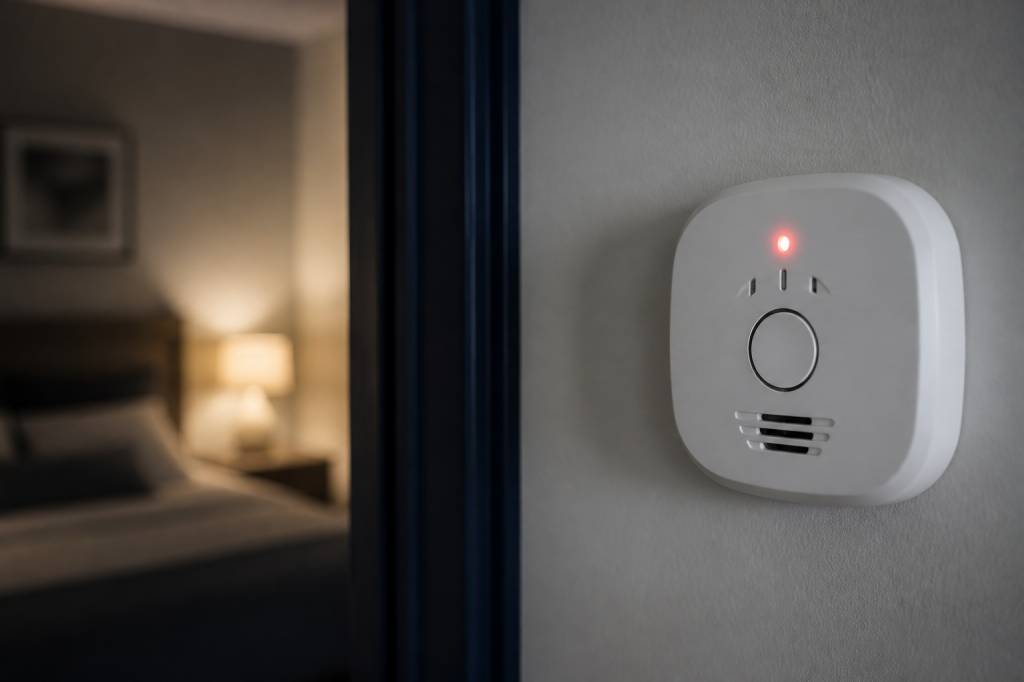
Carbon monoxide (CO) is often described as a “silent killer”. The phrase is unsettling, but accurate: this colourless, odourless gas can build up indoors without warning, affecting the body before anyone realises there is a problem.
Unlike smoke, carbon monoxide does not usually irritate the eyes or throat. Unlike natural gas, it has no distinctive smell. A person cannot reliably detect it without a working carbon monoxide alarm. Understanding where CO comes from, how it affects health and how to identify it quickly is therefore an important part of household and workplace safety.
What is carbon monoxide?
Carbon monoxide is a toxic gas made of one carbon atom and one oxygen atom. It is produced when carbon-based fuels do not burn completely. These fuels include gas, oil, coal, wood, petrol and other materials containing carbon.
Complete combustion produces carbon dioxide, or CO2. Incomplete combustion can produce carbon monoxide instead. This may happen when an appliance is faulty, poorly maintained, incorrectly installed or supplied with insufficient oxygen.
Common sources include:
- Gas boilers, fires, cookers and water heaters
- Wood-burning stoves and open fireplaces
- Oil-fired heating systems
- Charcoal barbecues and portable camping stoves
- Petrol and diesel engines
- Generators used indoors or near windows
- Blocked or damaged chimneys, flues and ventilation systems
Carbon monoxide is slightly lighter than air, but it does not simply remain near the ceiling. It mixes readily with indoor air and can spread through rooms and buildings. This makes assumptions such as “the gas will rise away from us” unsafe.
Why is carbon monoxide dangerous?
The main danger comes from the way carbon monoxide interferes with oxygen transport. When inhaled, CO passes from the lungs into the bloodstream. It binds to haemoglobin—the protein in red blood cells responsible for carrying oxygen—much more strongly than oxygen does.
This produces carboxyhaemoglobin and reduces the blood’s ability to deliver oxygen to vital organs. Carbon monoxide can also interfere with oxygen use at a cellular level. The brain and heart are particularly vulnerable because they require a continuous supply of oxygen.
The severity of exposure depends on several factors:
- The concentration of carbon monoxide in the air
- How long a person is exposed
- Whether they are asleep or awake
- The person’s age and general health
- Whether they have heart, lung or blood-related conditions
A room does not need to be visibly smoky or feel unusually warm for CO to be present. In fact, the absence of obvious warning signs is one of its most dangerous characteristics.
Carbon monoxide poisoning symptoms
Symptoms can be mistaken for flu, food poisoning, exhaustion or a headache caused by dehydration. They may also improve when a person leaves the building and return after coming back inside. This pattern is a significant warning sign.
Early or moderate symptoms may include:
- Headache
- Dizziness or light-headedness
- Nausea or vomiting
- Unusual tiredness or weakness
- Shortness of breath
- Blurred vision
- Confusion or difficulty concentrating
- Chest pain, especially in people with heart disease
More serious exposure can cause poor coordination, drowsiness, rapid breathing, seizures, loss of consciousness and death. People who are asleep may not notice symptoms before becoming severely ill.
Infants, older adults, pregnant people and individuals with asthma, cardiovascular disease or anaemia may be especially vulnerable. Pets can also be affected. A dog, cat or other animal becoming unexpectedly unwell at the same time as people in the home should not be dismissed as coincidence.
What to do if you suspect carbon monoxide poisoning
If a carbon monoxide alarm sounds, or if people in a building develop possible symptoms, treat the situation as an emergency.
- Stop using fuel-burning appliances if it is safe to do so.
- Leave the building immediately and move into fresh air.
- Call emergency services from outside. In the UK, dial 999 or 112.
- Do not re-enter the property until it has been declared safe.
- Seek urgent medical advice, even if symptoms begin to improve outdoors.
- Tell healthcare professionals that carbon monoxide exposure is suspected.
Do not return indoors simply to open windows or investigate the appliance. Ventilation may reduce the concentration, but it does not remove the source or guarantee that the building is safe. A qualified heating engineer or emergency service should assess the situation.
How is carbon monoxide detected?
People cannot detect carbon monoxide using their senses. There is no smell, colour or taste that provides a dependable warning. Detection requires a carbon monoxide alarm or professional monitoring equipment.
A domestic CO alarm continuously samples the surrounding air. If the gas reaches a dangerous level for a particular length of time, the alarm emits a loud warning. The time required to trigger depends on the concentration: higher levels generally produce an alarm more quickly.
When choosing an alarm in the UK, look for a product that meets the relevant safety requirements and carries a recognised certification mark. Alarms should be suitable for the location in which they are installed. Read the manufacturer’s instructions carefully, as placement and maintenance requirements vary between models.
A carbon monoxide alarm is not the same as a smoke alarm. Smoke alarms detect particles from combustion, while CO alarms detect carbon monoxide. A home needs both. One cannot replace the other.
Where should a CO alarm be installed?
Carbon monoxide alarms should be fitted in rooms containing a fixed combustion appliance, such as a boiler, gas fire or wood-burning stove. They should also be placed near sleeping areas so that occupants can hear the alarm at night.
In England, regulations require carbon monoxide alarms in many privately rented and social rented properties where fixed combustion appliances are installed. Requirements can differ across England, Wales, Scotland and Northern Ireland, so landlords, tenants and homeowners should check the current rules for their location.
General installation principles include:
- Follow the manufacturer’s instructions rather than relying on guesswork.
- Place the alarm where its sound can be heard throughout the property.
- Keep it at least the distance specified from appliances, doors and windows.
- Do not cover the alarm or place it behind curtains, furniture or other obstructions.
- Avoid installing it directly above cooking appliances unless the manufacturer permits this.
- Fit additional alarms near bedrooms in larger or multi-storey homes.
Portable alarms may be useful when travelling, camping or staying in unfamiliar accommodation, but they should not be treated as a substitute for permanent alarms in a home.
Testing and maintaining a carbon monoxide alarm
An alarm is only useful if it works when needed. Press the test button regularly, following the manufacturer’s recommended schedule. If the alarm uses replaceable batteries, change them as instructed. Some models have sealed batteries designed to last for the life of the unit.
Never remove the batteries because of nuisance alarms. Instead, identify why the alarm is activating and seek professional advice. A nuisance alarm may indicate a malfunction, poor placement or a real combustion problem.
Carbon monoxide alarms have a limited service life. Many need to be replaced after five to ten years, although the exact period depends on the model. Check the expiry date and replace any alarm that has been damaged, has reached the end of its service life or fails its test.
Dust can affect sensors, so keep alarms clean according to the instructions. Do not paint them, spray cleaning products directly onto them or modify their casing.
Preventing carbon monoxide in the home
Detection is essential, but prevention remains the strongest protection. Fuel-burning appliances should be installed, serviced and repaired by appropriately qualified professionals. In the UK, Gas Safe registered engineers must carry out gas work legally.
Important preventive measures include:
- Arrange regular servicing for boilers, fires and other combustion appliances.
- Have chimneys and flues inspected and cleaned when appropriate.
- Keep ventilation openings clear.
- Never use a gas cooker or oven to heat a room.
- Never operate a barbecue, generator or fuel-burning camping appliance indoors.
- Do not run a vehicle in a garage, even when the garage door is open.
- Check that appliance flames are the correct colour where visible; a yellow or orange flame may indicate incomplete combustion, although it is not a substitute for professional inspection.
- Make sure boiler and flue outlets are not blocked by snow, leaves, building work or stored items.
Modern homes can be highly energy efficient, but improvements in airtightness must be balanced with suitable ventilation. Sealing draughts is not a problem in itself; blocking designed ventilation or ignoring appliance requirements is.
Carbon monoxide and rented accommodation
Tenants should know where alarms are located and test them regularly. Report missing, damaged or faulty alarms to the landlord or managing agent without delay. Do not attempt to repair a gas appliance yourself.
Before moving into a property, check that combustion appliances have been inspected and that the required alarms are present. Tenants should also avoid using portable fuel-burning devices indoors, even if a room appears well ventilated. A partially open window cannot make a dangerous appliance safe.
Landlords have legal responsibilities relating to gas safety and, in many circumstances, carbon monoxide alarms. These obligations are important, but occupants should still report concerns promptly and leave the property if an alarm sounds.
Carbon monoxide in vehicles, boats and outdoor settings
CO poisoning is not limited to houses. Vehicle exhaust can accumulate rapidly in enclosed or poorly ventilated areas. Snow covering an exhaust pipe, a damaged exhaust system or a running engine inside a garage can all create serious risks.
Boats, caravans and motorhomes also require careful attention. Engines, generators, heaters and cooking appliances can produce CO. Install alarms designed for the relevant environment, maintain equipment and ensure vents remain unobstructed.
Charcoal is another common source of preventable exposure. It continues to release carbon monoxide while it burns and while embers remain hot. A barbecue should never be used inside a home, tent, caravan, shed or conservatory, nor immediately beside doors or open windows.
Why awareness still matters
Carbon monoxide is preventable, but its risks are easy to underestimate because it leaves no visible trace. A working alarm, professional appliance maintenance and sensible ventilation provide a practical defence against a hazard that the human body cannot reliably detect.
If a headache or nausea appears repeatedly at home but improves outside, ask a simple question: could carbon monoxide be involved? Do not wait for a second warning. Leave the building, seek advice and have the source investigated. In CO safety, a small amount of caution is far less costly than a missed alarm.
Reliable sources and further guidance
- UK Health Security Agency: guidance on carbon monoxide poisoning
- NHS: symptoms and treatment of carbon monoxide poisoning
- Gas Safe Register: gas appliance and engineer safety information
- Health and Safety Executive: guidance on gas safety and carbon monoxide
- Local fire and rescue services: advice on alarms and household fire safety