


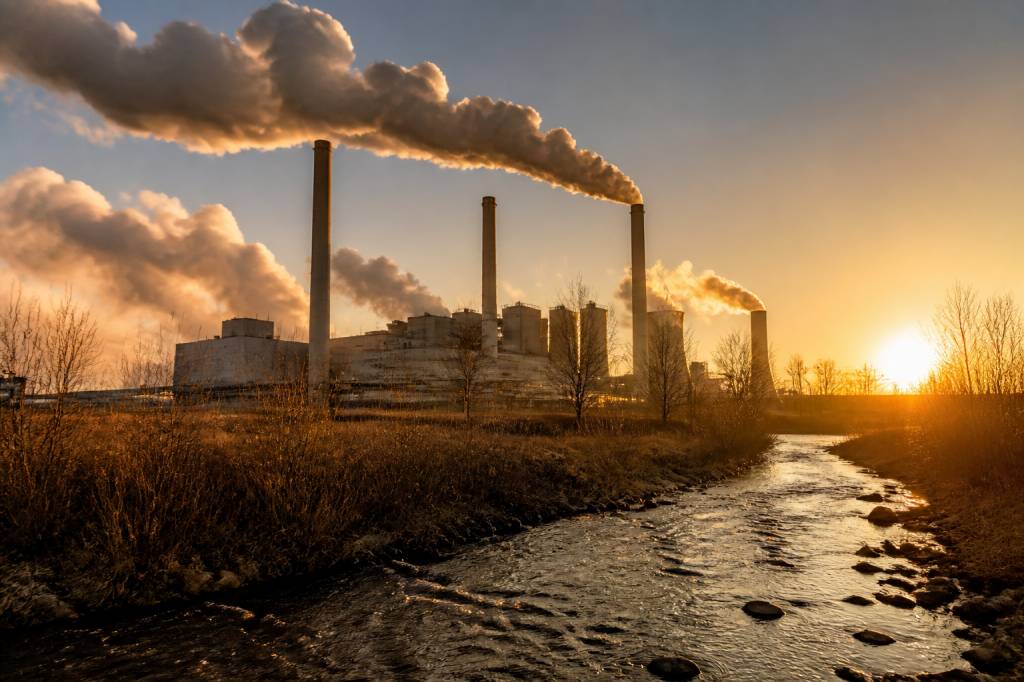
Carbon emissions in the United States have been trending in the right direction overall, but the story is more complicated than a single headline suggests. Yes, power-sector emissions have fallen sharply over the past two decades. Yes, renewable energy has expanded. But industrial pollution, transportation emissions, extreme heat, and climate-driven water stress are still shaping public health and water quality in ways that many people only notice when something goes wrong: a boil-water notice, a fish consumption advisory, a flooded treatment plant, or a spike in contaminants after a wildfire or storm.
For readers focused on PFAS, drinking water, and environmental health, the link between carbon emissions and water quality may not be immediately obvious. But it should be. The same systems that release greenhouse gases also influence the chemistry, movement, and treatment of pollutants. In other words: carbon emissions do not stay in the atmosphere and politely mind their own business. They interact with air, land, and water systems in ways that can make contamination harder to control.
Where U.S. carbon emissions stand now
The United States remains one of the world’s largest greenhouse gas emitters, though emissions have declined from their peak. According to the U.S. Environmental Protection Agency and other major datasets, total U.S. emissions have fallen from early-2000s highs, largely because coal use has dropped and electricity generation has become cleaner. Natural gas, renewables, and efficiency improvements have all played a role.
That said, progress is uneven. Transportation is still the largest emissions sector in the U.S., followed by electricity generation and industry. And while the power sector has made the fastest gains, industrial emissions have proven stubborn in many regions. Petroleum refining, chemical manufacturing, cement production, and metal processing continue to contribute heavily to both carbon emissions and local pollution burdens.
This matters because emissions are not just a climate problem. They are also a clue to where pollution pressure is concentrated. The same facilities and fuel systems that release carbon dioxide often emit nitrogen oxides, sulfur dioxide, fine particulate matter, and toxic byproducts. Those pollutants can alter air quality directly and water quality indirectly.
Why emissions trends matter for pollution beyond the air
Carbon emissions are often discussed as if they were separate from other environmental harms. In reality, they are part of a broader pollution network. Burning fossil fuels releases carbon dioxide, but also co-pollutants that travel through air and deposit into rivers, lakes, soils, and reservoirs. That deposition can contribute to acidification, nutrient imbalance, and contamination in nearby waters.
For example, nitrogen oxides from combustion can contribute to airborne nitrogen deposition. Once that nitrogen settles into water bodies, it can fuel algal growth, worsen eutrophication, and degrade oxygen levels. In plain English: more emissions can mean more conditions that help harmful algae thrive. And when algae blooms get out of control, drinking water utilities often face higher treatment costs and more operational headaches.
Sulfur and nitrogen pollution can also damage watersheds over time, especially where ecosystems are already stressed. Add drought, intense rainfall, or wildfire runoff, and water quality problems can escalate quickly. The climate signal and the pollution signal are increasingly intertwined.
The transportation sector: still a major driver of air and water pollution
Transportation remains a major source of U.S. carbon emissions, especially from cars, trucks, ships, and airplanes. Electrification is helping, but the transition is uneven and slower in heavy-duty freight, shipping, and aviation. That matters because transportation pollution is not confined to roadways.
Vehicle exhaust contributes to particulate pollution that can settle on land and water. Brake and tire wear release metals and micro-particles into stormwater. In urban areas, runoff washes these contaminants into drainage systems and waterways after every major storm. The more traffic and fuel use a region has, the more pollution accumulates in these pathways.
Here is the frustrating part: a city can improve its tailpipe emissions and still face rising stormwater contamination if road runoff is not managed well. Transportation decarbonization is essential, but so is upgrading drainage, green infrastructure, and water treatment systems that can capture pollution before it reaches rivers and aquifers.
Industrial emissions and the hidden burden on water systems
Industrial emissions deserve special attention because they are often tied to both carbon pollution and persistent contamination. Facilities involved in fossil fuel extraction, refining, chemical processing, and manufacturing can release a mix of greenhouse gases and hazardous substances. Some of these pollutants are airborne, while others are discharged into wastewater or captured in sludge and waste streams.
This is where water quality concerns become especially relevant. Industrial sites can affect nearby groundwater, surface water, and municipal treatment systems in several ways:
- Air emissions can deposit contaminants onto land and water through rainfall and dust.
- Wastewater discharges can carry metals, solvents, nutrients, and other pollutants into rivers and streams.
- Industrial stormwater can move contaminants off-site during heavy rain.
- Spills, leaks, and legacy contamination can linger for decades in soil and groundwater.
PFAS are a clear example of how industrial activity and water contamination overlap. While PFAS are not carbon emissions, many industrial sectors that emit greenhouse gases have also been linked to PFAS use, release, or disposal. So when emissions trends point to continued industrial activity in a region, water quality experts often pay close attention to the full pollution profile, not just the carbon footprint.
Climate change is changing the water quality equation
Carbon emissions drive climate change, and climate change is already affecting water systems across the U.S. This is one of the most important reasons emissions trends matter for pollution. Higher temperatures, more intense rainfall, longer droughts, and stronger storms all influence how contaminants move and how water systems perform.
Warmer water can worsen algal blooms and reduce oxygen levels in lakes and reservoirs. Heavier rainfall can overwhelm wastewater systems and wash pollutants into waterways. Drought can concentrate contaminants by reducing water volume and increasing salinity. Wildfires can mobilize ash, metals, nutrients, and organic compounds into drinking water sources after the flames are out.
From a treatment standpoint, climate stress can make water more difficult and more expensive to clean. When source water quality becomes more variable, utilities need more advanced treatment, more monitoring, and more resilience planning. That is especially true in regions already dealing with PFAS, agricultural runoff, or aging infrastructure.
What latest emissions trends mean for drinking water treatment
As emissions shift, water utilities are being asked to do more with the same or fewer resources. Cleaner electricity generation helps over time, but the near-term reality is that water systems are facing multiple pressures at once: contamination from legacy pollutants, climate-driven variability, and rising public expectations for safety.
There is a practical link here. Reducing carbon emissions can lower some of the pollution stress that water systems face, but treatment plants still need to deal with the contaminants already in the environment. That includes:
- sediment and nutrient loads from heavy storms
- microbial risks during flood events
- industrial pollutants in runoff and groundwater
- PFAS and other persistent chemicals that conventional treatment may not fully remove
In other words, emissions reduction helps prevent future damage, but it does not automatically clean up the water table. Communities still need filtration, source-water protection, and strong compliance standards.
Why PFAS readers should care about carbon trends
At first glance, carbon emissions and PFAS may seem like separate policy conversations. One is about climate. The other is about persistent chemicals in water. But the overlap is real.
Many of the same regions that are home to high-emitting industrial facilities also face PFAS contamination concerns. Why? Because industrial corridors, airports, military sites, landfills, and waste handling areas often concentrate multiple pollution sources in one place. Emissions tracking can therefore act as a rough map of where broader environmental pressures are likely to be strongest.
There is also a regulatory connection. As climate risk grows, so does pressure on regulators and utilities to improve monitoring, reporting, and pollution control. That creates opportunities to address PFAS alongside other contaminants rather than as an isolated issue. It is far more efficient to upgrade a system once than to keep patching separate problems one by one. The environment, inconveniently, prefers to bundle its crises.
Key regional patterns to watch
National emissions trends can hide major regional differences. Some states have reduced power-sector emissions quickly by retiring coal plants and expanding wind and solar. Others remain tied to fossil fuel extraction, refining, petrochemicals, or heavy freight traffic. Those differences shape local water quality risks.
Regions to watch closely include:
- industrial Gulf Coast corridors, where refining and chemical production are concentrated
- coal-dependent areas still managing legacy pollution and transition impacts
- fast-growing Sun Belt metros, where population growth increases water demand and runoff
- fire-prone western states, where emissions, drought, and wildfire impacts converge
- older urban centers with aging water and sewer infrastructure
In these areas, emissions trends should be read alongside water system performance, local contamination histories, and climate risk projections. A state may be cutting emissions overall while still leaving vulnerable communities exposed to pollution hotspots.
What a lower-carbon future could improve
The upside is meaningful. If the U.S. continues to reduce carbon emissions through cleaner power, electrified transport, industrial efficiency, and stronger regulations, several water-related benefits could follow.
Cleaner energy systems reduce airborne pollutants that deposit into watersheds. Better land-use planning and transportation policy can lower stormwater contamination. More efficient industrial processes can reduce wastewater burdens. And climate stabilization, while slow to show its full benefits, can reduce the frequency of extreme events that stress water systems.
That does not mean every contamination problem disappears. PFAS, for example, are persistent and often require targeted treatment, source control, and long-term monitoring. But lower emissions can reduce the environmental pressure on water systems, making contamination easier to manage and less likely to worsen over time.
What readers should take away
The latest U.S. carbon emissions trends are encouraging in some sectors, but they are not a reason to relax. Emissions are still high enough to drive climate impacts, and those impacts are already affecting pollution pathways and water quality. The biggest mistake would be treating carbon as a separate issue from water, health, and chemical exposure.
For communities, utilities, and policymakers, the message is straightforward: reducing emissions is also a water strategy. It supports cleaner air, more resilient watersheds, and less stress on drinking water systems. But it must be paired with direct action on contaminants like PFAS, stronger infrastructure investment, and smarter monitoring of the places where pollution risks overlap.
If you care about safe water, the emissions conversation is not a side topic. It is part of the same environmental story, just written in a different chapter.