


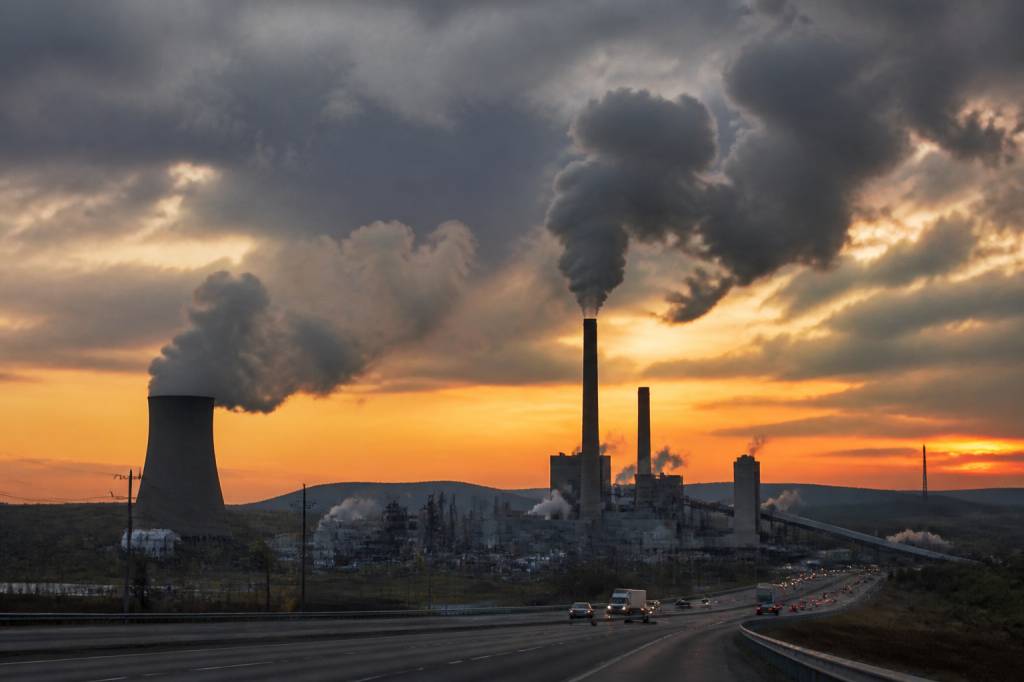
Carbon emissions in the United States are often discussed as a climate issue first. But the story is bigger than rising temperatures and melting ice. Fossil fuel combustion shapes the air people breathe, the illnesses they develop, and the infrastructure decisions that communities face for decades. If that sounds familiar to anyone following PFAS contamination, it should: invisible pollutants tend to travel far, accumulate quietly, and create expensive problems long after the source looks “normal.”
The US remains one of the world’s largest historical emitters of carbon dioxide, and although emissions have fallen from their peak in the mid-2000s, progress has been uneven. Some sectors have improved significantly, others have barely moved, and policy remains stuck between ambition and implementation. What is actually driving emissions today? How do carbon-heavy systems affect health, beyond the abstract language of climate models? And why is cutting emissions still so politically difficult in a country with vast renewable potential?
Where US carbon emissions stand today
The United States has reduced greenhouse gas emissions from their 2007 peak, but the decline has not been steep enough to align with long-term climate targets. Carbon dioxide remains the dominant greenhouse gas, and most of it still comes from three familiar sources: transportation, electricity generation, and industry.
According to the US Environmental Protection Agency, transportation has recently become the largest emitting sector in the country, overtaking power generation. That shift matters. Decarbonizing electricity is important, but if vehicles, shipping, aviation, and freight continue to rely heavily on petroleum, total emissions remain stubbornly high.
A few key trends stand out:
- Coal use has dropped sharply over the past decade, replaced mainly by natural gas, renewables, and, in some cases, nuclear power.
- Electricity-sector emissions have fallen more than emissions from transport and industry.
- Passenger vehicles remain a major source of carbon pollution, especially in car-dependent regions.
- Industrial emissions are harder to reduce because they are tied to heat-intensive processes, not just electricity use.
So while the US has made progress, the overall picture is still one of partial transition rather than decisive shift. In other words, the engine is idling, but it is not off.
What is driving emissions in the United States?
The US economy is built around energy-intensive systems. That is not a moral judgment; it is a structural reality. The challenge is that many of these systems were designed around cheap fossil fuels, and they are slow to change.
Transportation is the clearest example. Americans drive a lot. Suburban design, long commutes, and limited public transit in many regions all lock in oil demand. Even as electric vehicles gain market share, the existing vehicle fleet is huge, and replacing millions of internal combustion engines takes time.
Electricity generation has changed substantially, but the grid still depends on fossil fuels. Natural gas has often been promoted as a “bridge fuel,” but it is still a carbon source, and methane leakage across the supply chain can undermine some of its climate advantages.
Industry includes cement, steel, chemicals, refining, and manufacturing. These sectors are especially challenging because emissions come from both energy use and chemical reactions. Cement production, for example, releases carbon dioxide when limestone is heated. You cannot simply swap in a more efficient light bulb and call it a day.
Buildings also contribute through heating, cooling, and electricity demand. In colder regions, gas-fired heating remains common. In hotter regions, rising air-conditioning use increases electricity consumption, which can mean more emissions unless the grid is clean.
Agriculture and land use are smaller sources of carbon dioxide than energy systems, but they still matter in the broader greenhouse gas picture. Land management can either store carbon or release it, depending on how forests, soils, and wetlands are handled.
Why carbon emissions are a health issue, not just a climate issue
Carbon dioxide itself is not the main pollutant that directly harms lungs the way soot or ozone does. But the systems that produce carbon emissions also produce health-damaging air pollution. That is the key point, and it is often overlooked in public debate.
Burning fossil fuels releases fine particulate matter, nitrogen oxides, sulfur dioxide, and other pollutants that are linked to heart disease, stroke, asthma, and premature death. So when a coal plant or gas plant emits carbon, it is usually also emitting substances that make nearby communities sicker. One process, multiple harms.
The health burden is not evenly distributed. Communities located near highways, ports, refineries, power plants, and industrial corridors often face higher exposure. These are frequently lower-income neighborhoods and communities of color, which means carbon-intensive infrastructure can reinforce existing environmental injustices.
Some of the health pathways are direct and immediate:
- Increased asthma attacks and respiratory symptoms due to air pollution exposure
- Higher risk of cardiovascular disease linked to fine particle pollution
- Heat-related illness during more intense and frequent heat waves
- Worsened mental health after climate-related disasters such as floods, wildfires, and hurricanes
- Greater spread of certain infectious diseases as environmental conditions shift
There is also a less visible but important effect: climate stress. When people live through repeated flooding, wildfire smoke events, or dangerous heat, the body and mind are under prolonged strain. Public health does not need another invisible burden. It already has enough.
The hidden cost of fossil fuel dependence
The financial argument for cutting emissions is often framed around long-term climate risk, but the current costs are already substantial. Hospital visits, missed workdays, crop losses, damaged infrastructure, and disaster recovery all carry real economic consequences.
Consider wildfire smoke. In recent years, smoke events have affected large parts of the US far beyond the West Coast. When the air turns orange and outdoor activity becomes unsafe, the impact is not limited to people with asthma. It reaches schools, construction workers, athletes, older adults, and anyone whose job does not conveniently stop because the AQI has gone off the charts.
Heat is another major cost driver. Extreme heat reduces labor productivity, increases energy demand, and raises the risk of illness and death, especially for older adults and people without access to cooling. The health system absorbs part of that burden, but employers, local governments, and households pay too.
And unlike a short-lived supply shock, emissions-related damage compounds over time. The atmosphere does not offer frequent flyer miles for carbon; it just keeps the account open.
Policy progress in the US: real momentum, real gaps
US climate policy has moved faster in recent years than many people expected, but implementation remains uneven. Federal legislation, state-level action, court challenges, and changing market incentives all interact in messy ways. That makes progress possible, but also fragile.
The Inflation Reduction Act has been the most significant climate investment in US history, supporting clean energy deployment, electric vehicles, grid modernization, industrial decarbonization, and domestic manufacturing. It creates incentives rather than mandates in many areas, which helps with political durability, but it can also slow the pace of change if other policies do not reinforce it.
At the same time, the Biden administration has pursued regulatory measures on power plants, vehicle standards, methane, and industrial pollution. But regulations take time to design, defend, and implement. Court decisions and election cycles can alter the trajectory quickly.
Several policy challenges remain especially difficult:
- Grid expansion: Clean electricity cannot scale fast enough without new transmission lines, storage, and faster permitting.
- Transportation lock-in: Car-dependent land use makes vehicle electrification necessary, but not sufficient.
- Industrial decarbonization: Heavy industry needs new technologies, high capital investment, and long-term policy certainty.
- Political polarization: Climate policy often gets trapped in partisan messaging instead of public health framing.
- Equity concerns: Communities that have borne the worst pollution need priority in funding, siting, and remediation decisions.
That last point is crucial. A policy can reduce total emissions and still fail if it leaves the same communities exposed to pollution. Good climate policy should cut carbon and clean up local air at the same time.
Why methane, not just carbon dioxide, matters
Although this article focuses on carbon emissions, methane deserves attention because it is a powerful greenhouse gas and a major part of the US fossil fuel system. It is released during oil and gas production, processing, transport, and distribution.
Methane is shorter-lived than carbon dioxide, but much more potent in the near term. Reducing methane leakage can deliver faster climate benefits and improve local air quality by cutting associated pollutants. It is one of the clearest examples of a policy win with immediate payoffs.
In practical terms, methane control means better leak detection, stronger enforcement, and tougher standards for oil and gas operations. It is not glamorous work, but neither is preventing climate damage. Effective environmental protection rarely is.
What the next decade will decide
The US is at a crossroads. The technology to cut emissions already exists in many areas. Solar, wind, batteries, heat pumps, and electric vehicles are no longer experimental. The real question is whether policy, infrastructure, and market design can scale them fast enough to matter.
Three priorities will shape the next decade:
- Clean power expansion: Without a cleaner grid, electrification only shifts emissions from one place to another.
- Transportation reform: EVs help, but better transit, safer walking and cycling infrastructure, and smarter land use are also essential.
- Industrial transformation: Lower-carbon cement, steel, chemicals, and manufacturing will determine whether national reductions are durable.
There is also a communication challenge. Public support for climate action increases when people understand the health stakes. Cleaner air, fewer asthma attacks, lower heat risk, and safer communities are tangible benefits. “Carbon reduction” can sound abstract. “Your child breathes easier” does not.
What readers should watch for
When following US carbon policy, it helps to look beyond headline pledges and ask a few practical questions:
- Does the policy reduce emissions now, or only promise reductions later?
- Does it improve local air quality, or just shift pollution elsewhere?
- Does it support low-income communities and frontline neighborhoods?
- Does it address methane as well as carbon dioxide?
- Does it change the systems that create emissions, or just encourage minor efficiency gains?
These questions matter because climate policy is only as strong as its implementation. A target without infrastructure is just a number on paper. A law without enforcement is a polite suggestion. Neither is enough.
The US has the resources, scientific expertise, and technical capacity to cut emissions sharply. The harder part is aligning politics, investment, and public health priorities. That is where the real work begins.
And if one lesson stands out from the evidence, it is this: carbon emissions are not only about the distant future. They are already shaping the air, heat, health, and resilience of American communities today.