


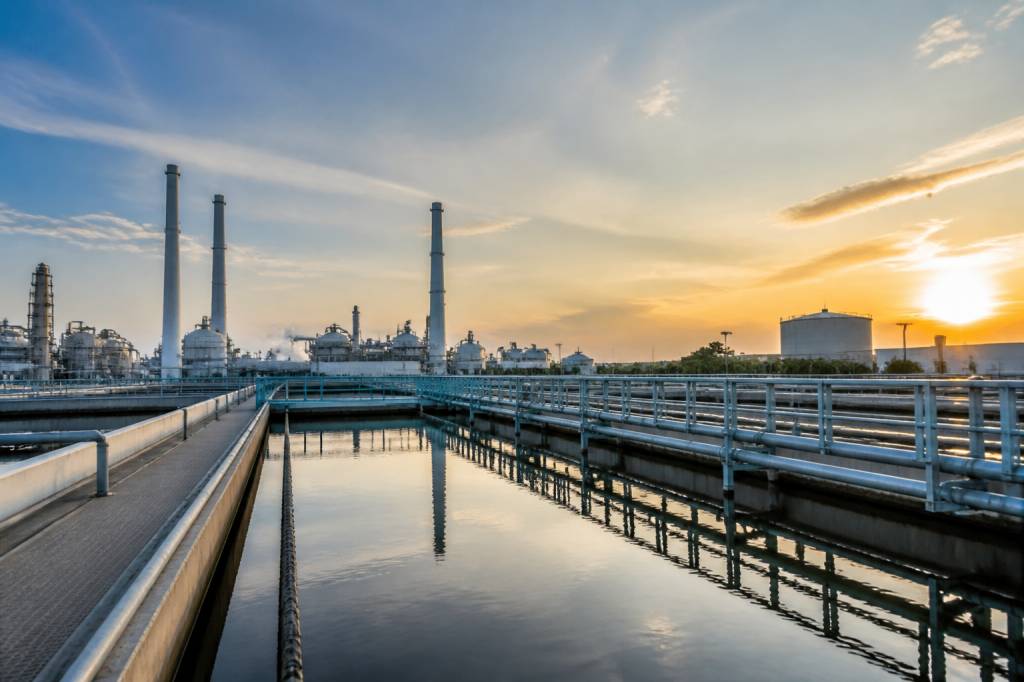
When people talk about water treatment, the conversation usually starts with safety: removing pathogens, reducing pollutants, and making sure what comes out of the tap is fit to drink. But there is another layer that is increasingly impossible to ignore: climate impact. Every stage of water treatment uses energy, chemicals, materials, and transport. And when PFAS treatment enters the picture, the carbon footprint can rise quickly if the chosen technology is energy-intensive or poorly matched to the problem.
That creates a difficult but necessary question: how do we remove “forever chemicals” without creating a climate burden of our own? The answer is not simple, because carbon emissions in water treatment come from multiple sources. Some are obvious, like electricity use. Others are easier to overlook, such as media replacement, sludge handling, membrane cleaning, and the transport of spent materials. Understanding these sources is essential if utilities, industries, and policymakers want to reduce PFAS risks without shifting the environmental cost elsewhere.
Where carbon emissions come from in water treatment
Water treatment is not a single process. It is a chain of steps, and each step can generate emissions directly or indirectly. In climate terms, these are often grouped into three broad categories: Scope 1, Scope 2, and Scope 3 emissions. That sounds technical, but the idea is straightforward.
- Scope 1 covers direct emissions from fuel burned on site, such as diesel generators or natural gas boilers.
- Scope 2 covers indirect emissions from purchased electricity used to run pumps, aeration systems, membrane units, and control equipment.
- Scope 3 includes the wider supply chain: chemical production, material manufacturing, transport, waste disposal, and replacement of equipment or filter media.
In many municipal water systems, electricity is the biggest single driver of operational emissions. Pumps and aeration are particularly energy-hungry. In wastewater treatment, aeration alone can account for a large share of the plant’s power use because microbes need oxygen to break down organic matter. The more advanced the treatment train, the more energy is usually required.
That matters for PFAS, because PFAS removal often requires additional treatment beyond conventional water processing. If a plant is already energy-intensive, adding PFAS treatment can increase emissions unless the system is optimized carefully.
Why PFAS filtration is a climate issue as well as a health issue
PFAS are persistent, mobile, and difficult to destroy. That is exactly why they are so problematic. They can pass through conventional treatment systems and remain in water sources, forcing utilities to install specialized treatment solutions. The most common options include activated carbon, ion exchange resins, nanofiltration, and reverse osmosis.
Each of these technologies has a different climate profile. Some are relatively low-energy but require frequent media replacement. Others provide very high removal efficiency but consume substantial electricity and produce a concentrated waste stream that still needs to be managed. There is no “zero impact” option here. There are only trade-offs.
And that is the key point: a technology that removes PFAS efficiently does not automatically have the lowest carbon footprint. Likewise, a low-energy system is not necessarily the best if it performs poorly, needs constant replacement, or generates large quantities of secondary waste. The climate question is not just “How much power does it use?” but “What does the whole system cost in emissions from start to finish?”
Activated carbon: familiar, effective, and not emission-free
Granular activated carbon, or GAC, is one of the most widely used PFAS treatment methods. It works by adsorbing PFAS molecules onto the surface of carbon media. For many systems, it is attractive because it is relatively simple to install and can be effective for certain PFAS compounds, especially longer-chain molecules.
From a climate perspective, GAC is often less electricity-intensive than pressure-driven membrane systems. That sounds like good news, and often it is. But the footprint does not end at the plant wall. GAC media must be produced, transported, installed, regenerated or replaced, and eventually disposed of. The production of activated carbon itself can be carbon-heavy, depending on the feedstock and activation process. Virgin carbon is not a magical sponge that appears out of nowhere.
There is also the issue of breakthrough. Once the media becomes saturated, PFAS start to pass through. That means the carbon used to create the media is effectively “wasted” if regeneration or replacement is too frequent. Better design and careful monitoring help extend service life and reduce emissions per volume treated.
In practice, GAC can be a balanced option where PFAS concentrations are moderate and flow rates are manageable. But if the water has high dissolved organic carbon or a PFAS mixture dominated by short-chain compounds, performance can decline and replacement frequency can increase. That is where climate impact begins to creep up.
Ion exchange: compact, efficient, but chemistry-heavy
Ion exchange resins are another common PFAS treatment option. These resins can be highly selective, making them useful when utilities need strong removal performance in a relatively small footprint. They can also outperform GAC for some short-chain PFAS, which are often harder to capture.
On paper, ion exchange can look efficient. Less space, strong performance, and often lower pressure requirements than reverse osmosis. But the resin itself is a manufactured chemical product, and its life cycle matters. Manufacturing resins requires raw materials and energy. Spent resins must be handled carefully because they contain concentrated PFAS, and regeneration processes can generate secondary waste streams that need treatment or disposal.
Regeneration can reduce the need for frequent resin replacement, which helps lower emissions associated with material production. Still, the regenerant chemicals, transport, and downstream waste handling all add to the footprint. If the regeneration loop is inefficient, the climate benefit shrinks quickly.
So while ion exchange can be a smart technical choice, it is not automatically the low-carbon choice. The system design, resin life, waste management pathway, and local energy mix all change the picture.
Reverse osmosis and nanofiltration: high removal, high energy demand
Membrane technologies such as reverse osmosis and nanofiltration are often praised for their ability to remove a broad range of contaminants, including PFAS. They are especially attractive when utilities need a near-barrier approach. If you want very high removal, these systems can deliver.
But membranes come with a significant energy cost. Water must be forced through semi-permeable membranes under pressure, which means pumps do a lot of work. The higher the pressure and flow, the higher the electricity demand. For reverse osmosis, that energy use can be substantial.
There is also concentrate management to consider. Membranes do not destroy PFAS; they separate them. The PFAS end up in a concentrated waste stream that must be treated, stored, or disposed of. That concentrate can become a climate issue if it requires transport to distant facilities, high-temperature treatment, or repeated handling.
Membranes also need cleaning. Chemical cleaning agents, replacement parts, and maintenance cycles all contribute to the footprint. In some cases, fouling can reduce efficiency and increase energy use over time. In other words, a membrane plant that starts out efficient may become less so if it is not operated carefully.
This is why membrane technologies are often best reserved for situations where their high level of removal is truly necessary. Using reverse osmosis everywhere, for every PFAS problem, would be a bit like using a firehose to water houseplants: technically possible, environmentally questionable.
Thermal destruction and advanced treatment: solving one problem, risking another
Once PFAS are captured, they still need to be dealt with. That is where destructive or advanced treatment technologies enter the conversation. Incineration, thermal oxidation, plasma, supercritical water oxidation, and electrochemical methods are all being explored or used in different contexts. Their main promise is clear: destroy PFAS rather than just move them around.
From a climate perspective, however, destruction can be energy-intensive. High-temperature processes require fuel or electricity, sometimes at very high levels. If the energy comes from fossil sources, the emissions can be significant. And if the destruction process is not complete, there is an environmental penalty without the intended benefit.
This is why the “best” solution is not always the most aggressive one. A low-emission capture technology paired with a carefully managed destruction pathway may outperform a high-energy treatment system that operates on dirty electricity. Climate impact depends on the full chain, not only the treatment step that gets the most attention.
The role of the electricity grid
One of the most overlooked factors in water treatment emissions is the electricity grid itself. Two identical treatment plants can have very different carbon footprints depending on where they operate. A facility powered by a relatively low-carbon grid will emit less than one drawing electricity from a fossil-heavy grid.
This matters especially for PFAS filtration because many of the most effective technologies are electricity-dependent. Membranes, pumping systems, advanced oxidation, and automated controls all rely on power. If utilities want to cut emissions, switching to renewable electricity or purchasing low-carbon power can make a meaningful difference.
Of course, grid decarbonization is not under the control of every utility. But energy procurement, on-site solar, battery storage, and operational scheduling can help. Running energy-intensive processes when renewable power is most available is not just a climate strategy; it is increasingly a cost strategy too.
What lifecycle thinking changes
It is easy to compare technologies using a single metric like energy use per cubic meter treated. That is useful, but incomplete. A proper lifecycle assessment looks at the full system: raw materials, manufacturing, transport, operation, maintenance, waste handling, and end-of-life disposal.
When lifecycle thinking is applied, some assumptions change. A technology with low operational electricity use may still have a high footprint if it requires frequent replacement. Another system may use more power but last longer and generate less waste. The answer depends on local water chemistry, PFAS profile, treatment goals, and waste management infrastructure.
In other words, the lowest-carbon solution is often the one that is best matched to the site, not the one that sounds best in a press release. That is not a glamorous answer, but it is usually the correct one.
How utilities can reduce emissions while treating PFAS
There are practical ways to lower climate impact without compromising water safety. The most effective strategies usually combine smart design, better monitoring, and cleaner energy.
- Match the technology to the contamination profile. Avoid overbuilding treatment capacity where lower-intensity options would work.
- Track breakthrough carefully. Better monitoring can extend media life and reduce unnecessary replacement.
- Optimize pumping and pressure. Small efficiency gains in pumps and membranes can deliver large savings over time.
- Use low-carbon electricity where possible. Renewable procurement can significantly reduce Scope 2 emissions.
- Plan for spent media and concentrate early. Waste handling is part of the carbon footprint, not an afterthought.
- Consider hybrid systems. Sometimes combining GAC with ion exchange, or pre-treatment with targeted polishing, reduces both waste and energy use.
There is also a strong case for preventive action. Reducing PFAS releases at the source remains the most climate-friendly option of all, because every litre of contaminated water that never enters the treatment system avoids energy use, material consumption, and waste generation. Treatment is necessary, but prevention is lighter on both the planet and the budget.
The bigger picture: clean water and climate goals should not compete
The debate around PFAS and carbon emissions can sound like a choice between two urgent priorities: public health versus climate action. But that framing is misleading. Clean water and climate protection are not competing goals. They are linked.
A treatment approach that protects people from PFAS while minimizing energy use, reducing waste, and making use of low-carbon electricity is not a compromise. It is better environmental practice. The challenge is to move away from thinking in single-issue terms. A water system is not just a filtration unit; it is a living infrastructure network with environmental consequences at every stage.
That is why the most useful question is not “Which PFAS technology is best?” but “Which technology is best for this water, this site, this grid, and this waste pathway?” The answer will differ from one location to another. But the principles stay the same: use less energy, waste less material, monitor performance closely, and avoid simply moving pollution from one form to another.
PFAS treatment will always carry some climate cost. The goal is not to pretend otherwise. The goal is to make sure that cost is measured, minimized, and justified by real environmental and health benefits. In a world where both contaminated water and carbon emissions are urgent problems, that kind of clarity is exactly what water management needs.