

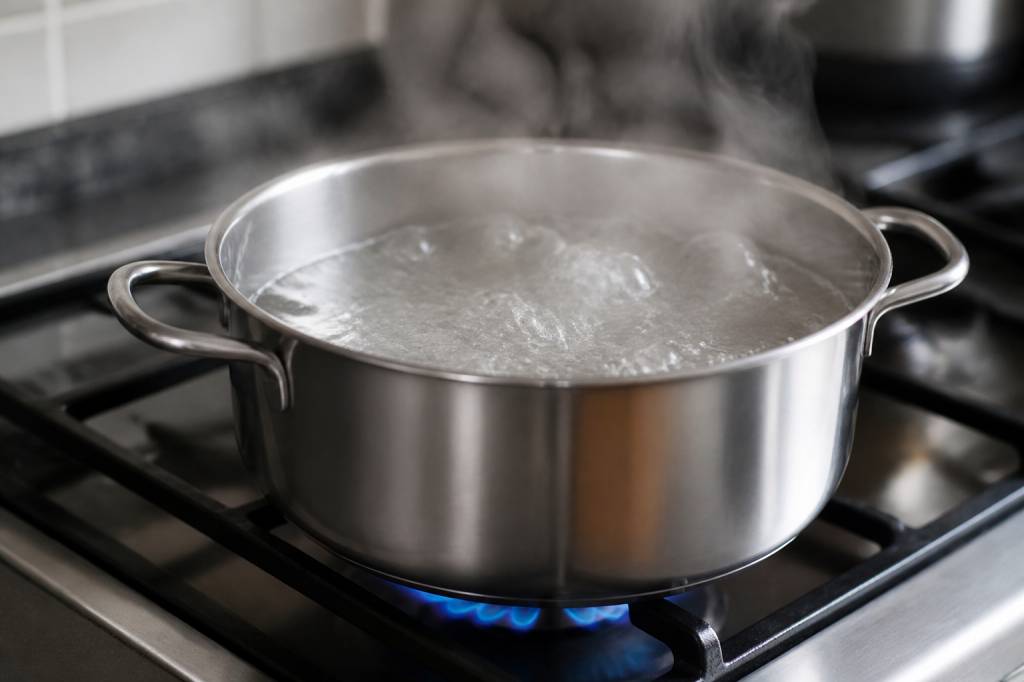
When water looks questionable, boiling is often the first fix people reach for. It feels simple, old-fashioned, and reassuring: heat it up, kill the germs, drink with confidence. And in many cases, that instinct is correct. Boiling water is one of the most effective ways to destroy disease-causing bacteria, viruses, and parasites.
But here’s the important catch: boiling does not make all water safe. It does not remove chemical contaminants, heavy metals, PFAS, or sediment. If your concern is contamination from sewage overflow, a flood, or a failing private well, boiling may help against microbes, but it can also leave other risks untouched. In some situations, it can even make certain contaminants more concentrated.
So, can boiling water kill bacteria and make water safe to drink? The short answer is yes, for biological contamination. The longer answer is: it depends on what is in the water in the first place.
What boiling water does well
Boiling water works because most harmful microorganisms cannot survive prolonged exposure to high temperatures. Once water reaches a rolling boil, pathogens begin to break down rapidly. This is why public health agencies have long recommended boiling during boil-water advisories, after flooding, or when the safety of a water supply is in doubt.
Boiling is especially effective against:
These organisms are common causes of waterborne illness. Even a small amount can make people sick, especially children, older adults, pregnant people, and those with weakened immune systems. If the issue is microbial contamination, boiling is a strong line of defense.
That is why, in emergency guidance, health authorities often recommend bringing water to a vigorous boil for at least one minute. At higher elevations, where water boils at a lower temperature, the standard advice is usually three minutes. Simple? Yes. Foolproof? Not quite.
Why boiling kills microbes
Microorganisms depend on proteins, enzymes, and cell structures that are vulnerable to heat. When water is heated to boiling, those structures denature and collapse. In plain English: the germs lose the machinery they need to survive and reproduce.
Boiling is not the same as sterilisation in a laboratory, but for everyday drinking-water emergencies, it is generally enough to make water microbiologically safer. It is a practical and proven method, which is why it remains a standard recommendation in households, hospitals, and disaster response settings.
Still, “microbiologically safer” is not the same as “fully safe.” Water quality is broader than microbes. And that distinction matters more than many people realise.
What boiling does not remove
Boiling is often misunderstood as a universal purification method. It is not. If contaminants are dissolved in water, heat will not make them disappear. In some cases, boiling can make the problem worse by reducing the water volume through evaporation while leaving the contaminant behind.
Boiling does not remove:
This is particularly important for households relying on private wells or water sources affected by industrial pollution. If the contamination is chemical rather than biological, boiling water is not a solution.
For example, if PFAS are present in tap water, boiling will not destroy them. These synthetic compounds are designed to resist heat, water, oil, and degradation. That is exactly why they persist in the environment and in drinking water supplies. Boiling them is a bit like trying to get rid of glitter with a hairdryer: it does not solve the real problem, and it may make you feel falsely reassured.
Can boiling make some contaminants more concentrated?
Yes. When water boils, some of the water evaporates, but dissolved contaminants remain. If you keep boiling the same water for an extended period, the contaminant concentration can increase as the total volume drops.
This is especially relevant for dissolved chemicals and minerals. So if the water contains substances like lead, PFAS, nitrates, or salts, boiling does not reduce their presence. It can actually make each glass slightly more contaminated by concentrating what is left.
That is one reason public health guidance is careful to distinguish between microbiological contamination and chemical contamination. The right response depends on the hazard.
When boiling water is the right choice
Boiling is most useful when you are dealing with a temporary risk of microbial contamination. Common scenarios include:
In these situations, boiling can significantly reduce the risk of stomach illness and infection. If no other treatment is available, it is one of the best emergency measures you can take.
It is also worth noting that clear water is not always safe water. Microbes are invisible. Water that looks clean can still carry harmful organisms. Boiling is valuable precisely because it addresses what your eyes cannot detect.
When boiling is not enough
If the concern is chemical pollution, you need a different approach. This is where many people get caught out. A household might hear that water is contaminated and assume boiling is the obvious fix. But if the contamination comes from industrial discharge, agricultural runoff, old plumbing, or landfill leachate, heat alone will not help.
Boiling is not enough when water may contain:
In these cases, the correct response may involve testing the water, using certified filtration, switching to bottled water temporarily, or following local authority guidance. If you suspect chemical contamination, do not rely on boiling as your main safeguard.
What about cloudy or dirty water?
Boiling can kill microbes, but it does not remove sediment, rust, or visible debris. If water is cloudy, muddy, or filled with particles, it should usually be pre-filtered through a clean cloth, paper towel, or coffee filter before boiling. That will not make it chemically safe, but it can improve clarity and reduce the amount of visible material in the final water.
However, if the water is heavily contaminated or could contain hazardous chemicals, sediment alone is not the main issue. In that case, filtration or an alternative source may be necessary. Boiling dirty water without addressing the underlying contamination can give a false sense of security.
How long should water boil?
For most situations, public health advice is straightforward: bring water to a full rolling boil and maintain it for at least one minute. A rolling boil means bubbles are rising rapidly and continuously across the surface, not just a few lazy bubbles at the edge.
At elevations above about 2,000 metres, the recommended boiling time is often three minutes because water boils at a lower temperature at altitude. The goal is enough heat exposure to inactivate pathogens reliably.
After boiling, let the water cool naturally and store it in a clean, covered container. If you want to avoid recontamination, handle it carefully. A sterile result does not stay sterile for long if it is poured into a dirty jug with a dusty spoon sitting in it.
Boiling versus filtration: which is better?
Boiling and filtration solve different problems. Boiling is excellent for killing microorganisms. Filtration is better suited to removing particles and, depending on the system, some chemicals. For the most resilient contaminants, like PFAS, you need a filter specifically designed and certified for that purpose.
A good water treatment approach depends on the contamination source:
In real life, some households need both boiling and filtration at different times. A boil-water advisory during a storm is not the same as chronic contamination from an industrial legacy site. The solution should match the problem.
Why this matters for PFAS
On a blog focused on PFAS, this distinction is crucial. PFAS are not living organisms. They do not die when heated in a kettle. They are chemically persistent, and boiling does not break them down in any meaningful household sense.
That means if your water is contaminated with PFAS, the priority should be testing, source identification, and the right treatment technology. Boiling may still be useful if there is also a microbial concern, but it will not address the PFAS exposure itself.
This is one of the most common misunderstandings about home water safety: people hear “make it safe” and assume one method fixes everything. In reality, safe drinking water depends on understanding the contaminant, not just applying heat and hoping for the best.
Practical takeaways for households
If you want a simple rule to remember, it is this: boiling water is a strong tool against germs, but not against chemicals.
Use boiling when:
Do not rely on boiling when:
If you are unsure, testing is the best starting point. Water quality problems are easier to solve when you know what is actually in the water. Guessing is not a treatment strategy.
The bottom line for safe drinking water
Boiling water can absolutely kill bacteria, viruses, and parasites, and in the right circumstances it can make water much safer to drink. It is a reliable emergency measure and an important public health tool.
But boiling is not a universal fix. It does not remove PFAS, lead, nitrates, or many other chemical contaminants. If your water problem is chemical rather than biological, boiling will not solve it, and may even concentrate certain substances.
So the real answer to “can boiling water make water safe to drink?” is: sometimes, and only for certain risks. The safest approach is to match the treatment to the contamination, not the other way around. In water safety, the details are not optional — they are the whole story.