


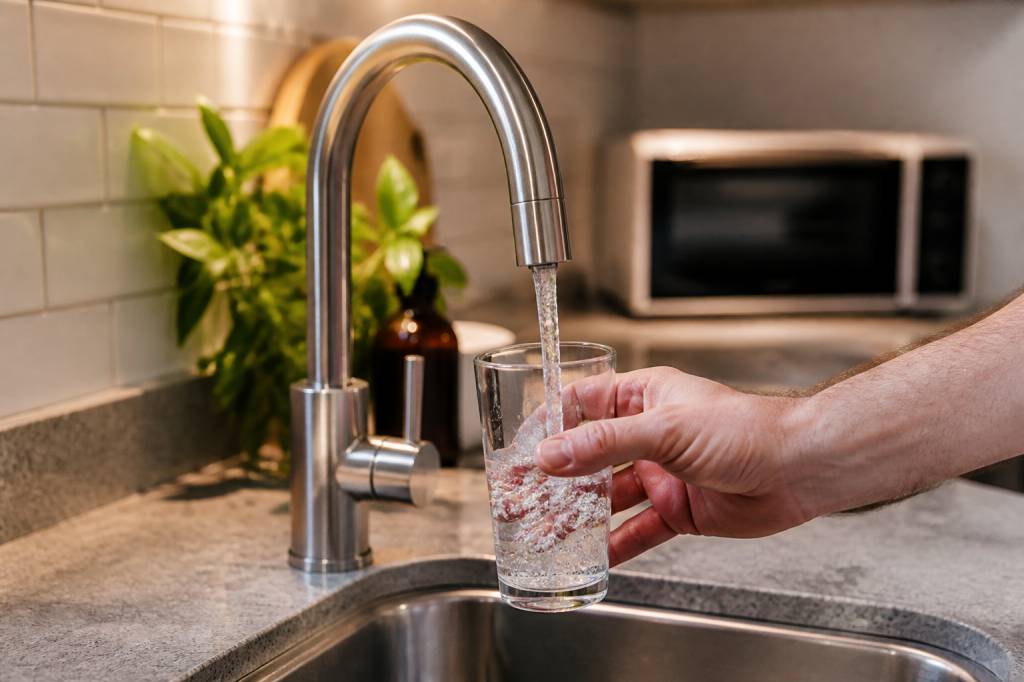
What calcium in water actually means
Calcium is one of the most common minerals found in natural water supplies. It enters water as rainwater moves through soil and rock, dissolving compounds such as limestone, chalk, and gypsum. In practical terms, higher calcium usually means harder water. Lower calcium usually means softer water. Simple enough, but the downstream effects are not always simple.
For households and businesses, calcium in water affects far more than taste. It influences scaling, appliance performance, soap efficiency, plumbing maintenance, and, in some cases, how well filtration systems work. In regions with hard water, calcium is not a rare contaminant or a sudden anomaly. It is part of the chemistry of the supply. The question is not whether it is present, but how much is present and what that means for your water treatment strategy.
From an environmental and public health perspective, calcium is not considered harmful at typical drinking-water levels. In fact, it is an essential mineral. But when calcium concentration rises, it can create operational issues that matter for water quality management. If you are dealing with PFAS, metals, sediment, or scale buildup, calcium can complicate the picture in subtle but important ways.
How calcium changes water quality
Calcium affects water quality primarily through hardness. Hard water contains elevated levels of calcium and often magnesium. The higher the mineral content, the more likely water is to leave deposits, interfere with detergents, and create visible scaling on fixtures and appliances.
One of the most obvious signs is limescale. If your kettle, showerhead, or taps develop a crusty white film, calcium is usually the main culprit. Over time, this scale can reduce heating efficiency and shorten the lifespan of boilers, dishwashers, washing machines, and water heaters. That is not just an inconvenience; it is a maintenance cost and an energy issue.
Water with high calcium may also have a slightly different mouthfeel. Some people describe it as “minerally” or “chalky,” though taste is subjective. In itself, calcium does not make water unsafe. However, it can change consumer perception. When people notice a cloudy kettle or soap that refuses to lather, they often assume something is wrong with the water supply, even when the issue is simply hardness.
There is also a chemistry angle worth noting. Calcium can interact with other dissolved substances in water, especially bicarbonates and carbonates, to form insoluble precipitates. That is the mechanism behind scale formation. In other words, calcium does not just sit passively in the water; under the right conditions, it starts building things on surfaces you would rather keep clean.
Common signs of calcium-rich water
If you suspect hard water, the clues are often hiding in plain sight. A few practical indicators include:
- White or chalky deposits on taps, shower screens, and kettles
- Soap that does not lather easily
- Stiff laundry or dull-looking clothes after washing
- Reduced water pressure caused by mineral buildup in pipes or fixtures
- Frequent appliance descaling needs
- Glassware with spots or a cloudy finish after washing
These symptoms are familiar to many households in hard-water areas. They are not dramatic, but they are persistent, and persistence is what makes them expensive. A thin layer of scale inside a water heater may look harmless, yet it can reduce heat transfer efficiency and increase energy use. Water chemistry has a way of turning tiny deposits into big bills.
Is calcium in drinking water a health concern?
In general, calcium in drinking water is not a health risk at normal concentrations. The mineral is essential for bone health, muscle function, and nerve signalling. Drinking water can contribute to daily calcium intake, although diet remains the main source for most people.
That said, “not a health concern” does not mean “irrelevant.” Very hard water can create practical issues for households, and people with kidney stone concerns sometimes ask whether calcium-rich water is a problem. The answer depends on the full context of the person’s diet, medical history, and overall fluid intake. For most people, drinking hard water is not considered dangerous. For anyone with a specific medical condition, it is sensible to speak to a healthcare professional rather than rely on internet folklore and kitchen-table chemistry.
From a regulatory standpoint, calcium is usually managed under water hardness or aesthetic quality rather than toxicological limits. The main concern is not exposure to calcium itself but the operational and treatment implications of mineral-rich water.
Why calcium matters for filtration systems
Calcium can have a surprisingly strong influence on filtration performance. Not because it is especially toxic, but because it changes the physical and chemical environment a filter has to work in. Filters are designed to remove specific contaminants under certain conditions. Hard water can stress those conditions.
One common issue is scaling on filter media and membranes. In reverse osmosis systems, for example, calcium can contribute to mineral fouling if pretreatment is inadequate. That buildup reduces flow, lowers efficiency, and increases maintenance requirements. If the membrane is doing battle with scale, it has less capacity to deal with the contaminants you actually care about.
Carbon filters are less vulnerable to scale than membranes, but calcium can still indirectly affect performance. High hardness may increase sediment and precipitate formation in some systems, causing cartridges to clog faster. In homes with multiple treatment stages, neglecting hardness can shorten the lifespan of the whole setup.
There is also an important interaction with certain contaminants. In systems designed to remove PFAS, for instance, water hardness can influence the overall treatment strategy. While calcium does not remove PFAS, a hard-water matrix may affect prefiltration needs, membrane maintenance, and long-term system performance. If the filter is fighting scale, it may not be operating at its best against trace contaminants.
Which filtration methods handle calcium best?
Different systems deal with calcium in different ways. The best choice depends on your goal. Are you trying to prevent scale? Improve taste? Protect appliances? Remove PFAS as well as hardness-related issues? The answer determines the technology.
Water softeners are the classic solution for calcium-related hardness. Most use ion exchange, replacing calcium and magnesium ions with sodium or potassium ions. This is highly effective for reducing scale formation. It does not remove all dissolved contaminants, but it is excellent for tackling the mineral problem itself.
Reverse osmosis systems can reduce calcium along with a broad range of other dissolved substances. They are useful when the aim is to improve overall water purity. However, they require careful maintenance and usually benefit from pretreatment if the water is hard. Otherwise, mineral scaling can become a recurring issue.
Carbon filters are not designed to remove calcium. They are useful for improving taste and odor and, depending on the system, may help with certain organic contaminants. But if the concern is scale, carbon alone will not solve it.
Sediment filters can help if hardness is accompanied by visible particulates, but they do not remove dissolved calcium. Think of them as the bouncers at the door, not the people dealing with dissolved ions already inside.
Template-assisted crystallization (TAC) systems are another option in some settings. Rather than removing hardness minerals, they alter the way minerals behave so they are less likely to adhere to surfaces. These systems can be useful where the goal is scale prevention rather than mineral removal.
How calcium affects PFAS treatment
For readers interested in PFAS specifically, this is where the topic gets especially relevant. PFAS treatment is rarely just about one contaminant. Real-world water often contains a mix of hardness, sediment, dissolved organic matter, metals, and other chemical compounds. Calcium is part of that mix, and it can influence treatment planning.
PFAS removal technologies such as activated carbon, ion exchange resins, and reverse osmosis all work best when water quality is relatively stable. High calcium levels can contribute to scaling, clogging, or faster media exhaustion, especially if the system is not designed with pretreatment in mind. In other words, calcium may not block PFAS removal directly, but it can make the system less efficient over time.
This matters in both domestic and industrial settings. A household system that looks fine on day one can lose performance much earlier than expected if hard water is ignored. In larger facilities, hard water can increase downtime, maintenance costs, and replacement frequency. The lesson is straightforward: effective PFAS treatment depends not only on the target contaminant, but also on the water chemistry around it.
Testing for calcium and water hardness
If you want a clear answer, test the water. Guesswork is a poor treatment plan, and water hardness is one of the easiest parameters to measure. Tests are available as simple home strips, drop-test kits, and more detailed laboratory analysis.
Hardness is usually reported in milligrams per litre as calcium carbonate (mg/L as CaCO3), or sometimes in grains per gallon. Calcium concentration itself may also be measured separately. The key is to understand what the number means for your system, not just to collect data for the sake of it.
As a rough guide, water is often considered:
- Soft: low mineral content
- Moderately hard: noticeable but manageable mineral content
- Hard: enough calcium and magnesium to cause scaling and soap issues
- Very hard: frequent maintenance problems and pronounced limescale buildup
The exact thresholds vary by region and reporting convention, but the practical effects are consistent. If your taps are white with scale and your kettle sounds like it is developing geological strata, the water is probably hard enough to warrant treatment.
Best practices for managing calcium-related issues
Managing calcium is usually about matching the solution to the problem. If you are only dealing with light scale, a softener may be more than you need. If you are treating for PFAS, hardness should be considered as part of the broader system design. A few sensible steps can help:
- Test water hardness before choosing a treatment system
- Check whether scale is affecting appliances, pipes, or heating efficiency
- Use pretreatment where needed to protect membranes and cartridges
- Follow maintenance schedules for softeners and RO systems
- Combine treatment technologies when water contains multiple issues
It is also worth reviewing the full water profile rather than focusing on calcium alone. Water treatment is rarely a one-parameter story. Iron, manganese, chlorine, sediment, and PFAS can all affect the same system. The best filtration setup is the one that deals with the whole picture efficiently, not just the most visible symptom.
What this means for households and water professionals
For homeowners, calcium in water is mainly a quality-of-life issue until it becomes an equipment issue. That means more descaling, more detergent, and more wear on appliances. The fix can be simple, but only if the problem is correctly identified.
For water professionals, calcium is a reminder that treatment systems operate within a chemical ecosystem. If hardness is ignored, performance can drop, maintenance costs can rise, and contaminant-specific technologies may underperform. In PFAS management especially, understanding the matrix matters. Water is not a blank canvas; it comes with a mineral history.
Calcium is not the villain of the water world. It is a natural part of many supplies, and in the right context it is completely benign. But when it is allowed to build scale, interfere with filtration, or undermine treatment efficiency, it becomes a very practical problem. And practical problems are usually the ones that cost the most.