

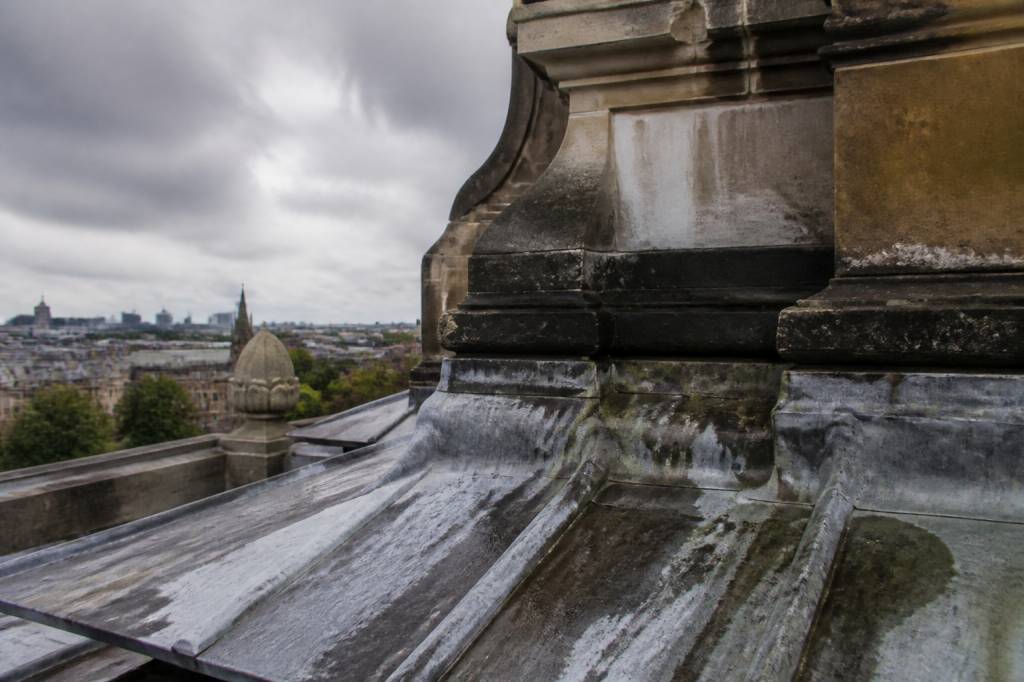
Why acid rain still matters for buildings and water quality
Acid rain may sound like a problem from another era, but it is still relevant today. In many regions, emissions of sulphur dioxide and nitrogen oxides continue to react in the atmosphere and fall back to Earth as acidic precipitation. When that rain lands on buildings, it does more than stain facades or erode stone. It can also change the way rainwater behaves as it moves across roofs, gutters, downpipes, and storage tanks.
That matters because buildings are often part of the water cycle in a very direct way. Rooftop rainwater harvesting, greywater systems, and even ordinary drainage all depend on surfaces that can influence water chemistry. If those surfaces are damaged by acid rain, the water they collect or channel may carry dissolved metals, sediment, and other contaminants that would not otherwise be present. For anyone concerned with water quality, that is not a minor detail.
The question is simple: when acid rain slowly eats away at a building, where do those materials go? The answer is usually into the water moving over or through the structure.
What acid rain does to building materials
Acid rain is typically defined as precipitation with a pH below about 5.6, although the exact impact depends on exposure time, material type, and local pollution levels. The damage it causes is often subtle at first. Over time, however, repeated wetting and drying can accelerate surface breakdown, corrosion, and chemical leaching.
Different materials respond in different ways:
- Stone and masonry: limestone and marble are especially vulnerable because they contain calcium carbonate, which reacts readily with acid.
- Concrete: acidic water can gradually dissolve the cement matrix, weakening surfaces and exposing aggregate.
- Metals: steel, copper, zinc, and lead can corrode faster when exposed to acidic conditions.
- Paints and coatings: acid rain can degrade protective layers, leaving the underlying material open to further damage.
- Roofs and gutters: repeated acid exposure can wear down roofing materials and increase the release of particles into runoff.
This is not just a cosmetic issue. Once a building envelope starts shedding particles or corroding components, rainwater can become a transport pathway for contaminants. Think of it as a slow, uninvited chemistry experiment happening above your head.
How damaged buildings affect rainwater runoff
Rainwater flowing off a building does not simply collect dust and move on. It picks up whatever sits on the roof surface, in the gutters, or inside drainage systems. If acid rain has already weakened those materials, the runoff can contain a wider mix of pollutants.
Common contaminants found in runoff from weathered buildings include:
- Lead from old paint, flashing, or plumbing components
- Copper and zinc from roofing and guttering
- Iron and aluminium from corroded structural materials
- Fine sediment and mineral particles from eroded masonry or concrete
- Organic debris and atmospheric pollutants deposited on surfaces
These contaminants can affect water quality in multiple ways. Some change taste, colour, or odour. Others pose more serious health concerns, especially if the water is intended for irrigation, cleaning, or non-potable household use. In buildings that collect rainwater for reuse, the quality of the roof surface is just as important as the storage tank itself.
Roof materials and rainwater harvesting: a hidden connection
Rainwater harvesting is often promoted as a sustainable option, and it can be. But the quality of harvested water depends heavily on the catchment surface. A roof exposed to acid rain for years may release more dissolved metals and degraded particles than a newer, intact roof. This is particularly relevant in older urban buildings, industrial zones, and areas downwind of major traffic corridors or combustion sources.
For example, a metal roof with corroded gutters may introduce zinc and copper into the harvested water. A stone or concrete roof edge can contribute fine mineral particles. If the building has older paint layers or historic materials, acid rain can also accelerate the release of legacy contaminants. In older housing stock, that is not an abstract concern; it is a practical water quality issue.
Rainwater harvesting systems therefore need to be designed with both the environment and the building material in mind. A first-flush diverter, regular gutter cleaning, and appropriate filtration are important, but so is understanding what the roof is made of and how long it has been exposed to acidic conditions.
Can acid rain change the chemistry of stored water?
Yes, indirectly. Acid rain does not usually remain acidic once it has passed over every building surface and entered a tank, but the water chemistry can still shift. Materials dissolved during runoff may lower pH, increase conductivity, or raise concentrations of specific metals. If the water is stored for a long period, these changes may become more pronounced depending on the tank material and maintenance practices.
Storage tanks can also interact with contaminants already present in the water. Sediment settles at the bottom. Biofilms develop on internal surfaces. Corrosion can continue if the tank or fittings are made from reactive metals. If the water is later used for irrigation, washing, or in systems where people may be exposed indirectly, that chemistry matters.
There is another point worth noting: acidic water can be more aggressive toward plumbing and fittings. In some cases, low pH water can leach metals from pipes, valves, and connectors after it leaves the roof. So even if the original runoff is only mildly contaminated, the distribution system may add to the problem.
Buildings most at risk
Not every building is affected in the same way. Exposure depends on location, material choice, age, maintenance, and the intensity of local air pollution. Some structures are simply more vulnerable than others.
Higher-risk buildings often include:
- Historic buildings with limestone, sandstone, or marble features
- Older buildings with deteriorating paint or corroded metalwork
- Industrial and urban properties near traffic or emission sources
- Buildings with neglected gutters, blocked drains, or cracked roofing
- Properties using roof rainwater harvesting without proper filtration
Historic architecture deserves special attention. Many older buildings were built with beautiful but chemically vulnerable materials. Once acid rain begins to roughen the surface, it increases the area available for further contamination and water retention. That can make each rainfall event slightly more problematic than the last.
Health implications of contaminated runoff
When people hear “acid rain,” they often think about damaged statues or blackened buildings. But the health angle becomes important when runoff enters cisterns, garden systems, or drainage channels that interact with domestic water use. The main concern is not usually the acidity itself. It is what the acidic water can mobilise.
Potential health-relevant issues include exposure to:
- Lead, which is particularly concerning for children and pregnant people
- Copper, which can cause taste issues and, at high levels, gastrointestinal effects
- Zinc, which may affect water palatability and system performance
- Particulate matter that can harbour other pollutants
In households using rainwater for toilets, washing machines, gardens, or even untreated non-potable uses, these contaminants can still matter. A garden hose connected to a rainwater tank may not seem like a health risk, but if the tank is fed by a roof shedding metals, exposure pathways multiply quickly. Water quality problems have a habit of being more connected than they first appear.
Maintenance can reduce the impact
The good news is that buildings do not need to passively accept acid rain damage. Regular inspection and maintenance can significantly reduce contamination risks.
Practical measures include:
- Inspecting roofs, flashing, and gutters for corrosion or surface breakdown
- Cleaning gutters and downpipes to remove sediment and debris
- Replacing degraded coatings or sealants before the material underneath is exposed
- Checking rainwater tanks for sludge, corrosion, and biofilm accumulation
- Using appropriate filtration before storage or reuse
- Testing water quality periodically, especially in older buildings or historic properties
For rainwater systems, first-flush diversion is often one of the simplest and most effective steps. It helps discard the initial runoff, which is usually the dirtiest and most likely to contain particles washed from the roof. But first-flush systems are not a magic shield. If the roof itself is deteriorating, the water may still carry a chemical burden.
Filtration and treatment: what helps, and what does not
Once contaminants enter runoff or stored rainwater, filtration becomes part of the solution. The right system depends on the contaminants involved. Sediment filters can remove particles. Activated carbon may help with some organic compounds and taste issues. For metals, specific media or membrane systems may be more effective.
However, filtration should be viewed as the final barrier, not the first line of defence. If a building material is actively corroding because of acid rain exposure, no filter can fully compensate for poor source control. It is better to reduce contamination at the roof or gutter level than to ask a cartridge filter to do all the heavy lifting.
For properties with rainwater harvesting systems, a sensible approach is to combine:
- Source protection through better building maintenance
- Runoff control through first-flush diversion and clean collection surfaces
- Storage protection through tank inspection and upkeep
- Point-of-use filtration where water quality matters most
What this means for environmental policy and urban planning
The relationship between acid rain, buildings, and water quality also has a policy dimension. Air quality regulations have helped reduce acid deposition in many countries, but the legacy of decades of exposure remains visible in older structures and infrastructure. Urban planners, conservation specialists, and water managers need to think about buildings as part of the environmental system, not separate from it.
That means considering how building materials age under acidic conditions, how runoff is managed, and how rainwater is reused. It also means recognising that infrastructure repair can be a water quality intervention. Replacing corroded gutters or restoring damaged masonry is not just about aesthetics. It can reduce the release of contaminants into local water systems.
In a climate where sustainable water reuse is increasingly important, ignoring the condition of building surfaces is a bit like installing a high-end filter on a leaking pipe. Helpful? Yes. Enough? Not really.
A practical takeaway for property owners and managers
If a building is exposed to acid rain, its impact on water quality should be taken seriously, especially where rainwater harvesting or direct runoff reuse is involved. The risk is usually gradual rather than dramatic, which makes it easy to overlook. But slow contamination is still contamination.
The most effective approach is to combine regular building inspection with sensible water management:
- Identify vulnerable materials early
- Maintain roofs, gutters, and drainage routes
- Test harvested water if it will be reused
- Use filtration appropriate to the known contaminants
- Replace ageing components before corrosion spreads
Acid rain may not dominate headlines the way it once did, but its effects are still embedded in the built environment. Buildings absorb that history in their surfaces, and rainwater often carries the evidence downstream. If we want cleaner water, we need to pay attention not only to treatment plants and pipes, but also to the roofs overhead.
Sometimes the path to better water quality starts at the top of the building.