


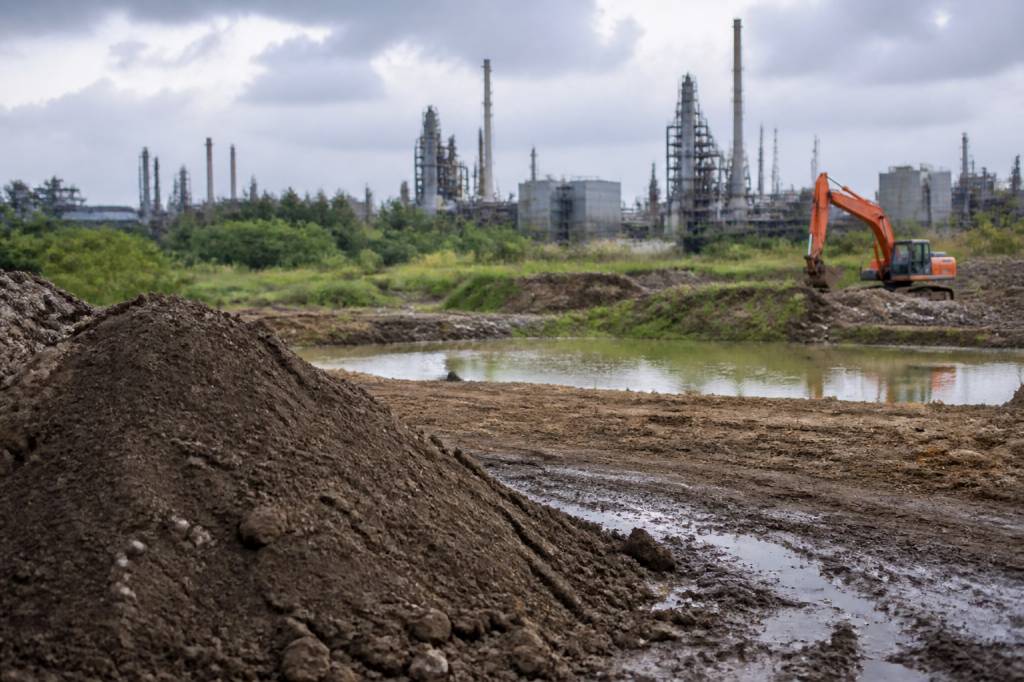
Brownfield redevelopment can turn neglected industrial land into housing, public space, clean energy infrastructure or new employment sites. But where per- and polyfluoroalkyl substances (PFAS) are present, the project requires more than removing visible waste or treating polluted soil. PFAS contamination can be difficult to locate, persistent in the environment and highly mobile in groundwater.
For developers, regulators and local communities, the central question is not simply whether a site is contaminated. It is whether the contamination has been properly characterised, whether exposure pathways are controlled and whether the chosen remediation strategy will remain effective over time.
PFAS management on brownfield sites is therefore a technical, regulatory and public health challenge. It begins with a robust investigation and continues through design, construction, monitoring and long-term stewardship.
Why brownfield sites may contain PFAS
PFAS are a large family of manufactured chemicals valued for their resistance to heat, water, oil and chemical degradation. These same properties made them useful in products and industrial processes for decades. They have been used in firefighting foams, metal plating, textiles, paper and food packaging, stain-resistant treatments, non-stick products and some industrial manufacturing applications.
On a brownfield site, contamination may have originated from one or several historical activities. Airports, military facilities, fire-training grounds and industrial sites are particularly important potential sources. A spill may have occurred many years ago, while routine use of aqueous film-forming foam (AFFF) could have released PFAS repeatedly into soil, drainage systems and groundwater.
Landfill areas and waste storage zones can also be relevant. PFAS-containing products disposed of on site may break down or leach over time. Contaminated wastewater, sludge, imported fill and construction materials can create additional pathways.
The original source is not always obvious. A site may have changed ownership and function several times, with incomplete records and limited information about historic chemical use. That is why a desk study alone is rarely sufficient when PFAS are suspected.
PFAS behave differently from many conventional contaminants
Brownfield investigations often focus on contaminants such as petroleum hydrocarbons, volatile organic compounds, solvents, metals or asbestos. PFAS introduce several additional complications.
- Persistence: many PFAS do not readily break down under normal environmental conditions. They are often described as “forever chemicals” because of their exceptional chemical stability.
- Mobility: shorter-chain PFAS are generally more soluble and can move readily with groundwater. Longer-chain compounds may bind more strongly to soil and sediment, although they can still migrate under changing conditions.
- Mixtures: contamination usually consists of multiple PFAS rather than a single compound. The substances may have different transport and treatment behaviours.
- Low concentrations: regulatory and health-based values can be extremely low. Sampling, laboratory methods and quality control must therefore be designed to avoid false results.
- Transformation: some precursor chemicals can break down into persistent perfluoroalkyl acids. A sample showing limited concentrations of certain PFAS may not represent the full future contamination potential.
These characteristics mean that a site can look clean while still presenting a risk below ground. PFAS may be present in groundwater, soil porewater, drainage infrastructure or sediments without producing an obvious odour, colour or visible stain.
Start with a clear conceptual site model
A conceptual site model, or CSM, is the foundation of PFAS risk management. It describes the relationship between the source, the environmental pathways and the people or ecosystems that could be exposed.
For a brownfield project, the CSM should consider historic land use, current conditions and the proposed future use. A former fire-training area, for example, may have a different contamination pattern from a textile factory or a landfill. The investigation should identify potential source zones and examine how PFAS could move through soil, groundwater, surface water, air and site infrastructure.
Important questions include:
- Where were firefighting foams, industrial chemicals or treated materials stored and used?
- Are there drainage channels, lagoons, soakaways, oil-water separators or underground tanks?
- Does groundwater flow towards homes, rivers, wetlands or private water supplies?
- Could excavation or dewatering mobilise contaminants that are currently stable?
- Will the redevelopment introduce homes, schools, allotments, public parks or other sensitive receptors?
- Could contaminated soil or imported fill be transported beyond the site?
The CSM should be updated as new data become available. This is not paperwork for its own sake. If the model is wrong, even an advanced treatment system may be installed in the wrong location or designed for the wrong contaminant profile.
Investigating PFAS in soil and water
PFAS sampling requires careful planning because contamination can be unevenly distributed. A few isolated samples may miss a source area or underestimate concentrations along a groundwater plume.
Investigations commonly include soil borings, groundwater monitoring wells, surface-water samples, sediment samples and, where appropriate, porewater or leachate testing. Sampling locations should reflect historic activities and the direction of groundwater movement rather than being arranged only on a simple grid.
Field teams must also control potential sources of cross-contamination. Some waterproof clothing, sampling equipment, tubing, containers, polishes and personal-care products may contain PFAS or interfere with analysis. Field protocols should specify appropriate materials, equipment blanks, trip blanks, duplicate samples and decontamination procedures.
Laboratory analysis is equally important. Target analyte lists differ between jurisdictions and laboratories, and no single analytical method captures every PFAS compound or precursor. The investigation should therefore document the compounds analysed, detection limits, reporting limits and quality assurance procedures.
In the UK, project teams should engage early with the relevant environmental regulator and follow current technical guidance. Regulatory expectations can evolve as scientific evidence develops, particularly around drinking water, soil and groundwater risk assessment. A historic “pass” against an old screening value does not automatically mean that a site is suitable for every future use.
Assessing risk to people and ecosystems
PFAS risk depends on concentration, exposure frequency, exposure duration and the way people use the site. A commercial redevelopment with sealed floors and restricted groundwater access presents different exposure pathways from a residential development with gardens and private boreholes.
Potential human exposure routes include:
- Drinking contaminated groundwater or surface water.
- Consuming food grown in contaminated soil or irrigated with affected water.
- Accidental ingestion or contact with soil and dust.
- Inhaling dust during excavation or construction.
- Using contaminated water in domestic or industrial settings.
PFAS can also affect aquatic environments. Groundwater discharges may carry contamination into streams, ponds, estuaries and wetlands. Some PFAS can accumulate in organisms, and contamination may move through food webs. Even where concentrations are below an immediate human health threshold, ecological receptors may require separate assessment.
Risk assessment should account for future site use, not just current conditions. A capped industrial yard may become a public park several years later. A groundwater plume that is currently stable may also change when foundations, drainage systems or pumping alter subsurface flow.
Choosing a remediation strategy
There is no universal PFAS remedy. The most appropriate approach depends on the chemicals present, soil type, groundwater conditions, source strength, land use, regulatory objectives and available treatment infrastructure.
Common management options include:
- Excavation and off-site disposal: contaminated soil is removed and transported to a suitably authorised facility. This can be effective for discrete source areas but does not destroy PFAS and may transfer the management problem elsewhere.
- Containment and capping: clean cover systems, engineered barriers and restricted land use can reduce contact and infiltration. Long-term inspection and maintenance are essential.
- Groundwater extraction and treatment: contaminated water is pumped to the surface and treated, often using activated carbon, ion exchange or high-pressure membrane systems.
- In situ treatment: amendments or barriers may be used to limit PFAS movement underground. These technologies are developing and require site-specific validation.
- Soil washing: soil is processed to separate contaminated fine particles from cleaner fractions. The concentrated PFAS fraction still requires treatment or disposal.
- Thermal treatment or destruction: high-temperature technologies may destroy PFAS under controlled conditions, but performance must be demonstrated and emissions carefully managed.
Activated carbon is widely used for treating PFAS-affected water, particularly for longer-chain compounds. However, it may be less efficient for some shorter-chain PFAS and requires replacement or regeneration. Ion exchange can offer strong performance across a broader range of compounds, but spent resin must be managed responsibly. Reverse osmosis can produce highly treated water, although it generates a concentrated waste stream and may require significant energy.
The key principle is simple: treatment does not make PFAS disappear unless the technology genuinely destroys them. It may transfer them from water to carbon, resin, membranes or concentrated waste. That transfer must be included in the remediation plan from the beginning.
Managing contaminated soil during construction
Construction can create new exposure pathways if PFAS-contaminated soil is excavated, stockpiled or transported without controls. A site remediation plan should define how soil will be classified, handled, stored, tested and documented.
Practical controls may include covered stockpiles, lined storage areas, wheel-wash facilities, dust suppression, controlled site drainage and dedicated plant. Clean and contaminated materials should be kept separate. Imported soil should also be tested where there is a credible risk that it could introduce PFAS to the site.
Dewatering requires particular attention. Pumping groundwater can draw a plume towards sensitive receptors or spread contamination through poorly controlled discharge. Water should be characterised before disposal, discharge or reuse. Construction discharge permits and regulator approvals may be required, depending on the location and receiving environment.
Waste classification must be based on current legislation and site-specific evidence. A soil management plan should record the origin, destination and treatment status of excavated material. “Out of sight” is not a remediation strategy; it is merely a future liability with better landscaping.
Designing for long-term control
PFAS management rarely ends when the excavators leave. Many brownfield sites require monitoring and institutional controls for years or decades, particularly where contamination remains in groundwater or beneath a cap.
A long-term management plan may include:
- Groundwater and surface-water monitoring at defined intervals.
- Inspection and maintenance of caps, barriers and drainage systems.
- Restrictions on groundwater abstraction or private wells.
- Controls on gardening, excavation and soil disturbance.
- Routine testing of treatment-system influent and effluent.
- Clear records for future owners, contractors and local authorities.
Monitoring should be designed to detect trends, not simply collect data. Falling concentrations may indicate source control, while a sudden increase could signal construction disturbance, seasonal changes or movement of a previously unidentified source.
Digital records and clear site documentation are especially valuable when land changes hands. PFAS contamination can outlast corporate structures, project teams and planning cycles. Future decision-makers need to know what was found, what was treated and what restrictions remain in place.
Communicating with communities
PFAS projects can generate understandable concern. Residents may worry about drinking water, property values, children’s health or the safety of proposed housing. Technical reports alone will not answer those concerns if the language is unclear or the information arrives late.
Effective communication should explain what is known, what remains uncertain and what actions are being taken. It should distinguish between detection and risk: finding PFAS in a sample does not automatically mean that people are being exposed at a harmful level, but it does justify a transparent assessment.
Useful engagement measures include public meetings, plain-language fact sheets, accessible sampling results and a named contact for questions. Independent experts can help explain laboratory findings and treatment performance. Communities are more likely to trust a project when uncertainty is acknowledged rather than hidden behind technical terminology.
What makes a PFAS brownfield project successful?
Successful redevelopment depends on integrating contamination management into the project from the earliest feasibility stage. PFAS should not be treated as a late discovery that is handed to the construction team after designs and budgets are fixed.
The strongest projects typically share several features:
- Early review of historic land use and potential PFAS sources.
- A conceptual site model that evolves with the investigation.
- Sampling plans designed for PFAS-specific risks and low detection limits.
- Early consultation with regulators, water companies and local communities.
- Remediation objectives linked to the intended future land use.
- Clear controls for soil, groundwater, waste and construction drainage.
- Verification testing before occupation or public access.
- A funded, enforceable long-term monitoring and maintenance plan.
Brownfield regeneration can deliver major environmental and social benefits, but PFAS contamination demands discipline. The objective is not simply to make a site look clean. It is to understand the contamination, prevent exposure, control migration and demonstrate that the chosen solution will protect people and the environment over time.
With rigorous investigation, appropriate treatment and honest communication, contaminated land does not have to remain unusable. It can be managed responsibly—but only when PFAS are treated as a long-term environmental challenge rather than a box to tick during planning.