

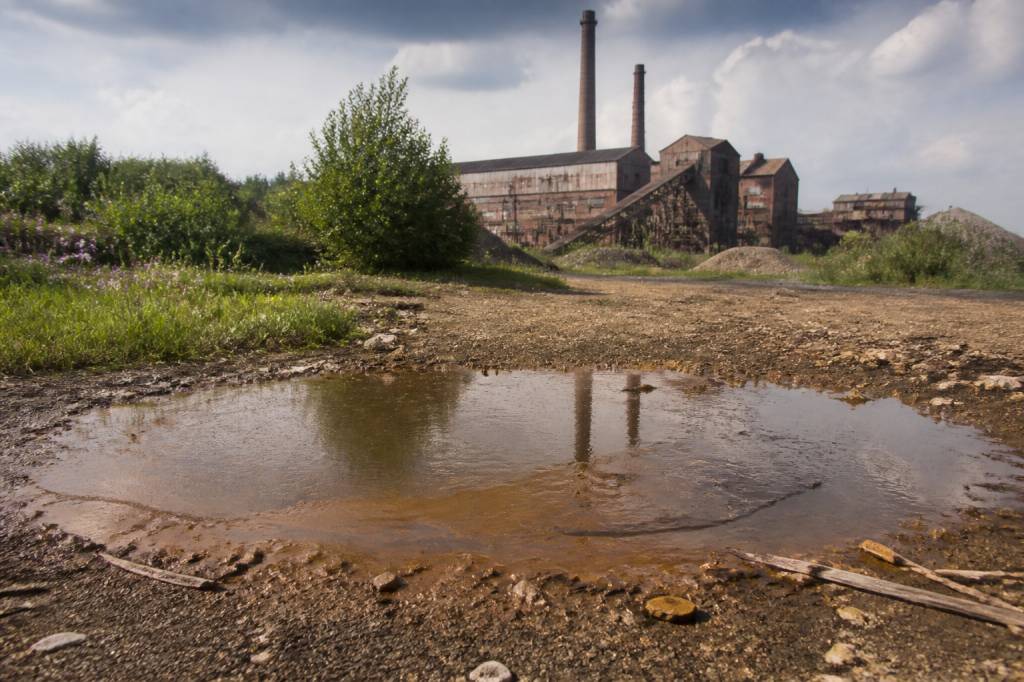
Brownfields are often described as yesterday’s industrial land: former factories, warehouses, petrol stations, airports, military bases, waste facilities and commercial sites that are no longer used as originally intended. But beneath an apparently empty building or an overgrown car park, there may be a more complex legacy—contaminated soil, buried waste, polluted groundwater and chemicals that can persist for decades.
PFAS pollution has added a new layer to this challenge. These highly persistent substances can move from historical industrial sites into soil, rivers and aquifers, potentially affecting drinking water supplies and ecosystems far from the original source. Understanding what a brownfield is, how contamination behaves and why PFAS are difficult to manage is essential for safe redevelopment and effective water protection.
What is a brownfield site?
A brownfield is land that has previously been developed or used for industrial, commercial, transport, defence or waste-related purposes and may be suitable for reuse or redevelopment. The term does not automatically mean that the land is contaminated. It means that past use may have left physical, chemical or regulatory complications that need to be assessed before the site is safely returned to productive use.
Typical brownfield sites include:
- Former manufacturing plants and engineering works
- Petrol stations, fuel depots and vehicle maintenance yards
- Airports, military bases and fire-training areas
- Landfills, waste transfer stations and recycling facilities
- Railway yards, ports and shipping terminals
- Metal plating, textile, paper and chemical processing facilities
- Former mining, quarrying and mineral processing sites
In the UK, brownfield land is frequently discussed in relation to housing and urban regeneration. Reusing land that has already been developed can reduce pressure on undeveloped areas and help limit urban sprawl. However, redevelopment must be based on evidence. Removing an old building or covering the ground with concrete does not remove contamination. It may simply hide it.
Brownfield land and contaminated land are not the same thing
These terms are sometimes used interchangeably, but they describe different issues. Brownfield refers primarily to a site’s previous use and development history. Contaminated land refers to land where substances are present at concentrations that could cause unacceptable harm to people, property, surface water, groundwater or ecosystems.
A brownfield site may be relatively clean after decades of natural recovery and responsible management. Conversely, a former industrial site can contain contamination even when there are no visible signs such as discoloured soil, chemical odours or dead vegetation.
Contamination may include:
- Petroleum hydrocarbons and fuel additives
- Heavy metals such as lead, mercury, cadmium and arsenic
- Solvents and volatile organic compounds
- Polychlorinated biphenyls, or PCBs
- Pesticides and herbicides
- Asbestos-containing materials
- PFAS, including PFOA and PFOS
The risk depends on several factors: the type and concentration of the contaminant, how easily it moves, the geology of the site, the depth of groundwater, and how people or wildlife may come into contact with it. A substance buried deep beneath an impermeable surface may pose a different risk from the same substance in a shallow garden or drinking-water catchment.
How can contamination reach water?
Water is one of the most important pathways connecting brownfield pollution to the wider environment. Rainfall can infiltrate contaminated soil and carry dissolved chemicals downward. This process, known as leaching, may allow pollutants to reach groundwater. Once present in an aquifer, contaminants can migrate with the natural flow of water.
Surface water can also be affected. Runoff from a site may enter drainage systems, streams, ponds or rivers, particularly during heavy rainfall. Flooding, changes to drainage infrastructure and construction work can alter water pathways and expose previously buried contamination.
Groundwater contamination is especially challenging because it is often invisible. A site may appear safe while a plume of polluted water slowly moves underground. The direction and speed of movement depend on local geology, groundwater gradients and the chemical properties of the contaminant.
Some pollutants bind strongly to soil and remain close to their source. Others dissolve readily and travel considerable distances. PFAS are particularly concerning because many of them are mobile, persistent and difficult to remove once they enter the water cycle.
Why PFAS are a concern on brownfield sites
Per- and polyfluoroalkyl substances, known collectively as PFAS, are a large family of thousands of synthetic chemicals. They have been used since the mid-twentieth century in products designed to resist water, oil, grease, heat and stains.
Historically, PFAS may have been associated with:
- Aqueous film-forming foams used in firefighting
- Metal plating and surface treatment
- Industrial coatings and manufacturing processes
- Textile, leather and paper treatments
- Non-stick and stain-resistant products
- Waste handling and disposal activities
Fire-training areas are a well-known source of PFAS contamination. For decades, firefighting foams containing PFAS were used to extinguish fuel fires at airports, military facilities, refineries and industrial sites. Repeated training exercises could release foam into soil and drainage systems, creating long-term contamination beneath the site.
PFAS are often called “forever chemicals” because many do not break down easily in the environment. The phrase is useful as a warning, although it covers a chemically diverse group. Some PFAS are more persistent than others, and environmental behaviour varies between compounds. Even so, the central problem remains: conventional natural degradation may be too slow to prevent long-term movement through soil and water.
PFAS and drinking-water quality
When PFAS reach groundwater, they may threaten private wells, public water supplies and wetlands connected to the aquifer. Water treatment can reduce concentrations, but treatment performance depends on the specific PFAS, the technology used and the condition of the treatment system.
Common treatment approaches include granular activated carbon, ion exchange and high-pressure membranes such as reverse osmosis. These technologies can be effective, but they do not make contamination disappear. Spent carbon, concentrated waste streams and membrane residues must still be managed safely.
PFAS monitoring also presents a technical challenge. A test for a small group of well-known compounds may not capture the full range of PFAS present at a site. Some replacement chemicals and precursor substances can transform into more persistent PFAS in the environment. This means that a single “not detected” result should not automatically be interpreted as proof that a site is free from PFAS.
In the UK, drinking-water standards and regulatory approaches continue to develop as scientific understanding improves. Water companies, regulators and site owners must consider both individual PFAS and broader groups of substances when assessing risk. The Drinking Water Inspectorate and the Environment Agency provide important regulatory and technical guidance, while international agencies such as the US Environmental Protection Agency and the European Environment Agency publish additional research and recommendations.
What are the health risks?
Human exposure to PFAS can occur through contaminated drinking water, food, indoor dust and consumer products. For communities near a polluted brownfield site, drinking water may be the most relevant pathway, particularly where private wells are used.
Research has associated exposure to certain PFAS with effects including changes in cholesterol levels, reduced immune response to some vaccines, effects on liver function and developmental impacts. The strength of evidence varies between compounds and outcomes. Risk also depends on dose, duration of exposure, age, existing health conditions and exposure to other chemicals.
It is important to avoid overstating what any single study proves. PFAS science is evolving, and regulatory assessments are based on a body of evidence rather than one isolated result. The practical message is straightforward: preventing contamination and limiting exposure are preferable to relying on treatment after pollution has spread.
How are brownfield sites investigated?
A responsible investigation normally begins with a desk study. Historical maps, planning records, aerial photographs, industrial permits, waste records and information about former site activities can reveal potential sources of contamination. Local knowledge can also be valuable. A retired employee or nearby resident may remember an unrecorded storage area that is absent from official plans.
Investigators then develop a conceptual site model. This maps the relationship between:
- The source of contamination
- The pathway through soil, air, surface water or groundwater
- The receptor, such as a resident, worker, river or drinking-water abstraction point
This source-pathway-receptor approach helps determine which risks require attention. Soil samples may be collected from different depths, while boreholes and monitoring wells can be used to assess groundwater. Surface-water and sediment samples may be needed where drainage connects the site to a river or wetland.
PFAS investigations require particular care. Sampling equipment, protective clothing, tubing and packaging can contain fluorinated materials or introduce background contamination. Laboratories must use appropriate analytical methods, quality controls and reporting limits. A poorly designed sampling programme can produce misleading results—either missing a contamination plume or suggesting a problem that was introduced during sampling.
Managing PFAS on a brownfield site
There is no single remedy that works for every contaminated site. The appropriate response depends on the PFAS profile, soil type, groundwater conditions, land use and proximity to sensitive receptors.
Potential management options include:
- Removing and disposing of highly contaminated soil
- Installing barriers or caps to reduce infiltration and direct contact
- Using pump-and-treat systems to capture contaminated groundwater
- Treating extracted water with activated carbon, ion exchange or reverse osmosis
- Improving drainage controls and preventing contaminated runoff
- Applying monitored natural attenuation where evidence supports it
- Restricting groundwater use through planning controls or legal notices
- Maintaining long-term monitoring and inspection programmes
Excavation can provide a rapid reduction in risk, but it may transfer the problem elsewhere. Soil containing PFAS must be transported and treated or disposed of at an appropriately authorised facility. Capping can be useful, but it requires long-term maintenance and may not prevent groundwater contamination if a plume already exists beneath the site.
Emerging technologies such as electrochemical treatment, advanced oxidation, foam fractionation and thermal destruction are being studied for PFAS remediation. Some approaches show promise in specific conditions, but performance, cost, energy use and management of secondary waste must be evaluated carefully. A technology described as “destructive” should be assessed not only for PFAS removal, but also for whether it creates harmful by-products.
Redeveloping brownfields without repeating the past
Redevelopment can be part of the solution when contamination is properly understood and controlled. New housing, parks, commercial buildings and renewable-energy projects can bring social and economic benefits while making previously neglected land useful again.
However, the intended future use matters. A site suitable for an industrial warehouse may not be suitable for allotments, a school or residential gardens without additional remediation. Children’s play areas and community gardens create different exposure scenarios from sealed car parks or commercial premises.
Developers, regulators and local communities should ask practical questions early:
- What activities took place on the site and for how long?
- Were firefighting foams, fuels, solvents or industrial coatings used?
- Where does groundwater flow, and are private wells or drinking-water sources nearby?
- Could construction mobilise buried contamination?
- How will soil, water and waste be managed during redevelopment?
- Who will pay for monitoring and maintenance after construction?
Transparency is essential. Clear communication about what has been tested, what remains uncertain and how risks are being managed helps communities make informed decisions. It also reduces the likelihood of discovering a serious problem only after people have moved into new homes or a water supply has been affected.
What can communities do?
Residents near a former industrial or firefighting site can contact their local authority, environmental regulator or water company to ask whether contamination assessments are available. Private well owners should seek advice before arranging testing, because PFAS analysis is specialised and not every laboratory offers reliable testing for the relevant compounds.
People should avoid assuming that boiling water will remove PFAS. Boiling may reduce pathogens, but it does not reliably destroy these persistent chemicals and can increase their concentration as water evaporates. Where contamination is confirmed or suspected, advice should come from the responsible health, environmental or water authority.
Brownfield redevelopment is neither inherently dangerous nor automatically safe. Its success depends on evidence, appropriate controls and long-term accountability. PFAS pollution makes that responsibility more urgent: once these chemicals enter groundwater, the consequences can extend well beyond the original site—and remain there long after the factory gates have closed.