

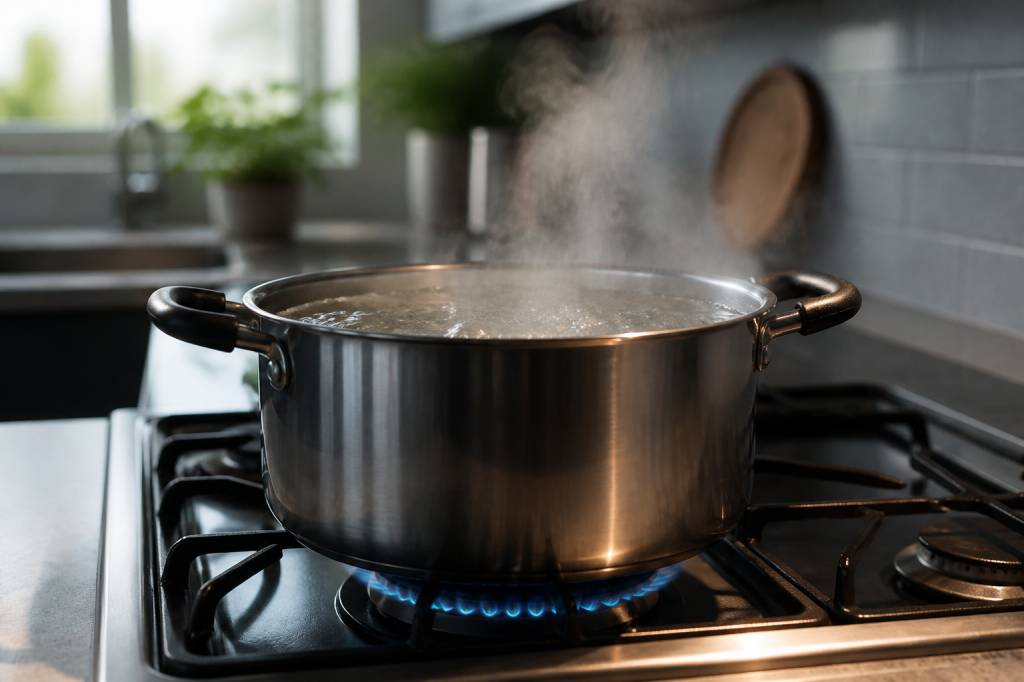
When tap water looks questionable, boiling can feel like the simplest fix. It’s fast, familiar, and—importantly—it kills many microbes that can make you sick. But here’s the catch: boiling is not a universal solution. It works well for some contamination risks and does absolutely nothing for others. If your concern is bacteria, viruses, or parasites after a boil-water advisory, heat can help. If your concern is PFAS, metals, nitrates, or many chemical pollutants, boiling may not just be ineffective — it can actually concentrate the contaminant as water evaporates.
That distinction matters. In the UK and beyond, people often assume “boiled equals safe,” but water safety depends on what is in the water. The right response for contaminated drinking water is not always the same, and choosing between boiling and filtration can save you from making a well-intentioned mistake.
What boiling water actually does
Boiling water is a disinfection method. At a rolling boil, high temperatures inactivate many disease-causing microorganisms, including common bacteria, viruses, and parasites. That’s why public health authorities often recommend boiling during a short-term microbiological contamination event, such as after flooding, a water main break, or a temporary issue in the treatment network.
Used correctly, boiling is effective for pathogens. It is not a treatment for chemical contamination. That is a key point, especially when communities are dealing with industrial pollution, agricultural runoff, or persistent chemicals such as PFAS.
Boiling is helpful when the problem is biological. It is not helpful when the problem is chemical. Simple, but easy to misunderstand.
When boiling water is the right choice
Boiling is generally appropriate when public health authorities issue a boil-water notice due to possible microbial contamination. Typical examples include:
In these situations, the risk is often pathogens. The goal is to make the water microbiologically safe until the system is restored and tested. If official guidance says to boil, follow it exactly.
A practical rule: boiling is a short-term safeguard for germs, not a long-term solution for poor water quality.
When boiling is not enough
Many contaminants do not disappear when water is heated. Some remain unchanged, while others become more concentrated as water volume decreases. That includes a number of chemicals of concern to environmental health professionals.
Boiling does not remove:
PFAS are especially important here. These “forever chemicals” are highly persistent and do not break down easily in the environment or in household boiling conditions. If your water contains PFAS, boiling will not protect you. In fact, if some water evaporates, the remaining PFAS concentration can rise slightly because the contaminant stays behind while the water leaves as steam.
That’s a problem because PFAS exposure is linked in scientific research to a range of potential health concerns, including impacts on cholesterol, immune response, thyroid function, and certain cancers. The exact risk depends on the specific compound, the concentration, and the duration of exposure, but the key point is simple: boiling is not a PFAS removal method.
Why boiling can give a false sense of security
Boiling feels reassuring. You see steam, you wait the recommended time, and the water seems “clean.” The trouble is that safety is not always visible. Chemical contamination is invisible, tasteless, and odourless in many cases. A glass of boiled water can look perfect and still contain PFAS or lead.
This false sense of security is one reason why clear public guidance matters. If a local advisory is about germs, boiling is useful. If the issue is chemical contamination, boiling can create a dangerous gap between perception and reality.
Think of it this way: boiling is a very good vaccine against some microbes, but it is not a filter. It does not physically remove dissolved contaminants. If the pollutant is still there, the boiling pot is not a magic trick.
How to know what kind of problem you have
The first step is to identify the source of the advisory or concern. Is the water utility warning about bacteria after flooding? Or are you dealing with chronic contamination identified in local testing? The answer changes the solution.
Look for these clues:
If you’re unsure, check the wording carefully. Public agencies are usually specific about whether the concern is microbiological or chemical. If the message is vague, call the supplier or local authority and ask directly. It’s a boring phone call, yes, but much cheaper than guessing.
When filtration is the better option
Filtration is the better choice when the issue is chemical contamination and you need an actual removal method. But not all filters are equal. A standard jug filter may improve taste or reduce chlorine, yet do little for PFAS or heavy metals. The filter needs to be certified for the contaminant you are trying to remove.
For PFAS, treatment technologies that are often effective include:
Each has trade-offs. Reverse osmosis can remove a broad range of dissolved contaminants, but it wastes some water and may require professional installation. Activated carbon can be effective, but performance depends on design, contact time, and maintenance. Filters that are not changed on schedule can become less effective over time.
If your concern is lead, select a filter certified for lead reduction. If the issue is PFAS, make sure the product specifically claims PFAS reduction and has third-party certification or independent testing to support that claim. General-purpose filters are not enough.
What to do if you are on a boil-water notice
When authorities issue a boil-water advisory, follow the instructions carefully. A typical approach is to bring water to a rolling boil for at least one minute. In higher elevations, longer boiling times may be recommended. After boiling, let the water cool naturally in a clean, covered container.
Use boiled water for:
It is also wise to think beyond the drinking glass. Ice made from unboiled water can contaminate a perfectly safe drink, and brushing teeth with unsafe water is an easy oversight. The whole kitchen matters, not just the kettle.
If you’re using bottled water during an advisory, choose reputable sealed sources and keep them stored safely. If a notice lasts longer than expected, ask whether you should also be concerned about chemical contaminants or whether the issue is strictly microbial.
What to do if you suspect PFAS in your water
If PFAS is the concern, boiling is not the answer. Start with testing if you have a private well or if local data suggest elevated levels in your area. For public supplies, review water quality reports and search for PFAS monitoring results from your utility or regulator.
Then consider treatment that is designed for PFAS removal. A few practical steps can make a real difference:
For many households, a point-of-use filter is the most cost-effective option. You do not always need to treat every drop used for showers or laundry if the main exposure route is ingestion. That said, the best setup depends on the specific contamination profile and household needs.
A quick comparison: boiling vs filtering
Boiling and filtering solve different problems. Boiling is a disinfection method for microbes. Filtration is a removal method for many chemicals and particles. If you match the method to the contaminant, you get a safer result.
In some cases, you may need both. For example, if water is microbiologically unsafe and also contains chemical contamination, boiling alone is insufficient. A certified filter may address the chemical problem, but you may still need to disinfect water if the immediate issue is microbial. That’s why identifying the contaminant matters so much.
Common mistakes people make with unsafe water
Water safety errors usually come from good intentions. People want to fix the problem quickly and rely on familiar habits. The trouble is that the wrong fix can be worse than doing nothing.
Watch out for these mistakes:
Also, do not forget pets. If there is a boil-water notice or chemical contamination issue, they are drinking the same supply you are. Safe water should be safe for everyone in the household.
How households can stay prepared
A small amount of planning goes a long way. Keep a reliable water filter in mind before an issue arises, not after. Know where to find your local water supplier’s alerts. If you use well water, test it regularly for the contaminants most relevant to your area.
Preparation can include:
The best strategy is not panic. It is matching the solution to the risk, and doing it consistently.
Boiling is useful, but only when the problem is microbial. If the issue is PFAS or another chemical contaminant, filtering is the safer path. The challenge for households is not just responding quickly, but responding correctly. And when it comes to drinking water, “correctly” is doing a lot of work.