


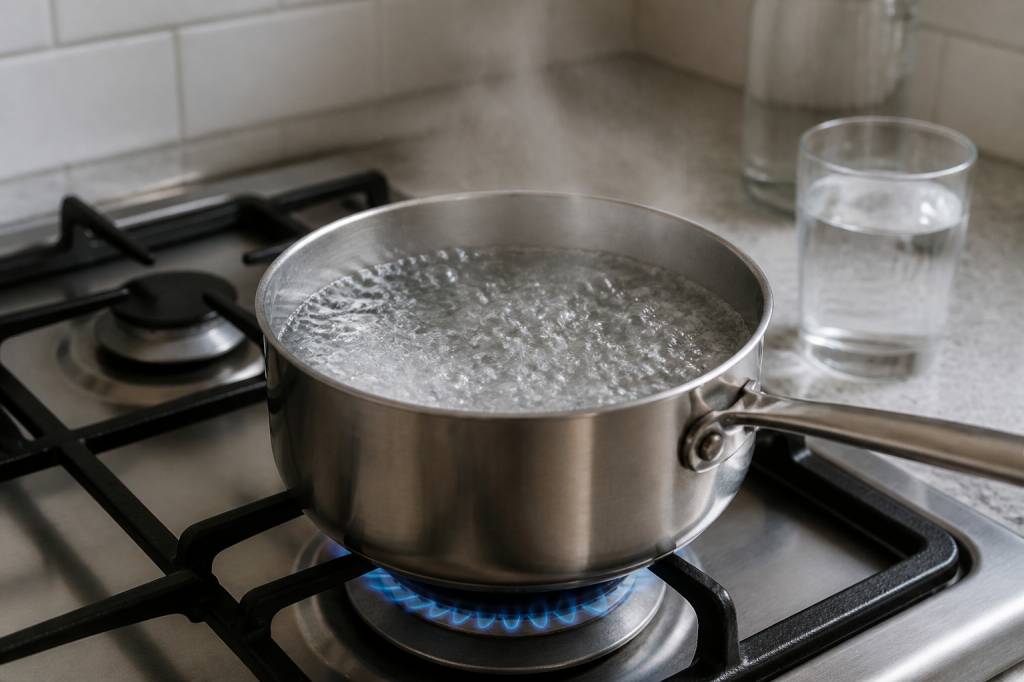
A boil water alert can feel alarming, especially when it arrives with little notice and a lot of uncertainty. Can you still drink the tap water? Is it safe to brush your teeth, cook pasta, or make baby formula? And what if you are already worried about PFAS in your water supply—does boiling help, or does it make things worse?
The short answer is that a boil water alert is about microbial contamination risk, not PFAS removal. That distinction matters. Boiling can kill bacteria, viruses, and parasites, but it does not remove PFAS. In some cases, it may even slightly concentrate them because water evaporates while the chemicals remain behind.
Below, we break down what a boil water alert means, why it is issued, how it relates to PFAS contamination, and what practical steps you can take to protect your household.
What a boil water alert actually means
A boil water alert is a public health notice issued when a water supplier or local authority suspects that drinking water may be contaminated with harmful microorganisms. The warning is usually triggered after events such as a water main break, loss of pressure in the distribution system, flooding, heavy rainfall, treatment plant failures, or routine testing that indicates contamination.
The concern is straightforward: if the water system has been compromised, pathogens can enter the supply and make people sick. Boiling water to a rolling boil for at least one minute is a widely recommended way to inactivate many disease-causing organisms.
That said, a boil water alert does not mean the entire water system is unsafe in the same way. It usually means there is a temporary increased risk in a specific area or network. The alert is a precaution, not a diagnosis. Think of it as public health saying, “We’re not taking chances.”
What boiling water can and cannot do
Boiling is effective against many biological contaminants. It can kill:
But boiling does not remove chemical contaminants. In fact, it may worsen the concentration of some chemicals as water volume decreases. This includes PFAS, which are designed to resist heat, water, and oil. These chemicals do not evaporate with the steam in any meaningful way, so they remain in the pot.
That is why a boil water alert should never be mistaken for a PFAS safety measure. If PFAS are present in the supply, boiling is not a solution. It is a separate issue entirely.
PFAS: why they are a different problem
PFAS, or per- and polyfluoroalkyl substances, are a large group of synthetic chemicals used in products ranging from non-stick cookware and food packaging to firefighting foams and industrial coatings. They are often called “forever chemicals” because they do not break down easily in the environment or the human body.
Unlike microbes, PFAS are not alive. You cannot kill them by heating water. They require different treatment methods, typically activated carbon, ion exchange, reverse osmosis, or a combination of advanced filtration technologies.
This is an important point because the public often assumes “boil it” is a universal answer to unsafe water. For microbial contamination, it can be an effective short-term measure. For PFAS, it is not just ineffective; it may give a false sense of security.
What happens if you boil water that contains PFAS?
Boiling water with PFAS does not destroy the chemicals. Instead, the water can evaporate while the PFAS remain, which may slightly increase their concentration. The amount of increase depends on how long the water is boiled and how much volume is lost, but the basic principle is the same: PFAS stay in the pot.
That means boiling water that is contaminated with PFAS is not recommended as a way to make it safer. If your water system is under a boil water alert and you also know PFAS are present or suspected, you should treat the two issues separately:
It sounds simple, but in real life it can be confusing. Water alerts rarely come with a chemistry lesson attached.
How to read a boil water alert without missing the fine print
Not all water advisories are the same. A boil water alert is different from a “do not drink” notice, and both are different from a PFAS advisory or long-term water quality notice. The wording matters.
A boil water alert usually tells you:
Read the notice carefully. If the alert is only about microbial contamination, boiling is typically the recommended response. If it also mentions chemical contamination, flooding, industrial runoff, or long-term water quality concerns, then the situation may be more complex.
And if PFAS have already been detected in your area, do not assume the boil notice addresses them. It usually does not.
Who is most vulnerable during a boil water alert
Everyone should take boil water alerts seriously, but some groups face greater risks from contaminated water:
For these groups, even short-term exposure to pathogens can have serious consequences. At the same time, PFAS exposure is also a concern because these chemicals can accumulate over time and are associated in the scientific literature with a range of health effects, including impacts on cholesterol, immune function, and certain cancers.
That combination makes clear communication essential. A household may need to protect itself from both microbial contamination and PFAS exposure at the same time, using different tools for each.
What you should do during a boil water alert
If local authorities issue a boil water alert, the safest approach is to follow the guidance exactly. Common recommendations include:
Some alerts also advise discarding ice made during the advisory period and thoroughly cleaning appliances that hold water, such as coffee makers and refrigerators with dispensers.
If you are unsure whether a specific use is safe, check the official notice. When in doubt, the rule of thumb is simple: if the water touches your mouth, it should be treated as potentially unsafe until the alert is lifted.
What you should not do
There are a few common mistakes people make during a boil water alert:
Clear water is not necessarily safe water. Microbial contamination is invisible, and PFAS are not detectable by sight, smell, or taste. If you can smell something unusual, that is a warning sign. If you cannot smell anything at all, that tells you very little.
Where PFAS filtration fits in
If PFAS are a concern in your area, a boil water alert is not the time to start improvising. You need a treatment method designed for chemical removal. The most commonly recommended options for PFAS reduction at the point of use are:
Not every filter is effective against PFAS. Standard pitcher filters and basic carbon filters may reduce some contaminants, but they do not automatically remove PFAS. Always check certification and performance data.
If you are dealing with both a boil water alert and PFAS contamination, it may help to think in layers. Boiling addresses microbes. Certified filtration addresses PFAS. Bottled water may be a temporary backup if you cannot confirm that your home treatment system is doing the job.
How public communication can create confusion
One reason boil water alerts cause anxiety is that water advisories are often communicated in a highly compressed format. A text message or short public notice might tell you to boil water, but it may not explain whether the issue is bacteria, turbidity, a main break, or something more serious.
That can leave residents making guesses. Is the alert about a short-lived infrastructure issue, or does it reflect broader contamination problems? Is this just a temporary microbial risk, or should you be thinking about PFAS, lead, nitrates, or another pollutant?
This is where transparency matters. People can make smarter decisions when water utilities provide clear information about the type of contamination, the likely duration of the risk, and the specific steps households should take. In environmental health, uncertainty is often the problem behind the problem.
How to prepare before the next alert
Because boil water alerts can happen unexpectedly, it helps to prepare in advance. A little planning can reduce stress when a notice arrives.
Useful preparations include:
If PFAS contamination is already documented in your area, consider a longer-term strategy rather than relying on emergency advisories. A boil water alert is a warning signal, not a water treatment plan.
The bigger picture: why this matters beyond one alert
Boil water alerts are often temporary, but they highlight a larger question: how resilient is our water infrastructure, and how well are we protecting drinking water from both biological and chemical threats?
PFAS contamination has shown that a water system can appear operational while still delivering water with long-term chemical risks. Meanwhile, boil water alerts remind us that infrastructure failures and extreme weather can quickly introduce microbial hazards. The two problems are different, but they overlap in one important way: both expose the limits of assuming tap water is always safe without close monitoring and effective treatment.
For households, the practical takeaway is clear. A boil water alert means you should act immediately to reduce microbial risk. It does not mean PFAS are gone. If PFAS contamination is part of your local water story, you need a separate response based on filtration, testing, and reliable public information.
Water safety is not one switch you flip once and forget. It is a system of checks, treatments, and timely communication. And when that system falters, the difference between bacteria and forever chemicals becomes more than a technical detail—it becomes the key to making the right decision for your health.