


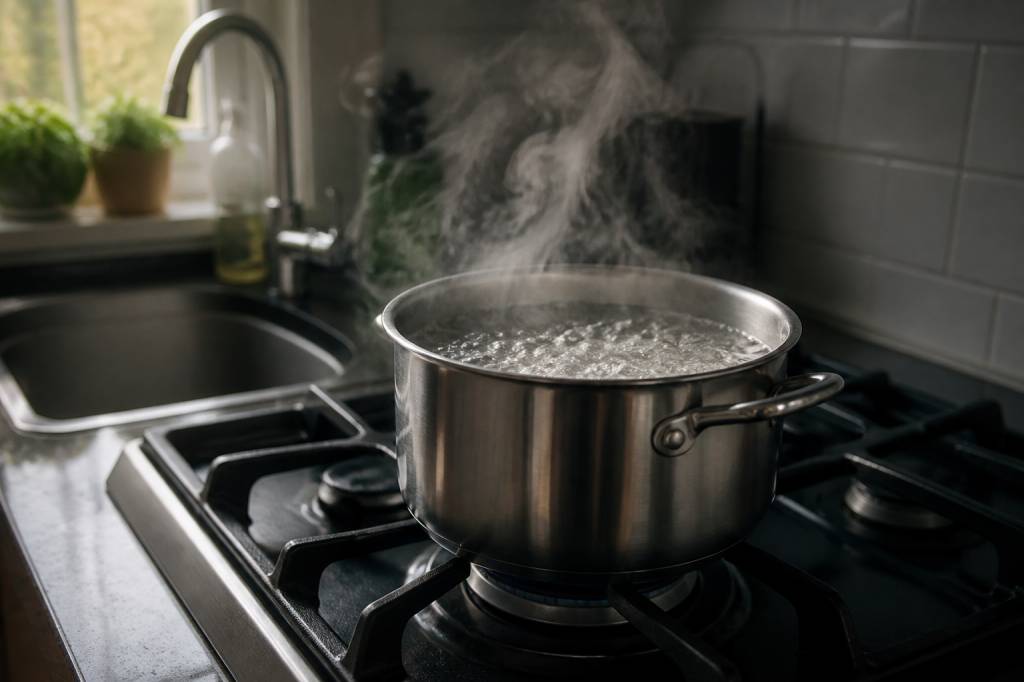
A boil water notice can be unsettling. One minute you’re filling a kettle for tea, the next you’re being told to boil your tap water before drinking it, brushing your teeth, or making formula. The message is simple, but the implications can be more complex than many people realise. Does boiling make water “safe”? What does the notice actually mean? And where do contaminants like PFAS fit into the picture?
For households trying to navigate water advisories, the most important point is this: a boil notice is usually issued because there is a short-term microbiological risk, not because boiling solves every water problem. In fact, while boiling is an effective emergency measure for many germs, it does not remove PFAS. In some cases, it can even slightly increase their concentration by reducing water volume. That distinction matters.
What a boil water notice is really telling you
A boil water notice is a public health alert issued when the water supply may be contaminated with disease-causing microorganisms. These can include bacteria, viruses, and parasites that may enter the system after heavy rainfall, flooding, pipe damage, treatment failures, or pressure loss in the network.
Water utilities issue the notice as a precaution when they cannot guarantee that the water delivered to homes is free from harmful pathogens. The goal is to reduce the risk of illness while the issue is investigated and repaired.
In practical terms, the notice usually means you should boil tap water for at least one minute, then let it cool before using it for:
- Drinking
- Preparing food
- Washing fruits and vegetables
- Making ice
- Brushing teeth
- Preparing infant formula, unless alternative instructions are provided by the local authority
Boiling water is one of the oldest public health interventions for a reason: it works well against many biological contaminants. But it is not a universal treatment method. That’s where things get more nuanced.
What boiling does and does not remove
Boiling kills most bacteria, viruses, and protozoa when it reaches a rolling boil for the recommended time. That makes it an effective emergency response for microbial contamination.
However, boiling does not remove chemical contaminants. That includes:
- PFAS
- Nitrates
- Heavy metals such as lead
- Pesticides
- Many industrial solvents
Why not? Because boiling is a thermal disinfection method, not a filtration or chemical separation process. It destroys some organisms, but it does not filter out dissolved chemicals. If anything, as water evaporates, certain chemicals can become more concentrated in the remaining water.
This is where confusion often starts. A boil notice sounds like an all-purpose safety alert, but it is usually issued for a very specific reason. If the concern is microbial contamination, boiling helps. If the concern is PFAS, boiling is not the answer.
Why PFAS are different from germs
PFAS, or per- and polyfluoroalkyl substances, are a large group of synthetic chemicals used in products such as non-stick coatings, stain-resistant textiles, food packaging, firefighting foams, and some industrial applications. They are often called “forever chemicals” because many of them persist in the environment for years, sometimes decades.
Unlike bacteria or viruses, PFAS are not living organisms. You cannot kill them with heat. You need a treatment method that physically removes them from water, such as activated carbon, ion exchange, or reverse osmosis. That is the key point many people miss when a boil notice is issued.
PFAS contamination is a long-term exposure issue, not a short-term outbreak issue. The health concern lies in repeated ingestion over time, which is why drinking water standards and filtration technology are so important. A boil notice may protect you from microbes today, while PFAS remediation addresses a different threat that may have been building quietly for years.
Can boiling PFAS-contaminated water make things worse?
In some situations, yes, slightly. Boiling water can reduce its volume through evaporation, which may increase the concentration of dissolved PFAS in the remaining water. That does not mean the level rises dramatically every time you put the kettle on, but it does mean boiling should never be viewed as a PFAS treatment method.
There is another subtle issue. If water containing PFAS is boiled and then used for cooking, the chemicals can still be present in the final meal or drink. For example, soup, pasta, rice, and tea made with contaminated tap water may all contribute to exposure. Boiling won’t neutralise the chemicals. It simply heats them.
So if your area has both a boil notice and known PFAS concerns, it is worth asking a very direct question: is boiling the water addressing the right problem? If the answer is “microbes, yes; PFAS, no,” then your home water strategy needs to reflect both risks separately.
How to respond during a boil water notice
When a boil notice is issued, the advice from local authorities should always come first. But there are a few practical steps that can help households manage the situation safely.
- Boil water vigorously for at least one minute before drinking or food preparation, unless local guidance says otherwise
- Use boiled or bottled water for brushing teeth and making ice
- Keep infants, older adults, and immunocompromised people on the safest available water source
- Follow instructions for washing dishes, especially if you are handwashing rather than using a dishwasher with a sanitising cycle
- Pay attention to pet water, since animals can also be affected by contaminated supplies
It also helps to distinguish between immediate precaution and longer-term planning. A boil notice is temporary. PFAS contamination is often not. If your area has recurring water advisories or a known industrial contamination history, that should trigger a broader review of your home water protection measures.
Why a boil notice should prompt questions about the broader water system
A boil notice often exposes a fragile point in the water infrastructure. If a pipe breaks, if treatment is interrupted, or if heavy rainfall overwhelms the system, the public is asked to take action immediately. That can feel reassuring in one sense: the warning exists because the system is monitored. But it can also raise a more uncomfortable question: what else is in the water that doesn’t trigger such a visible alert?
PFAS contamination is a good example. Unlike microbial contamination, it usually does not cause an obvious taste, smell, or colour change. You won’t see a boil notice for PFAS alone. In many cases, the water looks perfectly normal while containing measurable levels of persistent chemicals. That makes routine testing and transparent reporting essential.
For communities living near airports, military bases, landfills, wastewater discharge points, or industrial sites, PFAS exposure risk may be elevated. In those areas, a boil notice may deal with a short-term safety issue, but it should also prompt residents to ask whether they need a permanent filtration solution.
The best home treatment options for PFAS
If PFAS are a concern, home filtration can make a meaningful difference. Not all filters are equal, though, and marketing claims can be optimistic at best. The most reliable technologies for PFAS removal are:
- Activated carbon – Effective for many PFAS, especially longer-chain compounds, though performance depends on filter design, contact time, and replacement frequency
- Reverse osmosis – Highly effective at removing a broad range of PFAS and other dissolved contaminants
- Ion exchange – Used in some advanced systems and capable of removing PFAS under the right conditions
If you are choosing a system, look for independent certification rather than vague promises. A filter that says “improves taste” is not the same as one tested for PFAS reduction. The difference matters when your health is on the line.
It is also worth remembering that whole-house systems and point-of-use systems serve different purposes. A kitchen filter might be sufficient for drinking and cooking water, while a more comprehensive solution may be needed in areas with broader contamination concerns.
How PFAS exposure can add up over time
PFAS are not typically about a single dramatic exposure. The concern is cumulative exposure over months and years. These chemicals can build up in the body, and some have been associated in scientific studies with effects on cholesterol, immune response, thyroid function, liver enzymes, and certain cancers. Research is ongoing, and not every PFAS behaves the same way, but the precautionary logic is clear: reduce exposure where you can.
That is why a boil notice, while serious, should not distract from long-term chemical safety. If the water supply has a PFAS history, households should ask whether the current treatment system is designed for the full range of contaminants, not just bacteria after a storm.
One useful way to think about it is this: a boil notice is like putting on a raincoat in a downpour. It helps for the immediate weather. PFAS filtration is more like fixing the roof. Both matter, but they solve different problems.
Questions worth asking your water utility
If your area has a boil notice or a PFAS concern, it is reasonable to ask your water provider for clear, specific information. Useful questions include:
- What caused the boil water notice?
- How long is the advisory expected to last?
- Were microbial contaminants detected, or was the notice issued as a precaution?
- Has the water been tested for PFAS?
- If PFAS were detected, which compounds were found and at what levels?
- What treatment steps are in place to address PFAS contamination?
Clear answers should be part of public water service. Residents should not have to decode technical jargon to find out whether their water is safe. In an ideal system, both microbial and chemical risks are monitored transparently and communicated in plain language.
What households can do now
For most people, the right response is a combination of short-term caution and long-term planning. During a boil notice, follow the advisory carefully. If PFAS contamination is a known issue in your area, do not assume boiling offers protection. Instead, consider a certified filtration system designed for PFAS removal.
It can also help to stay informed about local water testing results, infrastructure upgrades, and regulatory changes. PFAS standards are evolving, and water providers are under increasing pressure to improve detection and treatment. That progress matters, but it does not happen overnight.
In the meantime, being informed is one of the most practical forms of protection. A boil notice is a signal to act now. PFAS contamination is a signal to think beyond the immediate emergency and ask a deeper question: is the water safe not just today, but over the long term?
That is the real takeaway. Boiling water can help protect you from microbial contamination. It does not solve the PFAS problem. And for households trying to reduce exposure to both, knowing the difference is the first step toward making the right choice.