


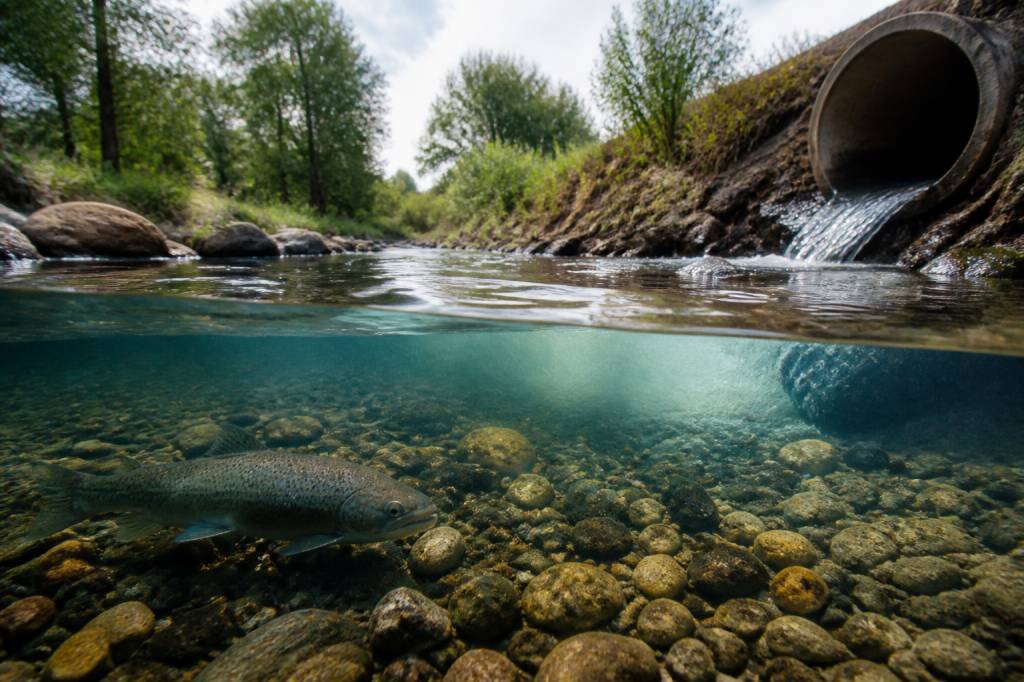
PFAS pollution is often discussed as a human health issue, but the story does not stop at the tap. These “forever chemicals” move through rivers, lakes, wetlands, sediments, and food webs, where they can alter water quality and expose wildlife at every level of the ecosystem. If biodiversity depends on clean water and stable habitats, PFAS contamination is a quiet but serious threat.
What makes PFAS especially concerning is not just their persistence, but their ability to travel. They are used in industrial processes, firefighting foams, stain-resistant treatments, and many consumer products. Once released, they do not break down easily. Instead, they spread, accumulate, and interact with the natural systems that support fish, amphibians, birds, insects, and the larger predators that depend on them. In short: PFAS are not “just” a pollution problem. They are an ecosystem problem.
Why PFAS are different from many other pollutants
Many contaminants degrade over time or remain trapped in one place. PFAS behave differently. Their strong carbon-fluorine bonds make them highly resistant to breakdown, which is why they persist for years, often decades, in the environment. Some PFAS are also highly mobile in water, meaning they can spread far beyond the original contamination source.
This matters for biodiversity because aquatic systems are interconnected. A contaminated stream can feed a river, a river can feed wetlands, and wetlands can support breeding grounds, nursery habitats, and migratory stopovers. Once PFAS enter a watershed, the impact is rarely isolated.
Researchers also know that PFAS do not exist as a single chemical problem. There are thousands of compounds in the PFAS family, each with different properties. Some accumulate strongly in organisms, while others move rapidly through water. That diversity makes regulation and remediation more complex, and it means ecological effects can vary depending on the specific PFAS mix present in a site.
How PFAS pollution changes water quality
When people hear “water quality,” they often think about taste, clarity, or bacterial contamination. PFAS add another layer: chemical quality that may not be visible, smellable, or obvious without laboratory testing. That invisibility is part of the problem. A river can look healthy and still carry PFAS levels high enough to affect aquatic life.
PFAS contamination can influence water quality in several ways:
- It introduces persistent synthetic chemicals that resist natural cleanup processes.
- It can contaminate surface water, groundwater, and sediments at the same time.
- It may travel downstream from industrial sites, airports, landfills, or wastewater treatment plants.
- It can accumulate in sediment, creating a long-term source of exposure for bottom-dwelling organisms.
Wastewater treatment is a particularly important pathway. Traditional treatment systems are not designed to destroy PFAS. In many cases, they move PFAS from one medium to another, concentrating them in sludge or allowing them to pass into effluent water. That means even systems built to protect water quality can unintentionally become redistribution points.
Rainfall and stormwater also matter. When contaminated surfaces are washed into drains, PFAS can move rapidly into streams and estuaries. In regions with heavy industrial history, this can create chronic exposure that persists long after the original source has shut down. The chemistry may be invisible, but the ecological footprint is not.
What happens to wildlife exposed to PFAS
Wildlife exposure can occur through water, sediment, or food. Fish absorb PFAS through their gills and diet. Amphibians may encounter contaminated water during sensitive developmental stages. Birds and mammals can be exposed by eating contaminated prey or drinking from affected habitats. Because PFAS can move up the food chain, top predators may experience the highest concentrations.
Scientists have documented a range of biological effects in wildlife exposed to PFAS, including:
- Changes in liver function and metabolism
- Reduced growth and development in young animals
- Immune system disruption
- Reproductive effects, such as altered fertility or reduced hatch success
- Hormonal changes that can affect stress response and development
Not every species responds in the same way, and effects can depend on the type of PFAS, exposure duration, and life stage. But the pattern is worrying: PFAS often target the same systems that help organisms survive, reproduce, and adapt. In ecological terms, those are not minor endpoints. They are the foundations of population health.
Fish are a good example. A fish population can appear stable while individual animals face immune stress or reproductive impairment. Over time, those subtle effects can reduce recruitment and make populations less resilient to other pressures such as warming water, habitat loss, and invasive species. Pollution rarely acts alone, and PFAS are no exception.
Why biodiversity is especially vulnerable in aquatic ecosystems
Aquatic ecosystems support a disproportionate share of biodiversity. Rivers, lakes, estuaries, and wetlands are home to a wide range of species, many of which depend on highly specific environmental conditions. This makes them productive, but also vulnerable. When water quality declines, the effects can spread quickly.
PFAS can disturb biodiversity in several linked ways. First, they can affect individual organisms directly, lowering survival or reproduction. Second, they can alter prey availability by impacting insects, crustaceans, or small fish. Third, they can change habitat quality if sediment and water remain contaminated over time. Put simply, PFAS can weaken the ecological scaffolding that supports diverse species communities.
Wetlands deserve special attention. They act as natural filters, flood buffers, and wildlife habitats, but they can also trap contaminants. Once PFAS settle into wetland soils and sediments, they may persist and continue affecting amphibians, waterfowl, and invertebrates. For migratory birds, that means exposure can occur across continents through stopover habitats alone. A bird does not need to live near a chemical plant to be affected by one.
Food webs do not stay neatly separated
One of the most important features of PFAS pollution is bioaccumulation. Some PFAS build up in organisms over time because they are not easily eliminated. In food webs, this means concentrations may increase from plankton to insects to fish to birds or mammals. The process is not always identical to classic biomagnification seen with older pollutants, but the risk of upward transfer is real and well documented in many ecosystems.
This matters for biodiversity because food webs are networks, not straight lines. If PFAS reduce the health of one link, the effects can ripple outward. For example, if insect larvae are affected in a contaminated stream, fish lose a food source. If fish populations decline or become less robust, birds and otters may also be impacted. Ecosystems are wonderfully interconnected when things are working well. Unfortunately, that also means contamination can travel through those same connections.
There is also a seasonal dimension. During breeding periods, animals often need more food and energy. Exposure to PFAS during these sensitive windows may have disproportionate effects, even if concentrations are not dramatically higher than at other times. Biology does not always wait for the “right” exposure level.
What the science says about broader ecological risk
Researchers have spent years studying PFAS impacts in lab and field settings, and the picture is becoming clearer. Laboratory studies show that PFAS can interfere with hormones, liver processes, and development in multiple species. Field studies have found PFAS in fish, birds, and other wildlife living near contaminated sites, often at levels that raise concern for chronic exposure.
One of the challenges is that ecological effects may take time to appear. A population can absorb pressure slowly before the consequences become visible in reproduction or survival trends. That makes PFAS particularly difficult to manage: by the time ecosystem damage is obvious, exposure may have been ongoing for years.
Scientists and environmental agencies are also paying closer attention to mixture effects. Wildlife is rarely exposed to one PFAS at a time. Instead, animals encounter chemical cocktails, along with nutrients, metals, pesticides, and microplastics. The combined effect can be more serious than any single pollutant acting alone. Nature, as it turns out, does not receive chemical exposures in tidy laboratory vials.
Where contamination often starts
PFAS can enter water systems from several common sources. Understanding them helps explain why the problem is so widespread.
- Industrial facilities that manufacture or use PFAS-containing materials
- Firefighting foam used at airports, military bases, and training grounds
- Landfills where consumer products and industrial waste break down slowly
- Wastewater treatment plants that release PFAS into effluent or sludge
- Runoff from contaminated soil, surfaces, or stormwater systems
Because these sources are often tied to infrastructure or legacy land use, contamination can persist long after direct emissions are reduced. That means environmental monitoring is essential. If a site is no longer active but PFAS remain in groundwater or sediment, wildlife may still be exposed for years to come.
Can water filtration help protect ecosystems?
Water filtration is often discussed in terms of human exposure, but it also has ecological value. Removing PFAS from drinking water protects communities, and advanced treatment can reduce the overall burden entering wastewater streams. In some cases, source control and filtration can lower downstream contamination enough to help wildlife recover.
Not all filtration technologies work equally well. Activated carbon, ion exchange, and high-pressure membrane systems can remove many PFAS compounds, but performance depends on the specific chemical profile and system design. For environmental protection, the key is not just treatment, but targeted treatment at the right points in the water cycle.
That might include:
- Treating contaminated drinking water sources before distribution
- Reducing PFAS at industrial discharge points
- Upgrading wastewater and stormwater management systems
- Monitoring sediment and surface water near known contamination hotspots
In other words, filtration is part of the solution, but not the whole solution. If PFAS continue to enter waterways upstream, wildlife will keep paying the price downstream.
Why early monitoring matters for conservation
For biodiversity protection, waiting for visible damage is a poor strategy. PFAS monitoring gives scientists and regulators a chance to detect contamination before it becomes ecological decline. Regular testing of surface water, groundwater, sediment, and biota helps identify hotspots and prioritize intervention.
This is especially important in sensitive habitats such as wetlands, spawning grounds, and protected reserves. A small change in contaminant load can have outsized effects in ecosystems already under stress from climate change and habitat fragmentation. When species are coping with heat, drought, or reduced breeding habitat, chemical exposure becomes one more pressure on an already strained system.
There is also a practical reason to monitor early: cleanup is easier when contamination is caught sooner. PFAS are expensive and difficult to remove once they spread broadly through a watershed. Finding them early is not a luxury. It is a cost-saving measure for both ecosystems and public infrastructure.
What healthy ecosystems need now
Protecting biodiversity in the face of PFAS pollution requires a layered approach. There is no single fix, because the contamination pathway is too complex for that. Still, the evidence points to a clear set of priorities.
- Stop PFAS at the source wherever possible
- Improve monitoring of water, sediment, and wildlife
- Upgrade treatment technologies for drinking water and wastewater
- Protect sensitive habitats from additional pollution stress
- Support long-term research on mixture effects and species-specific impacts
Public awareness also matters. PFAS pollution is often hidden in plain sight, and that makes it easy to underestimate. Yet the health of rivers, wetlands, fish populations, and bird communities depends on choices made upstream—in factories, treatment plants, landfills, and policy offices. Ecosystems do not need perfect conditions, but they do need protection from persistent chemical pressure.
When water quality declines, biodiversity rarely fails all at once. It erodes species by species, habitat by habitat, until the system no longer functions as it once did. PFAS accelerate that erosion because they linger, travel, and accumulate. The challenge now is not just to understand the problem, but to act before the damage becomes the new normal.