


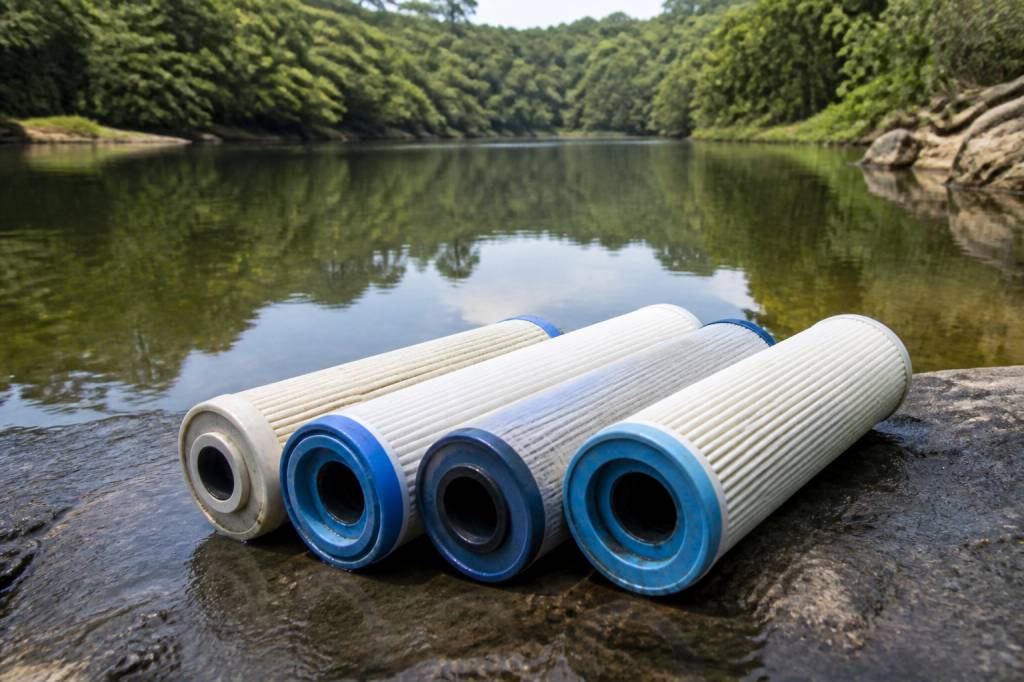
PFAS water filters are increasingly being used in homes, workplaces, and industrial settings to reduce exposure to “forever chemicals” in drinking water. That part is familiar. What is less widely discussed is what happens after those filters reach the end of their useful life. If they are simply thrown away, the PFAS they captured do not disappear; they can move into landfill leachate, wastewater streams, or other disposal pathways that can spread contamination further.
Recycling PFAS water filters offers a practical way to reduce that risk. It can help recover materials, lower waste volumes, and support a more responsible management system for hazardous contaminants. In other words, recycling is not just about keeping plastic out of landfill. In the PFAS context, it is part of a much bigger environmental strategy.
So why does this matter now? Because PFAS are persistent, mobile, and difficult to destroy safely. As treatment technologies expand, so does the number of spent filters that need handling. If we want cleaner water without creating a new waste problem, recycling has to be part of the conversation.
Why used PFAS filters should not be treated like ordinary waste
PFAS water filters are designed to capture contaminants such as PFOA, PFOS, and other PFAS compounds from water. Depending on the technology, they may contain activated carbon, ion exchange media, membranes, or a combination of materials. Over time, those media become saturated and must be replaced.
The challenge is that the captured PFAS remain in the filter material. A used filter is therefore not just “spent”; it is a concentrated form of the contamination it was meant to remove. If it is landfilled without proper controls, PFAS can leach out over time. If it is incinerated under inadequate conditions, some PFAS may survive or create harmful by-products. Neither option is especially reassuring for anyone interested in long-term environmental protection.
This is why recycling matters. It creates a pathway to separate recyclable components from contaminated residues and manage each stream more appropriately. That reduces the likelihood that captured PFAS will re-enter the environment.
How recycling PFAS water filters supports cleaner water
At first glance, recycling used filters might seem like a waste management issue rather than a water quality issue. But the two are directly linked. Every filter that is handled responsibly is one less opportunity for PFAS to cycle back into water bodies, soils, or treatment systems.
Consider a municipal or industrial facility replacing large volumes of spent filtration media. If those filters are disposed of without treatment, the PFAS they contain can escape through leachate or emissions. That leachate may need further treatment, and some PFAS are notoriously difficult to remove once they are diluted and dispersed. Recycling can interrupt this chain.
There is also a systems benefit. When filter recyclers recover usable materials from spent cartridges or media, they reduce demand for virgin raw materials. That means lower upstream environmental impacts from extraction, manufacturing, and transportation. Cleaner water is not just about what comes out of the tap; it is also about reducing contamination at every stage of the product lifecycle.
For households, the impact may seem small. One used filter will not change a watershed overnight. But scale matters. As PFAS filtration becomes more common, the volume of spent filters grows quickly. Multiply one cartridge by thousands of homes, schools, hospitals, and factories, and the disposal problem becomes significant.
Environmental benefits beyond waste reduction
Recycling PFAS water filters offers several environmental advantages that go beyond keeping material out of landfill.
- It reduces the amount of contaminated waste requiring final disposal.
- It lowers the risk of PFAS migrating from landfills into groundwater and surface water.
- It supports material recovery, which can reduce demand for new plastics, metals, and filter media.
- It can cut the carbon footprint associated with producing replacement components from scratch.
- It encourages better product design, especially when manufacturers know filters will be recovered at end-of-life.
These benefits may sound straightforward, but they matter. PFAS pollution is already a long-term environmental burden. Any strategy that reduces secondary contamination is valuable, especially when it also supports circular resource use.
There is another point worth making: recycling can improve accountability. Once a filter is sent into a managed recovery system, there is more transparency around where it goes and how it is treated. That is not a small thing in a sector where vague disposal claims are sometimes used as a substitute for real environmental action.
What actually happens when PFAS filters are recycled?
Not all PFAS filters are recycled in the same way, because the filter type, contamination level, and local infrastructure all affect the process. Still, the general approach usually involves collection, sorting, disassembly, and separate treatment of contaminated and non-contaminated components.
Some parts of the filter housing may be recyclable if they are not heavily contaminated. Plastics, metals, and structural components can sometimes be recovered. The filtration media, however, is often treated differently because it may contain concentrated PFAS and requires special handling.
Depending on the facility, contaminated media may be sent to thermal treatment systems designed to destroy PFAS under controlled conditions, or to specialized disposal routes where emissions are tightly managed. In some cases, spent carbon or resin can be regenerated, though this depends on the degree of saturation and the specific PFAS involved.
The key point is that recycling does not mean pretending the contamination is harmless. It means separating recoverable materials from hazardous waste and managing each stream in the most responsible way available.
Why recycling can be better than landfill or mixed waste disposal
Landfill may seem like the simplest option, but simplicity is not the same as safety. PFAS are highly persistent, and landfill environments do not destroy them. Instead, they can remain in waste cells for decades and potentially leach out through water movement.
Mixed waste disposal also creates problems because PFAS filters can be compressed, damaged, or exposed to moisture, increasing the chance of release. Once contaminants are mixed into a broader waste stream, they are harder to track and manage.
Recycling offers a more controlled alternative. It helps ensure that:
- filters are identified before they enter general waste streams;
- contaminated components are separated from recoverable materials;
- hazardous residues are sent to appropriate treatment pathways;
- the overall volume of waste requiring final disposal is reduced.
That last point is especially important. Waste reduction is not only about storage capacity or landfill space. It is about limiting opportunities for long-term pollution. If a waste stream contains persistent chemicals, then every avoided disposal event is an environmental gain.
The role of recycling in a circular economy for water treatment
Water filtration has traditionally been a linear process: manufacture a filter, use it, discard it. That model is becoming harder to justify in a world dealing with persistent pollutants, resource scarcity, and rising waste management costs.
Recycling PFAS filters fits within a circular economy approach, where materials are kept in use for as long as possible and waste is minimized. This is particularly relevant in water treatment, where filtration systems are expanding rapidly due to tighter regulations and greater public awareness.
A circular model can encourage manufacturers to design filters that are easier to disassemble, track, and recover. It can also help utilities and businesses implement take-back schemes, collection services, or certified recycling partnerships. Over time, that creates a more resilient system.
And there is a practical business case too. If a company can recover part of its filter materials and reduce disposal costs, that can improve operational efficiency. Environmental responsibility and cost control are not always aligned, but in this case they often are. A rare moment of agreement, one might say.
What households and businesses can do now
If you use PFAS water filters, the first step is to understand what kind of filter you have and how it should be handled at end-of-life. Not every product has the same recycling option, and not every local area offers the same collection services.
For households, this may mean checking the manufacturer’s guidance, asking whether a take-back program exists, and avoiding the temptation to throw used cartridges in regular household waste without verifying disposal instructions. For businesses, the responsibility is larger, especially where filters are used at scale.
Here are some practical actions worth taking:
- Check whether the filter manufacturer offers a return or recycling program.
- Keep used filters separate from general waste where possible.
- Record filter replacement dates so disposal can be planned in advance.
- Work with certified waste partners familiar with PFAS-related materials.
- Ask suppliers whether products are designed for easier recovery and recycling.
Facilities managers, laboratories, schools, and industrial sites may also want to build filter disposal into their compliance procedures. That is especially important in regulated environments, where contamination control does not end at the point of use.
Policy and innovation are moving in the right direction
The push to recycle PFAS filters is not happening in isolation. It is part of a broader shift in PFAS policy, research, and treatment innovation. Regulators are tightening standards for drinking water and waste handling, while researchers are examining better ways to destroy or recover PFAS without causing further harm.
Innovations in filter design, regeneration methods, and high-temperature destruction technologies are making end-of-life management more feasible. At the same time, pressure is growing on manufacturers to take responsibility for the full lifecycle of their products. That includes what happens after a filter has done its job.
This is an important change in mindset. For years, the focus was mainly on getting PFAS out of water. That remains essential. But it is no longer enough to remove contamination and ignore the waste it creates. Sustainable water treatment means thinking about the entire chain, from source to disposal.
A cleaner future depends on smarter filter management
Recycling PFAS water filters is not a silver bullet. It will not erase the need for better regulation, safer chemistry, or more effective destruction technologies. But it is a meaningful part of the solution. It helps reduce environmental release, supports material recovery, and keeps harmful contaminants from being casually reintroduced into the waste stream.
For anyone serious about cleaner water, that matters. A filtration system should not solve one pollution problem by creating another. Recycling helps avoid that trade-off and pushes water treatment toward a more responsible model.
The challenge now is not whether we can filter PFAS from water. We can. The real question is whether we are prepared to manage the aftermath properly. Recycling is one of the clearest answers available today, and it deserves much more attention than it gets.