


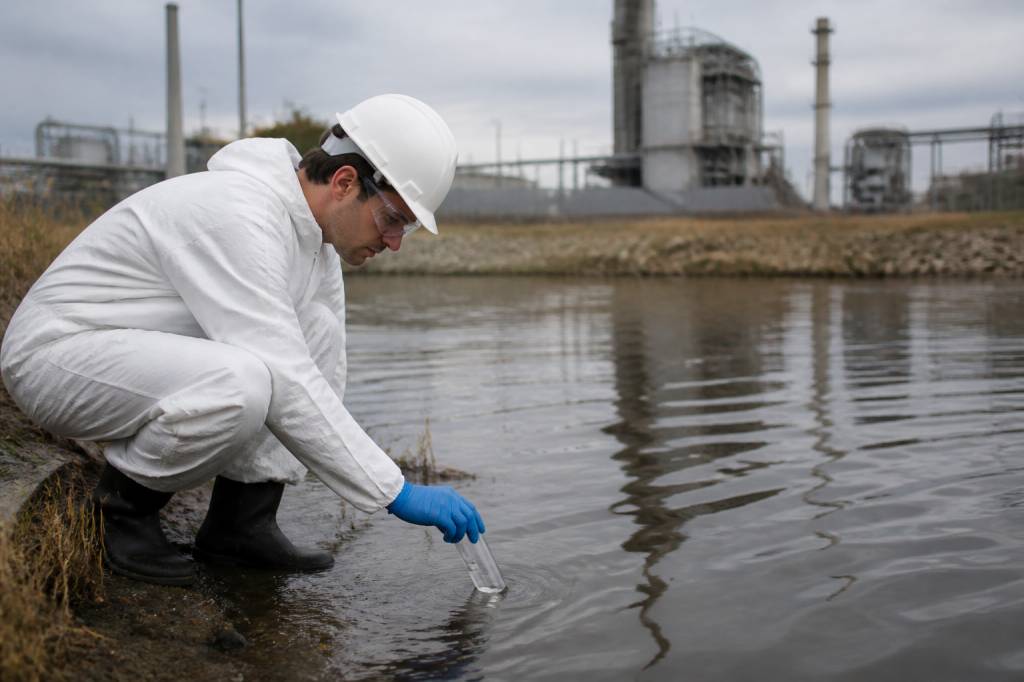
Volatile organic compounds (VOCs) are a broad group of carbon-based chemicals that evaporate easily into the air. They are found in everyday products, industrial processes, fuels and contaminated land. Some VOCs disappear quickly once released. Others can persist indoors, migrate through soil and enter groundwater, creating a longer-term environmental problem.
Are VOCs dangerous? The most accurate answer is: some are, depending on the chemical, the concentration, the duration of exposure and the route by which it enters the body. Short-term exposure may cause headaches, dizziness or irritation, while repeated or high-level exposure to certain VOCs has been linked with organ damage and cancer.
VOCs are not the same as PFAS, although both groups are important contaminants in environmental health. PFAS are often called “forever chemicals” because many resist natural breakdown. VOCs, by definition, are volatile and readily move between water, soil and air. This mobility gives them a distinctive risk profile—and makes them particularly challenging to manage.
What are VOCs?
“VOCs” is an umbrella term rather than the name of a single pollutant. It includes hundreds of chemicals with different properties and toxicities. Common examples include:
- Benzene, found in petrol and produced by combustion processes.
- Toluene and xylene, used in solvents, paints, adhesives and fuels.
- Trichloroethylene (TCE), historically used for metal degreasing and industrial cleaning.
- Tetrachloroethylene (PCE), also known as perchloroethylene, formerly widely used in dry cleaning.
- Vinyl chloride, used in the production of PVC and associated with some industrial contamination sites.
- Chloroform and other trihalomethanes, which can form as by-products when chlorine reacts with natural organic matter during drinking-water treatment.
Some VOCs occur naturally. Plants release volatile chemicals, and VOCs are produced during wildfires and other natural processes. However, many of the compounds that concern regulators are associated with human activity, including fuel storage, manufacturing, waste disposal and the use of solvents.
How can people be exposed?
Air is often the main exposure route. VOCs can evaporate from paints, varnishes, cleaning products, glues, air fresheners and fuels. Indoor concentrations may be higher than outdoor levels, particularly in newly renovated or poorly ventilated buildings. A strong smell is not a reliable measure of risk: some hazardous VOCs have noticeable odours, while others may be present without an obvious warning.
Water is another important pathway. VOCs can enter rivers, reservoirs and aquifers through industrial discharge, leaking underground fuel tanks, landfill sites, spills or improper disposal of solvents. Because many VOCs evaporate readily, contaminated groundwater can also release vapours into buildings above it. This process, known as vapour intrusion, can affect basements, warehouses and homes even when the contamination is not visible at the surface.
People may also ingest VOCs in contaminated drinking water or absorb small amounts through the skin during bathing. Inhalation during showering can be relevant for compounds that transfer easily from water to air. This does not mean that every shower presents a significant hazard, but it explains why regulators assess both ingestion and inhalation when setting drinking-water standards.
What health effects can VOCs cause?
Health effects vary substantially between chemicals. Exposure to high concentrations over a short period may affect the nervous system, causing symptoms such as:
- Headaches and dizziness
- Nausea or fatigue
- Eye, nose and throat irritation
- Confusion or difficulty concentrating
- Skin irritation
These symptoms are not specific to VOC exposure. They can also result from poor ventilation, dehydration, infections or other indoor-air problems. Testing is therefore more reliable than attempting to identify a chemical from symptoms alone.
Long-term exposure is more concerning for certain VOCs. Benzene, for example, is a recognised human carcinogen and is associated with damage to the bone marrow and an increased risk of leukaemia. Vinyl chloride is also classified as carcinogenic. TCE and PCE have been investigated for effects involving the nervous system, liver, kidneys, immune system and reproductive health, although the level of risk depends on exposure conditions and the individual compound.
Children, pregnant people, older adults and those with existing respiratory or neurological conditions may be more vulnerable to some pollutants. Occupational exposure can also be higher than everyday background exposure, particularly in industries that use solvents, fuels or chemical feedstocks. Employers should control risks through substitution, enclosed systems, ventilation, personal protective equipment and regular monitoring.
It is important not to treat the word “VOC” as a diagnosis. A low level of one compound may pose less risk than a higher level of another. Scientific assessments focus on the specific chemical, the measured concentration and the duration of exposure—not simply on whether a substance belongs to the VOC group.
How do VOCs affect water quality?
VOCs can degrade water quality even when contamination is not visible. Clear water can still contain chemicals that require specialist laboratory analysis. Some compounds dissolve readily in groundwater and move through aquifers, while others attach to soil or collect as separate liquid phases beneath the surface.
Groundwater contamination is particularly difficult because aquifers can transport pollutants over considerable distances. A leak from an underground storage tank may continue for years before it is detected. Once a plume has formed, remediation can require pumping and treating groundwater, removing contaminated soil, installing barriers or using technologies that break down the chemicals in place.
VOCs can also change during treatment. Aeration and activated carbon are commonly used because they can remove many volatile or organic contaminants. However, treatment performance depends on the compound, water chemistry, temperature, contact time and the condition of the filtration media. A system designed to reduce taste and odour is not automatically suitable for every VOC.
Boiling water is not a universal solution. Heating can cause some VOCs to evaporate, but it may also transfer them from water into indoor air. Boiling does not reliably remove every contaminant and can concentrate chemicals that do not evaporate. Where contamination is suspected, the safest approach is to follow advice from the relevant water supplier or public-health authority.
VOCs and drinking-water regulation
Drinking-water standards are designed to limit exposure to contaminants that may affect health. In the United Kingdom, water companies operate under regulatory requirements overseen by organisations including the Drinking Water Inspectorate in England and Wales, the Drinking Water Quality Regulator for Scotland and the Northern Ireland Environment Agency.
Regulatory limits differ between countries because authorities use different assessment methods, exposure assumptions and legal frameworks. Some standards apply to individual substances, while others cover groups of compounds, such as total trihalomethanes. A limit is not a dividing line between “safe” and “toxic”; it is a health-protection value based on available evidence and intended exposure conditions.
Water suppliers routinely monitor treated drinking water for a range of chemical parameters. Private wells and small water supplies may require additional attention because they are not always monitored as frequently as public systems. Properties near petrol stations, industrial facilities, landfills, dry-cleaning businesses or former manufacturing sites may warrant a professional risk assessment.
If you rely on a private well and notice a fuel-like taste or odour, do not assume that the water is safe because it looks clear. Stop using it for drinking and food preparation until testing has been arranged, particularly after flooding, construction or a known chemical spill. Contact the local authority or environmental regulator for guidance.
How are VOCs detected?
VOCs are generally measured using laboratory techniques such as gas chromatography combined with mass spectrometry. These methods can identify individual compounds at very low concentrations. Sampling must be carefully controlled because VOCs can escape from containers or be altered by heat and light, producing misleading results.
Home testing kits may be useful for screening, but they should not replace accredited laboratory analysis when there is a potential health risk or legal requirement. A credible testing plan should specify:
- Which VOCs will be analysed and why
- Where and when samples will be collected
- Whether the sample represents drinking water, groundwater, indoor air or another source
- Which laboratory accreditation and quality-control procedures apply
- How results will be compared with current regulatory or health-based values
Testing only once may not reveal the full picture. VOC concentrations can vary with groundwater movement, pumping, seasonal conditions and changes in industrial activity. A qualified environmental consultant can help interpret results and determine whether follow-up sampling is necessary.
Can water filtration remove VOCs?
Several treatment technologies can reduce VOC concentrations, but no single filter is effective for every chemical or situation.
Granular activated carbon (GAC) is widely used in point-of-use and municipal systems. It adsorbs many organic chemicals onto a highly porous carbon surface. Performance depends on the carbon type, flow rate, contaminant concentration and competing substances in the water. Carbon filters must be replaced before they become saturated; otherwise, contaminants can pass through or be released in a process known as breakthrough.
Air stripping transfers VOCs from water into air. It can be effective for compounds that are highly volatile, but the treated air must be captured and managed so that pollution is not simply moved from one medium to another.
Advanced oxidation processes use chemical oxidants, often combined with ultraviolet light or catalysts, to break down contaminants. These systems can be powerful but require careful design because partial degradation may create by-products that also need assessment.
Membrane technologies, including reverse osmosis, may remove a range of dissolved contaminants. They can be useful in specific applications, although they produce a concentrated waste stream and require maintenance, energy and appropriate pre-treatment.
Before buying a domestic filter, check whether the manufacturer provides independent performance data for the specific VOCs of concern. Claims such as “improves water quality” are too vague to demonstrate removal of benzene, TCE or any other named compound. Certification from a recognised standards organisation is more meaningful, but the exact contaminant claims still need to be reviewed.
Reducing VOC exposure at home and work
Practical steps can lower everyday exposure:
- Improve ventilation when using paints, adhesives, solvents or strong cleaning products.
- Keep fuels, pesticides and solvents in sealed containers away from living areas.
- Follow product instructions and never mix cleaning chemicals unless the label specifically permits it.
- Choose low-emission products where suitable, while remembering that “low-VOC” does not mean VOC-free.
- Do not store chemicals in or near private-well buildings.
- Have suspected contaminated water tested rather than relying on smell or taste.
- Maintain activated-carbon or other treatment systems according to the manufacturer’s schedule.
For businesses, prevention is usually less expensive than remediation. Leak detection, secondary containment, solvent recovery, safe chemical storage and proper waste handling can reduce the risk of contamination before it reaches soil or groundwater.
Why ongoing monitoring matters
VOCs occupy an important place in environmental health because they connect indoor air, industrial activity, soil and water quality. A chemical released into the ground may eventually become a drinking-water issue. A contaminant found in water may also create an indoor-air pathway through showering or vapour intrusion.
The most useful response is neither panic nor complacency. Identify the specific compound, measure the exposure accurately, compare results with current health-based guidance and select treatment that has been demonstrated to work for that contaminant. As with PFAS and other emerging pollutants, transparent monitoring and prevention are essential.
VOCs may be invisible, but they are not impossible to manage. With reliable testing, effective controls and properly maintained treatment systems, communities and households can reduce exposure while protecting the groundwater resources on which so many people depend.
Sources and further reading
- UK Drinking Water Inspectorate, drinking-water quality standards and guidance.
- UK Health Security Agency, toxicological profiles and chemical exposure guidance.
- US Environmental Protection Agency, volatile organic compounds in drinking water and indoor air.
- World Health Organization, guidelines for drinking-water quality.
- Agency for Toxic Substances and Disease Registry, toxicological profiles for benzene, TCE, PCE and vinyl chloride.