


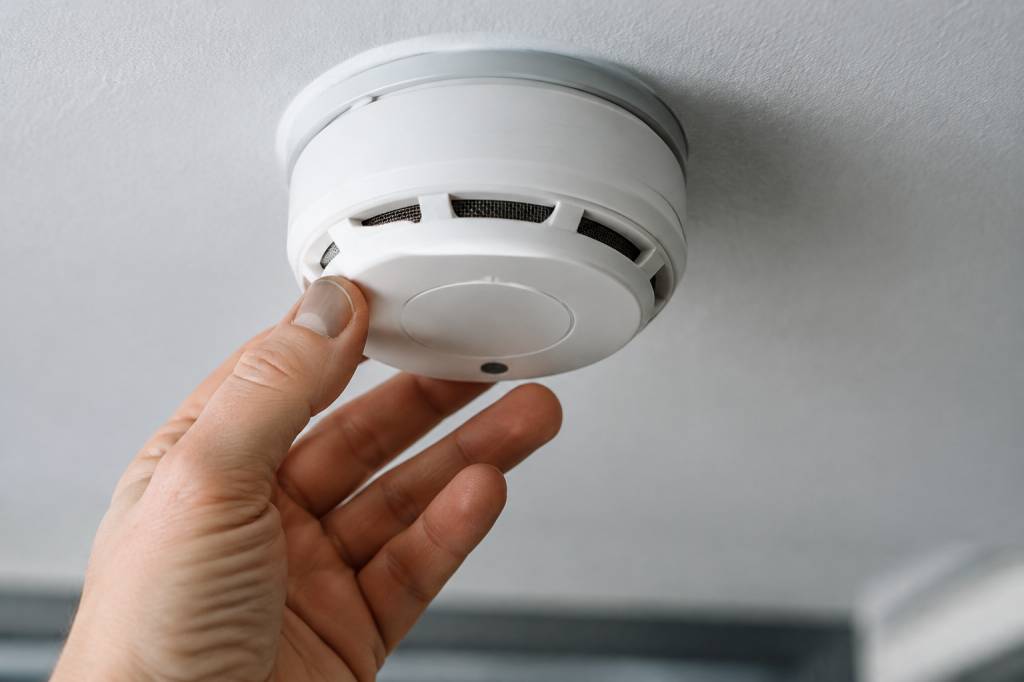
Smoke detectors are designed to protect people from one of the fastest-moving household hazards: fire. Yet many homeowners are surprised to learn that some alarms contain a small quantity of radioactive material. Does that make them dangerous? Should they be removed from bedrooms, kitchens or children’s rooms?
The short answer is reassuring: correctly manufactured and undamaged ionisation smoke alarms are considered safe for normal domestic use. The radioactive source is sealed inside the device, and the radiation it emits has a very limited range. The main risks arise from improper disposal, dismantling or damage—not from living with a functioning alarm on the ceiling.
Why do some smoke detectors contain radioactive material?
There are two main types of domestic smoke alarm: ionisation alarms and photoelectric, also called optical, alarms. They detect smoke in different ways.
An ionisation alarm contains a small sealed source of americium-241. This radioactive isotope emits alpha particles, which ionise the air between two electrically charged plates. The resulting electrical current is stable while the air is clear. When smoke enters the sensing chamber, it disrupts the current, triggering the alarm.
Americium-241 is used because it has a relatively long half-life—around 432 years—and provides a consistent source of alpha radiation over the working life of the alarm. The quantity is very small and varies according to the product. Many domestic alarms contain activity measured in tens of kilobecquerels or less, although the exact amount should be checked on the product label or manufacturer’s documentation.
The source is not loose inside the alarm. It is normally fixed to a holder and protected by a metal enclosure. Under ordinary conditions, this prevents the radioactive material from spreading into the home.
How much radiation does an ionisation alarm produce?
The word “radioactive” can sound alarming, but radioactivity is not automatically equivalent to danger. Risk depends on the type of radiation, its energy, the amount of radioactive material, and the exposure route.
Americium-241 primarily emits alpha particles. Alpha particles can cause damage if radioactive material is inhaled or swallowed, but they do not travel far through air and cannot penetrate the outer dead layer of human skin. A sheet of paper can stop them. The alarm’s casing provides additional protection, and the source is positioned inside the sensing chamber rather than exposed to the room.
Ionisation alarms can also produce very low levels of other radiation, including low-energy gamma emissions. For a properly manufactured and intact domestic unit, the resulting external exposure is extremely small. UK and international radiation-protection authorities have consistently regarded compliant ionisation smoke alarms as safe when used as intended.
In practical terms, the health benefit of having a working smoke alarm greatly outweighs the very small radiation risk from the sealed source. Fire and smoke can cause fatal injuries within minutes, while an intact alarm contributes negligible radiation exposure in everyday use.
Are smoke detectors radioactive in the same way as nuclear waste?
No. An ionisation alarm contains radioactive material, but it is not comparable to a nuclear reactor, medical radiotherapy source or high-level radioactive waste.
The source is tiny, sealed and designed for a specific detection function. It does not create a chain reaction, generate dangerous heat or make nearby objects radioactive. Simply standing beneath an alarm does not contaminate a room, and touching the outside of the unit does not normally expose someone to hazardous material.
However, “low risk” does not mean “safe to dismantle”. If the casing is broken open, the source assembly could be damaged. The principal concern would then be contamination, particularly if particles were released and later inhaled or swallowed.
What about photoelectric smoke alarms?
Photoelectric alarms do not use a radioactive source. They contain a light-emitting diode and a sensor. When smoke enters the chamber, it scatters the light towards the sensor and activates the alarm.
This technology is often effective at detecting slow, smouldering fires, such as those involving upholstered furniture, mattresses or electrical wiring. Ionisation alarms can respond quickly to some fast-flaming fires. Neither type is perfect in every situation, which is why fire-safety guidance often recommends using suitable alarms throughout a property rather than relying on a single device.
For households that prefer to avoid radioactive components, a certified photoelectric alarm is an alternative. It is important, however, not to remove an ionisation alarm and leave an area unprotected. Replacing it with a compliant optical model is safer than simply taking it down.
Can an ionisation alarm harm children or pregnant people?
There is no evidence that a compliant, intact domestic ionisation alarm presents a significant health risk to children or pregnant people when installed and maintained correctly.
Children may be more curious about household devices, so alarms should be fixed securely and kept out of reach where possible. They should not be used as toys, opened with household tools or deliberately damaged. The same advice applies to everyone in the home.
Pregnancy does not require the removal of a properly installed smoke alarm. The radiation exposure from an intact unit is extremely low, and removing a working alarm would create a much more immediate and serious fire-safety risk.
When could a smoke detector become a concern?
The most important distinction is between normal use and damage. Seek advice if an alarm is:
- Cracked, crushed, burned or visibly damaged;
- Missing part of its casing;
- Being dismantled or repaired by an unqualified person;
- Involved in a fire, flood or building demolition;
- Producing loose components or unexplained dust; or
- Being stored in large quantities without appropriate disposal arrangements.
If a damaged alarm is found, do not touch the internal components unnecessarily. Keep people and pets away from the area, place the device in a secure location only if this can be done without handling broken parts, and contact the manufacturer, local authority waste service or an appropriate radiation-protection adviser for instructions.
Do not attempt to remove the americium source. Do not burn the alarm, put it into a fire, drill it, crush it or place it in a household compactor. These actions could damage the source assembly and may also breach waste-handling requirements.
How should radioactive smoke alarms be disposed of?
Smoke alarms should not automatically be placed in general household waste. Disposal rules vary by country and may depend on the type of alarm, the quantity involved and the local waste system.
In the UK, householders should check the instructions provided by the manufacturer and contact their local council before disposal. Some councils accept smoke alarms through household recycling or waste facilities, while others direct residents to specific collection arrangements. The Waste Electrical and Electronic Equipment framework may apply to the electrical device, but the sealed radioactive source means that ordinary recycling routes are not suitable in every case.
Manufacturers and suppliers may also provide take-back schemes. This is particularly relevant for landlords, housing associations, businesses and organisations replacing multiple units at once. Keeping the original packaging and product information can make identification and disposal easier.
Never send an ionisation alarm to a scrap-metal facility without confirming that the facility is authorised to handle it. A source that is harmless in a sealed product can become a serious problem if it enters a metal recycling furnace or is accidentally dismantled.
What do the symbols and labels mean?
Look for the model number, manufacturer’s name and disposal instructions on the back or side of the alarm. Ionisation models may display the radiation trefoil symbol or wording such as “contains radioactive material” or “Am-241”. The symbol is a warning for handling and waste control; it does not mean the device is unsafe to occupy the same room with.
Some alarms carry a “10-year” label. This generally refers to the recommended service life of the alarm or its battery, not to a guarantee that every component will remain suitable indefinitely. Follow the manufacturer’s replacement schedule, test the alarm regularly and replace it immediately if it fails a test.
Are false alarms linked to radiation?
No. A beeping or false alarm is not evidence that the radioactive source is leaking. False alarms are more commonly caused by cooking fumes, steam, dust, insects, low batteries, poor positioning or a sensor reaching the end of its service life.
Ionisation alarms should not normally be installed too close to cookers or bathrooms. Optical alarms may be more suitable near kitchens, although no smoke alarm should be placed where routine steam or cooking vapour will trigger repeated alerts. Persistent nuisance alarms should be investigated rather than disabled.
A missing battery is especially dangerous. Some people remove the battery after a false alarm and forget to replace it. A silent alarm cannot warn anyone at night, regardless of whether it uses radioactive technology.
What does the science say about risk?
Radiation protection follows a straightforward principle: reduce exposure where it is reasonable to do so, while recognising that the level of risk matters. Regulatory authorities assess smoke alarms by considering the activity of the source, its shielding, possible exposure pathways, manufacturing standards and disposal controls.
The concern with americium-241 is mainly internal contamination. If the source remains sealed, that pathway is effectively controlled. The everyday external dose from an intact domestic alarm is very low. If the source is damaged, the situation changes, which is why authorities discourage dismantling and careless disposal.
This is similar to other products that contain tightly controlled hazardous components: fluorescent lamps may contain mercury, batteries may contain corrosive chemicals, and refrigerants can affect the climate. Safe use depends on product design, correct maintenance and responsible end-of-life management.
Smoke alarms and wider environmental responsibility
Smoke alarms are not PFAS sources, and the presence of a radioactive component should not be confused with contamination by per- and polyfluoroalkyl substances. PFAS are a broad group of persistent chemicals used in many industrial and consumer applications; americium-241 is a radioactive isotope with a completely different chemistry and risk profile.
Both issues nevertheless highlight the same environmental lesson: products need to be managed across their entire life cycle. A device may be safe during normal use but require specialised handling when it becomes waste. Correct collection prevents hazardous components from entering landfills, recycling plants or uncontrolled waste streams.
Practical steps for homeowners
- Keep all required smoke alarms installed and operational.
- Test them regularly according to the manufacturer’s instructions.
- Replace batteries promptly, or replace the unit if it has a sealed end-of-life battery.
- Do not open, drill, burn or crush an ionisation alarm.
- Check the label to identify whether the alarm is ionisation or photoelectric.
- Follow local authority or manufacturer guidance before disposal.
- Seek professional advice if an alarm is damaged by fire, impact or demolition.
- Consider interconnected alarms so that one detection event alerts occupants throughout the property.
So, are smoke detectors radioactive? Some are—but the fact alone is not a reason to remove them. An intact ionisation alarm contains a very small, sealed source designed to operate safely for years. The most effective approach is informed use: understand the technology, maintain the alarm, and dispose of it through the correct route when its service life ends.