


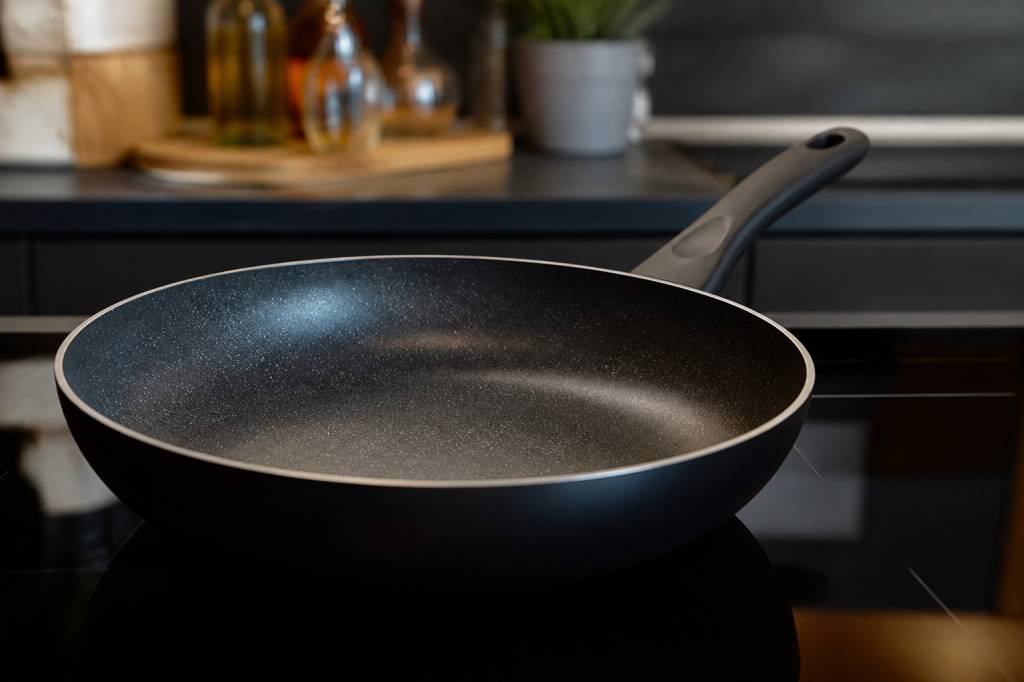
Non-stick pans are convenient, affordable and remarkably easy to clean. For many households, they are the go-to choice for cooking eggs, pancakes and delicate fish. But concerns about “forever chemicals” have led many people to ask a reasonable question: are non-stick pans dangerous?
The short answer is more nuanced than a simple yes or no. Modern non-stick cookware can be safe when it is used correctly, but some products, particularly older or poorly manufactured pans, raise legitimate concerns about PFAS exposure and environmental contamination. Understanding the difference between the coating, the chemicals historically used to manufacture it, and the conditions that can make it hazardous is essential for making informed choices.
What makes a pan non-stick?
Most traditional non-stick pans are coated with polytetrafluoroethylene, or PTFE. PTFE is a synthetic fluoropolymer belonging to the broader PFAS family. Its carbon-fluorine bonds make it highly resistant to heat, water, oil and chemical reactions. That same stability is why food is less likely to stick to the surface.
PFAS, or per- and polyfluoroalkyl substances, is an umbrella term covering thousands of chemicals. They are used in products ranging from waterproof clothing and food packaging to firefighting foams and industrial equipment. Not all PFAS behave identically, and the risks associated with one compound cannot automatically be applied to every other substance in the group.
This distinction matters. A finished PTFE coating is generally considered chemically stable under normal cooking conditions. However, the manufacture of fluoropolymer coatings has historically involved processing aids such as perfluorooctanoic acid, commonly known as PFOA. PFOA has been linked to adverse health effects and has been phased out or restricted in many countries, including the United Kingdom, the European Union and the United States.
Are modern non-stick pans safe to use?
When a modern, reputable non-stick pan is used according to the manufacturer’s instructions, the risk of significant exposure from the intact coating is considered low. PTFE does not normally migrate into food in meaningful quantities during everyday cooking at moderate temperatures.
Regulatory agencies assess cookware materials for their intended use. In the UK, food contact materials must comply with safety requirements designed to prevent harmful levels of substances from transferring into food. Similar systems operate across the European Union and North America.
That does not mean every non-stick product is identical. Quality, age, manufacturing standards and the condition of the coating all matter. A pan purchased from an established retailer, clearly labelled for food use and maintained properly is a different proposition from an unbranded product with no traceable manufacturer or safety information.
It is also important to avoid a common misunderstanding: “PFOA-free” does not necessarily mean “PFAS-free”. Some products may no longer contain PFOA but still use other fluorinated substances, including PTFE. If avoiding the entire PFAS class is your priority, look for cookware explicitly described as PFAS-free and check the manufacturer’s technical information rather than relying only on marketing language.
Why overheating is the main concern
The greatest immediate risk associated with PTFE cookware is not ordinary contact with food. It is overheating.
At typical cooking temperatures, PTFE remains stable. However, an empty pan can heat up very quickly, especially on a powerful hob. Once the coating reaches very high temperatures, it can begin to degrade and release fumes. This process is sometimes referred to as polymer fume fever.
In humans, exposure to these fumes may cause temporary flu-like symptoms, including chills, headache, fever and muscle aches. Symptoms usually develop several hours after exposure and often resolve within a day or two, but the experience can be unpleasant and should not be dismissed.
Birds are especially vulnerable. Fumes from overheated PTFE can be fatal to pet birds because of their highly efficient respiratory systems. If you keep birds at home, take extra care with any fluoropolymer-coated cookware and ensure good ventilation in the kitchen.
To reduce the risk of overheating:
- Do not preheat a non-stick pan while it is empty.
- Use low or medium heat unless the manufacturer specifically permits higher temperatures.
- Never leave a pan unattended on a hot hob.
- Switch on an extractor fan or open a window when cooking.
- Keep pet birds away from the kitchen and ensure they have adequate ventilation.
- Follow the temperature guidance supplied with the cookware.
A pan containing food is less likely to reach extreme temperatures because the food and any moisture absorb heat. The risk rises when a dry pan is left on a burner, particularly on an induction or gas hob.
What if the coating is scratched or peeling?
Scratches can be worrying, but the main issue is usually performance rather than acute toxicity. Small flakes of PTFE are not readily digested and are expected to pass through the body without being absorbed. Accidentally swallowing a tiny fragment is therefore unlikely to cause poisoning.
However, a damaged coating is a practical reason to replace the pan. Peeling surfaces can make cooking less predictable, expose the underlying metal and increase the chance of further deterioration. Damage may also indicate that the pan has been exposed to excessive heat or rough handling.
To extend the life of non-stick cookware:
- Use wooden, silicone or plastic utensils rather than metal tools.
- Avoid cutting food directly inside the pan.
- Do not stack pans without protective padding.
- Wash with a soft sponge and mild detergent.
- Follow the manufacturer’s instructions about dishwasher use.
- Replace cookware when the surface is extensively scratched, blistered or peeling.
Using a non-stick pan as a frying surface for high-temperature searing is also poor practice. Cast iron, stainless steel or carbon steel may be better suited to very high heat.
The legacy of PFOA and other PFAS
The debate around non-stick cookware is closely connected to the wider history of PFAS pollution. PFOA was used for decades as a processing aid in the production of some fluoropolymer coatings. Industrial releases and waste disposal contaminated soil and water in several locations, creating long-term exposure concerns for nearby communities.
PFOA is persistent, meaning it does not break down easily in the environment. It has also been detected in human blood and has been associated in scientific research with outcomes such as changes in cholesterol, reduced immune response and certain cancers. Research continues, and the strength of evidence varies by health effect and level of exposure, but regulators have taken increasingly strict action.
Another compound, PFOS, has a similarly persistent nature and has been widely restricted. These substances can travel through water systems and accumulate in organisms. Their environmental impact is one reason PFAS are often called “forever chemicals”—a memorable phrase, although it does not mean that every PFAS remains unchanged forever.
For consumers, the key point is that the presence of historical PFOA contamination does not mean a properly manufactured modern pan is releasing dangerous amounts of PFOA into a meal. The more significant PFAS concerns often relate to industrial production, contaminated drinking water, food packaging and environmental persistence rather than normal use of an intact pan.
Does cooking with non-stick cookware expose you to PFAS?
Potential exposure depends on several factors: the type of coating, the age and quality of the pan, its temperature and its condition. Under normal cooking conditions, migration from a sound PTFE surface into food is expected to be very low.
Exposure pathways can be different during manufacturing or waste disposal. Workers may face higher occupational risks, while communities near facilities using or releasing PFAS may be exposed through contaminated air, soil or drinking water. This is why PFAS management cannot be reduced to a question of which frying pan a household uses.
Food packaging is another relevant source. Grease-resistant paper and takeaway containers have historically used PFAS to prevent oils from soaking through. Depending on the product and jurisdiction, these uses are being restricted or replaced. In some cases, choosing fresh food and reducing contact with grease-resistant packaging may do more to limit everyday PFAS exposure than discarding a serviceable non-stick pan.
How to choose safer cookware
No cookware material is perfect. Each has advantages, limitations and different environmental considerations. If you want to reduce reliance on fluorinated coatings, consider the following alternatives:
- Stainless steel: Durable, versatile and free from fluoropolymer coatings, although food can stick if the pan is not preheated and oiled correctly.
- Cast iron: Long-lasting and suitable for high heat. It can add small amounts of iron to food and requires seasoning and careful drying.
- Carbon steel: Lighter than cast iron and capable of developing a naturally non-stick seasoned surface.
- Glass or ceramic cookware: Useful for baking and roasting, although ceramic “non-stick” coatings vary and should be checked carefully.
- Enamelled cookware: Durable and easy to clean, but chips and impact damage should be monitored.
Be cautious with vague claims such as “green”, “chemical-free” or “non-toxic”. Everything is made of chemicals, and a marketing label is not a substitute for a materials declaration. Ask whether the product is PFAS-free, what coating it uses and whether the manufacturer provides clear safety information.
What should you do with an old pan?
If an old pan is intact and used on low or medium heat, there is no need to panic or throw it away immediately. Replacing usable cookware solely because it is non-stick may create unnecessary waste. A more practical approach is to use it correctly and plan a replacement when the surface deteriorates.
If the coating is severely damaged, do not place the pan in kerbside recycling unless your local authority specifically accepts it. Many recycling systems cannot process mixed-material cookware. Contact the manufacturer, household recycling centre or local council to ask about the appropriate disposal route.
Never burn non-stick cookware or attempt to remove the coating by heating it. High temperatures can generate fumes, while inappropriate disposal can contribute to wider contamination.
A sensible approach to food safety
Non-stick pans are not automatically dangerous, but they should not be treated as indestructible. The safest routine is straightforward: buy from a reputable source, avoid unknown coatings, cook at moderate temperatures, never heat an empty pan and replace cookware that is badly damaged.
For people seeking to minimise PFAS altogether, stainless steel, cast iron or carbon steel can reduce dependence on fluoropolymer coatings. Yet individual consumer choices are only one part of the issue. Stronger controls on PFAS manufacturing, transparent product labelling, effective waste management and clean drinking water standards are essential to reduce exposure across communities.
The pan in your kitchen deserves attention—but so do the industrial sites, water supplies and regulations that determine how PFAS move through the wider environment.
Sources and further reading:
- UK Food Standards Agency, guidance on food contact materials and cookware safety.
- European Food Safety Authority, scientific opinions on PFAS in food and human health.
- US Food and Drug Administration, information on PFAS in food contact applications.
- US Environmental Protection Agency, research and regulatory information on PFAS.
- UK Health Security Agency, information on exposure to chemical substances and environmental contaminants.