

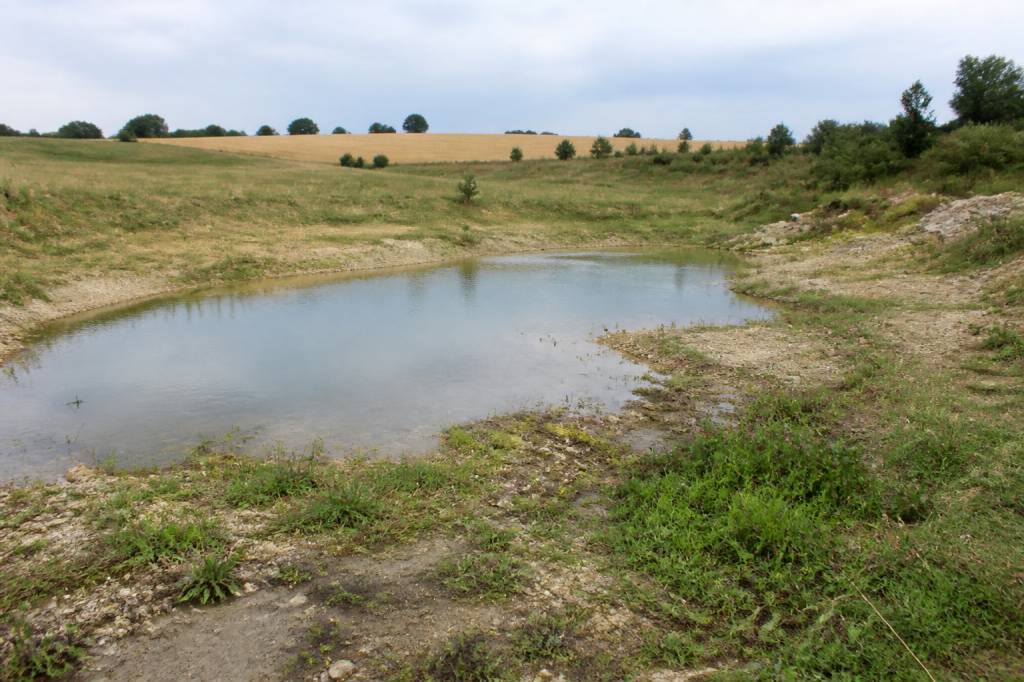
Aquifer recharge is often presented as a practical response to water scarcity. By allowing rainwater, treated wastewater or surface water to enter underground formations, communities can store water for dry periods and support long-term supply. But recharge does not automatically improve water quality. If the source water contains per- and polyfluoroalkyl substances (PFAS), the process can move these persistent chemicals into aquifers that may be difficult and expensive to clean.
This matters because groundwater supplies drinking water for billions of people worldwide and supports agriculture, industry, wetlands and rivers. Once PFAS enter an aquifer, they may remain there for years or decades, depending on the chemical, the geology and the movement of groundwater. Recharge can therefore become either a valuable water-management tool or an unintended pathway for contamination.
What is aquifer recharge?
An aquifer is an underground layer of permeable rock, sand or gravel that stores and transmits water. Aquifers are replenished naturally when precipitation infiltrates through soil and reaches the water table. This process is known as natural recharge.
Managed aquifer recharge, or MAR, deliberately increases this movement. Common approaches include:
- Infiltration basins, where water is held in shallow ponds and allowed to seep into the ground.
- Recharge wells, which inject treated water directly into an aquifer.
- Stormwater infiltration systems designed to capture runoff.
- Spreading treated wastewater or recycled water across permeable land.
- Induced recharge, where groundwater pumping encourages nearby surface water to move underground.
These methods can help replenish depleted aquifers, reduce pressure on rivers and reservoirs, and provide a buffer against drought. However, the quality of recharge water is critical. The ground is not a universal filter, and PFAS are particularly capable of passing through natural systems.
Why PFAS are a concern during groundwater recharge
PFAS are a large group of manufactured chemicals used in products such as firefighting foams, non-stick cookware, stain-resistant textiles, food packaging and industrial coatings. Their strong carbon-fluorine bonds make many PFAS highly resistant to heat, chemical reactions and environmental degradation. This persistence has earned them the widely used nickname “forever chemicals”.
Not all PFAS behave in exactly the same way. Some bind more readily to soil or sediment, while others remain dissolved in water and travel further. Short-chain PFAS, for example, are generally more mobile in groundwater than many long-chain compounds. Soil properties, organic carbon content, pH, temperature and groundwater velocity can all influence their movement.
During recharge, PFAS-containing water may pass through soil and the unsaturated zone before reaching the aquifer. Some of the chemicals can temporarily attach to soil particles. This may slow their movement, but it does not necessarily remove them. Changes in water chemistry can later release PFAS back into groundwater, creating a delayed contamination signal.
That delay makes monitoring especially important. A recharge project may appear to operate safely for several years before PFAS concentrations begin to rise in nearby monitoring wells.
How PFAS move through the subsurface
The behaviour of PFAS underground depends on both the chemical mixture and the geological setting. Water moving through coarse sand or fractured rock can travel relatively quickly. Clay layers may slow the movement of water, but they are not always complete barriers, particularly where cracks, faults or old wells provide preferential pathways.
PFAS can also accumulate at the boundary between water and air in unsaturated soils. This is known as air-water interfacial adsorption. When the water table rises or recharge conditions change, chemicals stored at this interface may be remobilised. In practical terms, an aquifer can receive PFAS not only from today’s recharge water, but also from contamination retained in the ground from previous events.
Groundwater flow modelling can help estimate where a contaminant plume may travel, but models depend on accurate information about geology, pumping rates and chemical behaviour. Small errors in the location of a recharge well or the permeability of a geological layer can affect predictions. Regular field measurements remain essential.
Potential sources of PFAS in recharge water
PFAS contamination does not come from a single industry or one type of site. Recharge projects should assess the full catchment and the history of the water source. Potential inputs include:
- Municipal wastewater treated at facilities that receive PFAS from households, hospitals and industrial users.
- Stormwater runoff from airports, military bases, training grounds, landfills and industrial estates.
- Firefighting foam used during emergency response or training exercises.
- Landfill leachate, which can contain a complex mixture of PFAS and their transformation products.
- Industrial discharges and contaminated surface water.
- Agricultural land amended with sewage sludge or biosolids containing PFAS.
Conventional wastewater treatment is not designed to destroy PFAS. Some treatment processes may shift PFAS between water and waste streams, but the chemicals often remain present. A facility may therefore produce a clear, odour-free effluent that still contains substances requiring careful monitoring.
Why recharge can increase the scale of a problem
Recharge systems are designed to distribute water underground. That is beneficial when the water is clean. If PFAS are present, the same design can spread contamination across a larger area or move it closer to drinking-water abstraction wells.
Infiltration basins may create broad, shallow recharge zones. Recharge wells can introduce contaminants directly into deeper formations, bypassing some natural attenuation processes. The risk is greatest where recharge occurs near public-supply wells, vulnerable springs or connected surface-water bodies.
Groundwater and surface water are often part of the same connected system. An aquifer contaminated through recharge may later discharge into a river, wetland or lake. The direction can also be reversed: PFAS in a contaminated river may infiltrate into the aquifer during periods of low flow or heavy pumping.
This connectivity is easy to overlook. A project designed to secure drinking water for one community can affect ecosystems and water users downstream or several kilometres away.
PFAS and drinking-water quality
Exposure to certain PFAS has been associated in scientific studies with effects such as changes in immune response, altered cholesterol levels, impacts on liver function and developmental effects. The strength of evidence varies by compound and outcome, and research continues. Because PFAS can persist and people may be exposed through multiple routes, regulators increasingly focus on reducing exposure wherever feasible.
Groundwater contamination is particularly challenging because many communities rely on wells without continuous treatment. Private well owners may not receive the same routine testing as users of public water systems. A recharge project can therefore create a public-health concern even when contamination is not immediately visible.
Testing only for PFOA and PFOS may also provide an incomplete picture. Thousands of PFAS exist, and some are not included in standard analytical panels. Precursors can transform into more persistent compounds over time. Monitoring programmes should be based on the likely sources, local regulatory requirements and the capabilities of accredited laboratories.
How recharge projects can manage PFAS risk
PFAS prevention is generally more effective than attempting to remove a mature groundwater plume. Before a recharge scheme begins, project operators should establish a detailed baseline for water quality and groundwater conditions.
Good practice includes:
- Testing the proposed recharge source for a broad suite of PFAS and relevant precursors.
- Mapping known and historical PFAS sources across the recharge catchment.
- Characterising aquifer geology, groundwater flow direction and connections to surface water.
- Installing monitoring wells upgradient, downgradient and alongside recharge facilities.
- Setting trigger levels that require investigation or operational changes.
- Using conservative groundwater-flow and contaminant-transport models.
- Publishing monitoring results in a clear and accessible format.
- Reviewing the project when regulations, treatment technologies or scientific evidence change.
Monitoring should continue after recharge starts. Sampling at the recharge basin alone is not enough; PFAS may move unevenly through the subsurface. Seasonal changes, heavy rainfall, drought, pumping and fluctuations in the water table can all affect transport.
Can PFAS be removed before recharge?
Several treatment technologies can reduce PFAS in water, although performance depends on the compounds present and the design of the system.
- Granular activated carbon: Often effective for longer-chain PFAS, but it may be less efficient for shorter-chain compounds. Spent carbon must be managed safely.
- Ion exchange: Can remove a broad range of PFAS and may perform well at low concentrations, but resin replacement and waste disposal require planning.
- Reverse osmosis: Provides high removal rates for many PFAS, yet it consumes energy and generates a concentrated waste stream.
- Foam fractionation: Uses the tendency of some PFAS to accumulate at air-water interfaces. It can reduce PFAS mass while producing a smaller, concentrated waste stream.
- Destructive technologies: Electrochemical treatment, supercritical water oxidation, plasma and other methods are being researched to break PFAS down. Their suitability for large-scale, low-concentration water treatment is still developing.
“Removal” does not mean “destruction”. If PFAS are transferred from water into carbon, resin, membranes or concentrate, the resulting waste still contains the chemicals. A responsible treatment plan must account for transport, storage, regeneration and final disposal.
Regulation and the precautionary approach
PFAS standards differ between countries and may change as toxicological assessments develop. In the United States, the Environmental Protection Agency has established national drinking-water standards for PFOA and PFOS, alongside requirements addressing mixtures of several other PFAS. In the United Kingdom and Europe, regulation involves a combination of drinking-water requirements, environmental permits, chemical controls and national guidance.
Recharge operators should not rely solely on a single legal threshold. A concentration below a current limit does not necessarily mean that no risk exists, particularly where several PFAS are present or where the science is evolving. The precautionary approach is more robust: identify contamination early, minimise inputs and avoid placing PFAS-bearing water into vulnerable aquifers.
A practical example: the hidden delay
Imagine a community using a stormwater infiltration basin to recharge an aquifer beneath an industrial area. Initial tests show low PFAS concentrations, so the project proceeds. Several years later, monitoring wells detect increasing levels of short-chain PFAS. Investigators discover that historical firefighting activities occurred upstream and that older contamination had been retained in the soil.
The recharge basin did not necessarily create the contamination. Instead, changing water levels and increased infiltration may have mobilised PFAS that were already present. The lesson is important: a low result at the start of a project cannot replace long-term source investigation and monitoring.
What communities and water managers should ask
Before approving or expanding an aquifer recharge scheme, decision-makers should ask:
- Where does the recharge water come from, and what activities occur upstream?
- Which PFAS have been tested, and are the laboratory methods sufficiently sensitive?
- Could the recharge zone connect with drinking-water wells, rivers or wetlands?
- What happens if PFAS concentrations increase?
- Who pays for treatment, additional monitoring or well replacement?
- How will contaminated treatment residues be handled?
- Will results be reported publicly and independently reviewed?
Aquifer recharge remains an important tool for water security, particularly as drought and demand place pressure on conventional supplies. But underground storage should not become underground disposal. Protecting groundwater quality requires source control, appropriate treatment, transparent monitoring and a clear understanding of how PFAS behave beneath our feet.
Useful sources for further reading
Reliable information is available from organisations including the UK Environment Agency, the Drinking Water Inspectorate, the European Chemicals Agency, the United States Environmental Protection Agency, the United States Geological Survey and the Interstate Technology & Regulatory Council. Their guidance covers PFAS monitoring, groundwater transport, treatment technologies and contaminated-site management.
For communities considering managed aquifer recharge, the most important first step is straightforward: test the water and investigate the catchment before recharge begins. Once PFAS enter an aquifer, the problem is no longer confined to a treatment plant or a drainage channel. It becomes part of the groundwater system itself.