


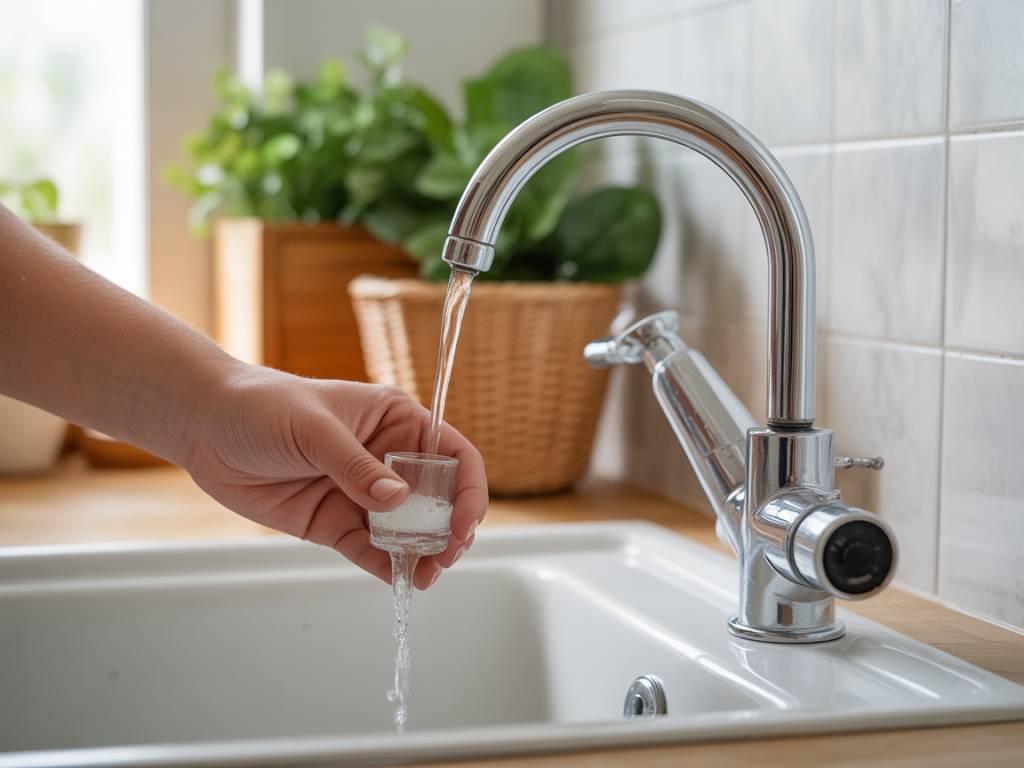
Hard water is one of those everyday problems that seems minor until you add up the impact: clogged showerheads, chalky kettles, dull laundry, higher energy bills and appliances that fail years before they should. For many households, the automatic response is to install a traditional salt-based water softener.
But what if you don’t want to add sodium to your water, regularly buy salt bags or discharge salty brine down the drain? And what if you’re already concerned about contaminants like PFAS and don’t want yet another treatment system that creates environmental side-effects?
The good news: there are credible, science-backed alternatives to conventional water softeners that can reduce limescale and protect your plumbing – often with a smaller environmental footprint.
What hard water actually is (and why it matters)
Hard water is water with a high concentration of dissolved minerals, mainly calcium and magnesium. These minerals are picked up as rainwater moves through limestone, chalk or gypsum-rich rocks. The level of hardness is often expressed in mg/L (or ppm) of calcium carbonate (CaCO₃) or in degrees of hardness.
Why it’s a problem:
- Scale in pipes and appliances: When hard water is heated or pressure changes, calcium and magnesium can come out of solution and form limescale. That’s the white buildup you see in kettles, on taps and inside boilers.
- Energy efficiency drops: Even a thin layer of limescale on heating elements can significantly reduce efficiency, forcing your boiler or water heater to work harder.
- Soap and detergent performance: Calcium and magnesium react with soap to form “soap scum”, reducing cleaning power and leaving residue on surfaces, skin and hair.
- Shorter appliance lifespan: Dishwashers, washing machines and boilers fail sooner when constantly battling mineral deposits.
From a health perspective, calcium and magnesium are not inherently harmful – in fact, they’re essential minerals. The main issues are practical, economic and environmental (through higher energy use and more frequent replacement of appliances).
Why many people are rethinking traditional salt-based softeners
Conventional water softeners typically use an ion exchange resin to remove calcium and magnesium from the water and replace them with sodium (or sometimes potassium). This does prevent limescale, but it comes with trade-offs:
- Increased sodium in drinking water: For those on low-sodium diets or with specific health conditions, the added sodium from softened water can be a concern, especially if used for cooking and drinking.
- Salty brine discharge: Softeners periodically regenerate by flushing the resin bed with a concentrated salt solution. This brine, loaded with sodium, chloride and hardness minerals, is discharged into the wastewater system or, in some cases, directly to the environment.
- Environmental impacts: Elevated salinity in rivers and streams can harm freshwater ecosystems, affect soil structure and complicate wastewater treatment. In some regions (particularly parts of the US), regulations are tightening on salt-based softeners due to their impact on sewage works.
- Ongoing maintenance and resource use: Regular salt purchases, resin replacement and extra water used for regeneration all add up over time.
For households already concerned about chemical contaminants like PFAS, adding another system that relies on large chemical inputs and discharges highly concentrated waste streams can feel contradictory – even if the softener itself isn’t the source of PFAS.
So what are your options if you want to tackle limescale and hard water without committing to a traditional softener?
Key question: Do you need to remove hardness, or just control limescale?
This distinction shapes everything. There are two broad goals:
- Softening: Physically removing calcium and magnesium from the water (usually via ion exchange or membrane processes). This changes the water chemistry.
- Conditioning: Changing how minerals behave so they’re less likely to form hard, adherent limescale, without substantially changing overall hardness.
Many households don’t actually need “soft” water in the strict sense. They mainly want:
- Less limescale in pipes and appliances
- Fewer cleaning headaches and stains
- Better energy efficiency
If that’s you, non-softening technologies may be enough – and often more sustainable.
Physical water conditioners: “Softening” without salt
Physical or “template” water conditioners don’t remove hardness minerals. Instead, they alter the way calcium and magnesium crystallise so that they stay in suspension as tiny, non-adherent crystals rather than welding themselves to surfaces.
There are several types, with varying levels of evidence behind them.
Template-assisted crystallization (TAC) and similar media
Template-assisted crystallization (TAC) is one of the more robustly studied alternatives. In TAC systems, water passes through a specially designed polymer media with “template sites” that encourage calcium and magnesium to form microscopic crystals.
These crystals stay suspended in the water and are flushed away instead of sticking to pipes, heating elements and fittings. The overall hardness (measured as Ca/Mg) stays very similar, but the behaviour of those minerals changes.
Key advantages:
- No salt, no regeneration: The media doesn’t need salt brine; it regenerates continuously using the natural flow of water.
- Minimal waste: There’s no salty wastewater discharge, just normal household wastewater with minerals in a less problematic form.
- Lower maintenance: Media typically lasts several years before replacement, depending on water quality and usage.
- Energy and pressure friendly: TAC systems are usually installed as simple cartridges or tanks with low pressure drop and no electricity needed.
Limitations and caveats:
- Not true softening: Soap will still behave like in hard water (some soap scum can form), though users often report easier cleaning and fewer deposits on shower screens and tiles.
- Sensitivity to water chemistry: High levels of iron, manganese or certain other contaminants can foul the media, so pre-filtration might be necessary.
- Performance depends heavily on design: Not all “TAC-style” systems are created equal; independent test data is important.
From an environmental perspective, TAC and related media systems avoid the brine discharge and salt consumption associated with traditional softeners, which is why they’re often recommended where local regulations discourage salt-based systems.
Electromagnetic, electronic and magnetic descalers
You’ve probably seen compact devices that clamp onto pipes and promise scale-free living through magnetism or electronic pulses. These are sometimes sold as “salt-free softeners”, though technically they’re conditioners, not softeners.
How they’re supposed to work:
- Some use permanent magnets around the pipe.
- Others use coils that generate an electromagnetic field.
- The aim is to influence the crystallization of calcium carbonate, encouraging non-adherent forms.
The evidence is mixed:
- Some controlled studies and user experiences suggest modest reductions in scale formation under certain conditions.
- Other studies show little to no effect, especially when installation, flow rate or water chemistry are not ideal.
- Results can be highly site-specific and difficult to predict.
Pros:
- No consumables: No media, salt or filters to replace.
- Easy installation: Usually external clamp-on units.
- Very low environmental footprint: Minimal energy use, no brine discharge.
Cons:
- Inconsistent performance: Not a guaranteed solution; relies on complex interactions between water chemistry and electromagnetic fields.
- Limited independent validation: Many claims are marketing-heavy and data-light.
If you choose this route, look for systems with independent testing under relevant standards, and consider them an experiment rather than a guaranteed fix.
Polyphosphate dosing systems
Polyphosphate systems dose a tiny amount of food-grade phosphate into the water. The phosphate sequesters calcium and magnesium and forms a protective film on metal surfaces, helping to:
- Reduce scale deposition
- Limit corrosion inside pipes and appliances
Where they’re commonly used:
- Protecting commercial coffee machines, steam ovens and dishwashers
- Point-of-entry systems for boilers and hot water circuits
Advantages:
- Simple and compact: Usually a small cartridge or dosing unit.
- Good protection for heating equipment: Especially in moderately hard water.
- No salt or brine: Less environmental burden than traditional softeners.
Points to consider:
- Not ideal as a whole-house solution in all cases: Some people prefer not to add phosphates to all their water, particularly where phosphate levels in wastewater are already a concern for local ecosystems.
- Cartridge replacement needed: Ongoing cost and periodic maintenance.
- Water still “hard” in feel: Again, this is conditioning, not true softening.
Polyphosphate systems can be a pragmatic choice if your primary goal is to protect a boiler or a specific appliance rather than re-engineering your entire home’s water chemistry.
Membrane-based alternatives: Nanofiltration and reverse osmosis
Ion exchange isn’t the only way to physically remove hardness. Nanofiltration (NF) and reverse osmosis (RO) use semi-permeable membranes to remove minerals, including calcium, magnesium and many other dissolved substances.
How they differ:
- Nanofiltration: Often described as “softening membranes”. They preferentially remove divalent ions (like calcium and magnesium) while allowing much of the monovalent ions (like sodium) to pass.
- Reverse osmosis: Removes a very high percentage of dissolved solids, including hardness minerals, salts and many contaminants like some PFAS, nitrates and heavy metals.
Pros:
- True reduction of hardness: Water leaving an NF or RO system can be very low in calcium and magnesium.
- Broad contaminant removal: Particularly relevant if you’re also concerned about PFAS, pesticides or other pollutants; certain RO systems with appropriate carbon prefiltration can significantly reduce PFAS concentrations.
Cons:
- Wastewater generation: Both NF and RO produce a concentrate stream that carries rejected minerals and contaminants away. This can be 20–70% of the incoming flow, depending on system design.
- Energy and pressure: They require higher pressure and sometimes boosting pumps, which means more energy use.
- More complex systems: Pre-filtration, periodic membrane replacement and careful sizing are necessary.
From a sustainability perspective, RO and NF can be powerful tools – especially where contaminants like PFAS are a concern – but they need to be designed thoughtfully to minimise water waste and energy use. They’re often best used as point-of-use systems (for drinking and cooking water) rather than treating every litre that flushes through toilets and garden hoses.
Behavioural and maintenance strategies that cost almost nothing
Not every limescale problem requires a new piece of hardware. Some of the most effective measures are surprisingly low-tech:
- Temperature management: The hotter the water, the more aggressively hardness precipitates. Lowering your hot water setpoint slightly can noticeably reduce scale buildup and save energy.
- Regular descaling of high-risk appliances: Kettles, showerheads and taps can be descaled with simple acid solutions (e.g. citric acid or vinegar). Keeping scale thin and soft stops it becoming a hardened, insulating layer.
- Surface protection: Squeegeeing shower screens and tiles after use reduces the time hard water spends evaporating on surfaces, which is when scale deposits form.
- Material choices: Using scale-resistant faucet aerators or showerheads designed for hard water can reduce clogging and make cleaning easier.
These strategies will not change your water hardness, but they can substantially reduce day-to-day inconvenience and appliance wear, especially when combined with a conditioning technology.
How to choose the right alternative for your home
There is no single “best” alternative; the right option depends on your priorities, water quality and budget. Some key questions to ask:
- What is your actual hardness level? If your water is only moderately hard, a simple conditioner plus good maintenance may be enough.
- What’s your main pain point? Scale in the kettle? Boiler protection? Skin comfort? Soap efficiency? Each may point to a different solution.
- Are you also trying to deal with other contaminants (such as PFAS, nitrates or heavy metals)? If yes, a combined approach (e.g. whole-house conditioning plus point-of-use RO for drinking water) can be more strategic than trying to do everything with one device.
- What are your local regulations and environmental concerns? In some regions, discharging salty brine is discouraged or restricted, making salt-free technologies more attractive.
- How much maintenance are you realistically willing to do? Systems with cartridges or media will need periodic replacements; others may require periodic cleaning or inspections.
An example combined setup for a hard-water household concerned about both scale and PFAS might look like this:
- At the point of entry: A sediment prefilter followed by a TAC-based conditioner to minimise limescale in plumbing and appliances.
- At the kitchen sink: A dedicated RO system with high-quality activated carbon stages specifically certified for PFAS and other contaminants, providing very low-hardness, low-contaminant water for drinking and cooking.
- Routine maintenance: Regular descaling of showerheads and taps, plus monitoring of filter and media replacement schedules.
This kind of layered approach avoids the downsides of whole-house ion-exchange softening while directly targeting the water that matters most to health and taste.
Final thoughts: Rethinking “soft” water in a changing world
Hard water and limescale are more than just cosmetic nuisances. They influence how much energy we use, how long our appliances last and how many cleaning chemicals we go through. But the traditional fix – sodium-based softening – also has environmental costs, particularly in terms of salt use and brine discharge.
As awareness grows around contaminants like PFAS and the broader ecological impacts of our water choices, it makes sense to look for approaches that solve one problem without creating another. Physical conditioning technologies, targeted membrane systems and smart maintenance habits can dramatically reduce limescale while keeping mineral content – and environmental impacts – in balance.
The most resilient solution is rarely a single gadget. It’s a considered combination of technology, behaviour and, crucially, good information. Testing your water, understanding your priorities and questioning marketing claims will take you much further than simply buying whatever is labelled “salt-free softener” on the box.
If you’re navigating the overlap of hard water, limescale and chemical contaminants like PFAS, thinking systemically about your water – from source to tap to drain – is the most powerful alternative of all.