


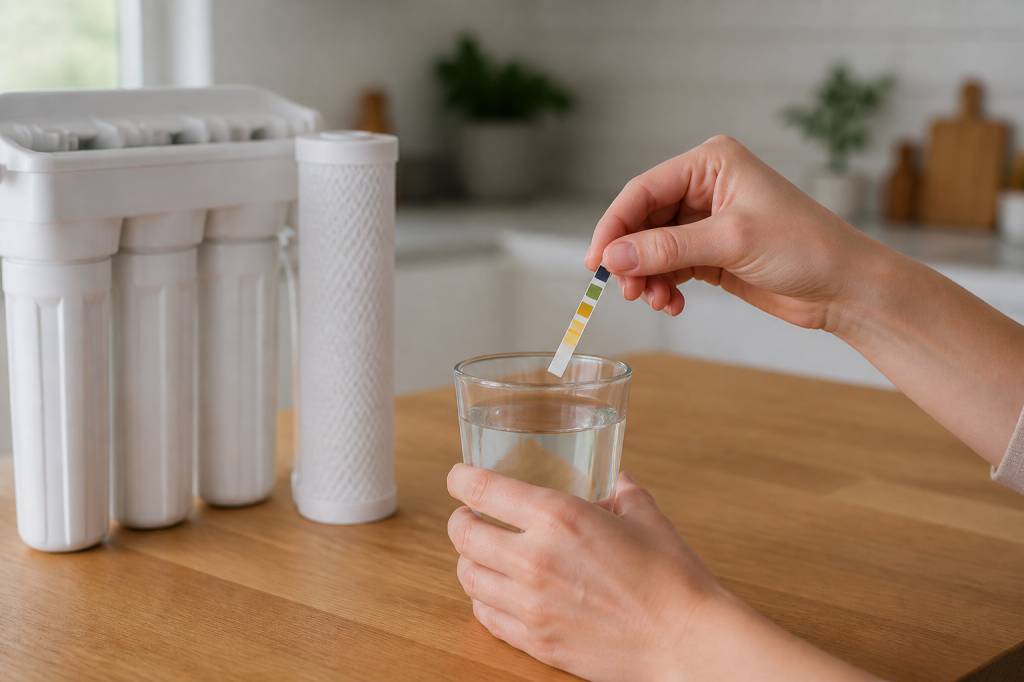
When people talk about water quality, pH is often one of the first numbers they mention. “Alkaline water” has become a popular phrase in health circles, and it is sometimes presented as if a higher pH automatically means cleaner, safer, or better water. But water chemistry is rarely that simple. A higher pH can affect taste, plumbing, corrosion, and how some filtration systems perform. It does not, by itself, remove contaminants such as PFAS.
That distinction matters. In an era where many households are trying to make sense of bottled water labels, home filters, and “healthy water” claims, it is worth asking a direct question: what does alkaline pH actually tell us about water quality, and what does it not tell us?
What alkaline pH actually means
pH measures how acidic or alkaline water is on a scale from 0 to 14. A pH of 7 is considered neutral. Below 7 is acidic, above 7 is alkaline. Drinking water typically falls somewhere between 6.5 and 8.5, although this range can vary depending on local geology, treatment processes, and source water conditions.
Alkaline water usually refers to water with a pH above 7, often around 8 to 9. Natural groundwater can be slightly alkaline because it picks up minerals such as calcium, magnesium, and bicarbonate as it moves through rocks and soil. Some products are also made artificially alkaline through ionization or mineral cartridges.
But pH is only one piece of the puzzle. Two water samples can both be alkaline and still have very different quality profiles. One may be rich in beneficial minerals and low in contaminants, while another may contain unwanted chemicals, microbes, or disinfection by-products. pH is a property of the water, not a guarantee of safety.
Why pH matters for water quality
pH affects more than taste. It influences the behavior of metals, minerals, disinfectants, and pipe materials. In practical terms, this means pH can shape what happens between the water source and your glass.
For example, water that is too acidic can be corrosive. Over time, it may leach metals such as copper or lead from plumbing, especially in older buildings. On the other hand, highly alkaline water can sometimes contribute to scaling, which is the buildup of mineral deposits inside pipes, kettles, and appliances. That scale may not be dangerous in itself, but it can reduce efficiency and shorten the lifespan of fixtures.
Water utilities therefore manage pH carefully. In many systems, pH control is part of corrosion control, disinfection strategy, and overall treatment stability. In other words, pH is important, but mostly because it helps water behave predictably through the treatment and distribution process.
What pH does not do is tell you whether your water contains PFAS, pesticides, nitrates, heavy metals, or bacteria. A glass of alkaline water can still contain contaminants that matter to health.
Alkaline water and health: what the evidence says
Claims around alkaline water often suggest benefits such as detoxification, improved hydration, better digestion, or even disease prevention. The scientific evidence for these claims is limited.
The human body already regulates blood pH very tightly through the lungs and kidneys. Drinking alkaline water does not meaningfully change blood pH in healthy people. That is not marketing’s favorite fact, but it is a relevant one.
Some people report subjective benefits from drinking alkaline water, and some of those effects may be real in a practical sense. For example, water that tastes better may encourage people to drink more, and better hydration can absolutely support general wellbeing. Water with a balanced mineral profile may also be more pleasant to drink than very soft or flat-tasting water.
Still, the major health claims often associated with alkaline water are not strongly supported by robust clinical evidence. If a product promises to “neutralize” all toxins or “reverse” acidity in the body, that is a red flag. The body’s chemistry is more sophisticated than a pitch deck.
From a public health perspective, the more important question is usually not “Is this water alkaline?” but “Is this water free from harmful contaminants, and is it treated appropriately?”
The link between alkaline pH and filtration
pH can affect filtration performance, but not in the simplistic way some product ads imply. Different filtration technologies respond differently to water chemistry.
Activated carbon filters, for example, are widely used to improve taste and reduce chlorine. They are useful in many home systems, but their ability to remove contaminants depends on what they are designed for. Standard carbon filters do not reliably remove dissolved salts, hardness minerals, or many synthetic chemicals.
Reverse osmosis is a different story. It uses a semi-permeable membrane to remove a broad range of contaminants, including many PFAS compounds, heavy metals, and dissolved solids. However, reverse osmosis systems can slightly lower pH because they remove buffering minerals, leaving the treated water more acidic unless it is remediated afterward.
That is why some reverse osmosis systems include a remineralization stage. This step adds back minerals and can raise pH slightly, improve taste, and create a more balanced final product. In this context, alkaline pH is often a result of post-treatment, not the reason the water is cleaner.
This is a crucial distinction. A filter does not become more effective against PFAS simply because the water it produces is alkaline. PFAS removal depends on membrane structure, adsorption capacity, contact time, system maintenance, and proper certification.
Can alkaline filters remove PFAS?
Short answer: not because they are alkaline.
PFAS are highly persistent synthetic chemicals that resist heat, water, and oil. Their chemistry makes them difficult to remove with basic filtration alone. Because they are dissolved contaminants, they do not behave like sediment or chlorine. That means they require specific treatment methods.
The most effective household approaches for reducing PFAS typically include:
- Reverse osmosis systems certified for PFAS reduction
- Activated carbon filters with verified PFAS performance
- Ion exchange systems designed for PFAS removal
- Proper maintenance and timely cartridge replacement
Some alkaline water filters include mineral stones, ceramic stages, or carbon cartridges, but these features are usually aimed at taste, pH adjustment, and general filtration. Unless the product specifically states tested PFAS removal performance and provides credible certification, it should not be assumed to address PFAS contamination.
One useful rule of thumb: if the marketing focuses heavily on “alkalinity” but says very little about contaminants, testing standards, or third-party certification, treat the health claims with caution.
How pH affects plumbing and filter lifespan
Water chemistry affects equipment as much as it affects health. pH can influence how long filters last and how well they function over time.
Highly acidic water can corrode metal components, which may introduce metallic taste or dissolve trace metals from pipes and fittings. Highly alkaline water, especially if it is hard, can encourage scale buildup. That scale can clog filters, reduce flow rate, and place stress on appliances.
For home filtration systems, this means maintenance matters. A filter installed on water with unusual pH or mineral content may need more frequent cartridge changes or pre-treatment. In practical terms, the best filter is not only the one with the right technology, but the one matched to the chemistry of your water.
If you have well water, older plumbing, or a history of scale and corrosion, it is especially wise to test the water before choosing a system. Water that looks clear may still be chemically aggressive or contaminated in ways you cannot detect by sight or taste.
What to look for in a filtration system
If you are deciding between an alkaline filter and a more targeted purification system, start with your actual water concerns. Are you trying to improve taste? Reduce chlorine? Remove PFAS? Address lead? Fix hard water? Those are different problems, and they require different solutions.
Look for systems that are transparent about what they remove and how they have been tested. Third-party certification is especially useful because it reduces the gap between marketing claims and real-world performance.
Useful features to check include:
- Certification for specific contaminant reduction, not just general “purification” claims
- Clear data on PFAS, lead, chlorine, or VOC reduction where relevant
- Maintenance requirements and replacement intervals
- Flow rate and capacity, especially for household use
- Whether the system affects pH and whether remineralization is included
If your main concern is PFAS, pH enhancement should be secondary. A slightly alkaline finish may improve taste, but it does not replace a system designed to capture persistent chemicals. In water treatment, aesthetics and safety are not the same thing.
Is alkaline water ever useful?
Yes, in some contexts. A slightly alkaline water profile can improve taste, especially for people who dislike the sharper flavor of more acidic water. Some mineral-rich waters also have a pleasant mouthfeel and are easier to drink regularly.
For households using reverse osmosis, a remineralization stage can be genuinely helpful. It can restore a more natural taste and reduce the “flat” quality that purified water sometimes has. In that sense, alkaline treatment can be a finishing step that improves the drinking experience.
But “useful” is not the same as “protective.” If the source water contains PFAS or other contaminants, the system must address those directly. Alkalinity can complement treatment, but it cannot substitute for it.
Think of it like this: a clean coat of paint can make a room look better, but it will not fix a leaky roof.
How to assess your own water
If you want to know whether alkaline pH is relevant to your home, testing is the most practical starting point. A water report can reveal pH, hardness, chlorine, metals, and sometimes broader chemical indicators. If PFAS are a concern in your area, look for local testing data or request a specific analysis.
Questions worth asking include:
- What is the current pH of my water?
- Is my water sourced from a municipal supply or a private well?
- Are there known PFAS detections in my region?
- Do I have issues with corrosion, scale, or unusual taste?
- What contaminants does my chosen filter actually remove?
The answers can help you avoid unnecessary purchases. Many households buy alkaline products because they sound healthy, only to discover that the real issue was chlorine taste, hard water, or a contaminant that the filter was never designed to handle.
What really matters when choosing water treatment
Alkaline pH can be part of a good water profile, but it should never be treated as a shortcut to safety. Water quality depends on source conditions, treatment methods, distribution infrastructure, and ongoing maintenance. Health protection depends on removing the contaminants that are actually present.
If your goal is better-tasting water, a slight pH adjustment may help. If your goal is safer water, especially in relation to PFAS, you need evidence-based filtration designed for the contaminant in question. That means reading beyond the front label and paying attention to certifications, test data, and replacement schedules.
In the end, alkaline water is not the villain or the miracle. It is simply one variable in a much larger system. The smartest approach is to treat pH as a useful clue, not a final verdict. When water quality is on the line, clarity matters more than trends.