


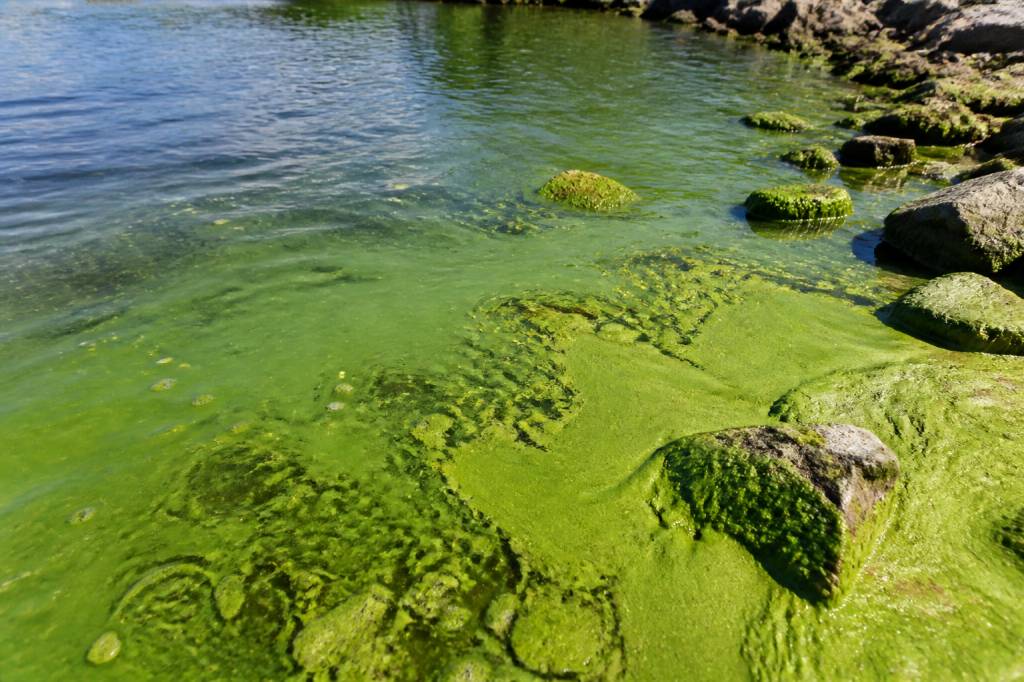
When people hear “algae in water,” they often picture a green film on a pond or a murky lake in midsummer. It looks unpleasant, but is it actually dangerous? In some cases, yes. Algae-related contamination can range from a nuisance that affects taste and odour to a serious public health issue involving harmful algal blooms and cyanotoxins.
For households relying on surface water sources, for communities near lakes and reservoirs, or for anyone trying to understand what’s really in their drinking water, algae deserves more attention than it usually gets. It is not just a seasonal inconvenience. Under the right conditions, algae can affect water quality, treatment performance, and health.
What is algae water?
Algae water is not a formal technical term, but it is commonly used to describe water affected by algae growth, especially when that growth is visible or when algal by-products influence water quality. Algae are simple photosynthetic organisms that thrive in sunlight, warm temperatures, and nutrient-rich water. That means lakes, reservoirs, slow-moving rivers, and even some treated storage systems can become vulnerable during warmer months.
There are many types of algae, and not all of them are harmful. In fact, algae are a natural part of aquatic ecosystems. The problem begins when conditions favour rapid growth. This can lead to algal blooms, which may discolor water, reduce oxygen levels, and in some cases produce toxins.
One of the main concerns is cyanobacteria, often called blue-green algae. Despite the name, they are bacteria, not true algae, but they are usually discussed in the same context because they create similar water quality issues. Some cyanobacteria can release toxins known as cyanotoxins, which can pose risks to humans, pets, livestock, and wildlife.
Why algal blooms happen
Algal blooms are usually the result of a combination of environmental conditions rather than a single cause. If a water body receives too much nutrient input, especially nitrogen and phosphorus, algae can multiply quickly. These nutrients often come from agricultural runoff, wastewater discharges, stormwater, and industrial pollution.
Warm water, calm conditions, and lots of sunlight can make the situation worse. Climate change is also playing a role by increasing water temperatures and changing rainfall patterns, which can encourage bloom formation and make events more frequent or more intense in some regions.
In practical terms, this means that what happens on land often ends up affecting water quality downstream. A fertiliser-heavy field, a leaking sewage system, or poor catchment management can all contribute to the growth of algae in a reservoir. Water systems do not exist in isolation; they reflect what is happening in the surrounding environment.
Health risks linked to algae in water
The health risks depend on the type of algae, the level of contamination, and how people are exposed. Some algal issues are mostly aesthetic, while others can be genuinely harmful.
Exposure can happen through drinking contaminated water, swallowing water while swimming, inhaling aerosolised droplets near affected water bodies, or even through skin contact in certain cases. For people who rely on untreated surface water or private water supplies, the risk can be higher.
Potential health effects include:
Children, older adults, pregnant people, and individuals with weakened immune systems may be more vulnerable. Pets are also at risk, especially dogs that drink from or swim in bloom-affected water. Sadly, pet poisonings linked to harmful algal blooms are well documented, and symptoms can develop very quickly.
It is worth stressing that not every green or cloudy water source is toxic. But visible bloom or not, contaminated water should be treated cautiously. Toxins are not always obvious to the eye, and a water body can look deceptively normal while still carrying a risk.
Signs that water may be affected by algae
So how do you know if algae might be the issue? There are some common warning signs, although laboratory testing is the only reliable way to confirm toxin levels.
Look out for:
Sometimes algae produce compounds that do not pose a direct health risk but still make water unpleasant to drink. Geosmin and 2-methylisoborneol, for example, can give water an earthy or musty taste and smell. Not dangerous in themselves at typical levels, but enough to make people ask, “Why does my water taste like a pond?”
How water utilities treat algae-contaminated water
Municipal treatment plants use multiple steps to manage algae and related contaminants. The exact process depends on source water quality, the type of bloom, and whether toxins are present.
Common treatment methods include coagulation and flocculation, sedimentation, filtration, activated carbon, and, in some cases, advanced oxidation or membrane processes. The challenge is that algae are not all removed the same way. Some cells can be physically filtered out, but dissolved toxins may pass through if treatment is not properly designed.
Utilities often need to adjust operations during bloom events. For example, they may increase monitoring frequency, change chemical dosing, or optimize filtration to prevent algae cells from breaking apart and releasing toxins into finished water. Once cells rupture, treatment becomes much more complicated. In other words, sometimes the best strategy is not just removing algae, but removing them gently.
Monitoring matters just as much as treatment. Water suppliers that regularly test for cyanotoxins and track bloom conditions are better positioned to respond before contamination reaches consumers. That is why proactive catchment management and real-time monitoring tools are becoming increasingly important in the water sector.
Can household filtration remove algae and toxins?
For households, filtration can help, but the type of system matters enormously. A standard sediment filter may remove particles and improve clarity, but it will not necessarily remove dissolved toxins. If the concern is visible algae, a basic filter may reduce some of the material. If the concern is cyanotoxins, more advanced treatment is usually needed.
Activated carbon is one of the most useful tools for reducing many algal compounds, including some taste-and-odour issues and certain toxins, depending on the system design and filter condition. Granular activated carbon can adsorb a range of organic contaminants, but performance varies based on contact time, water chemistry, and media replacement schedules.
Reverse osmosis can remove a wide range of dissolved contaminants and is often more effective than simple filtration for many water quality problems. However, like any system, it must be properly maintained. A neglected membrane does not magically become more effective with age.
Ultraviolet treatment can help in some situations, but UV alone is not a universal solution for algae-related risks because it does not reliably remove toxins already present in water. It is better thought of as one part of a broader treatment approach rather than a stand-alone fix.
If you are choosing a home water filter to address algae concerns, the key questions are:
It is not enough for a product to say “improves water quality.” That phrase can mean almost anything. For bloom-related risks, specificity matters.
What to do if your water source is affected
If local authorities issue a bloom advisory or warning, follow their guidance first. That may include avoiding drinking tap water, using bottled water, boiling water only if advised, or keeping pets away from affected areas. Important note: boiling does not remove cyanotoxins and can even concentrate them if water evaporates, so it is not a universal solution.
If you rely on a private well, the situation is different. Wells are generally less exposed to surface blooms, but shallow or poorly protected wells can still be vulnerable to contamination pathways, especially after flooding or runoff events. If your water looks, smells, or tastes unusual, stop using it for drinking until it has been tested.
Practical steps include:
That last point matters more than people think. Filters do not announce when they are exhausted. They just stop performing properly, quietly and without ceremony.
How to reduce algae risks at the source
Long-term control is not just about treatment. It also depends on preventing the conditions that allow algae to thrive in the first place. That means managing nutrients across entire watersheds and improving the resilience of water systems.
Effective source control measures include:
These actions may sound broad, but they are essential. Treating contaminated water is necessary; preventing contamination is smarter. Source protection lowers treatment costs, improves reliability, and reduces risk for everyone downstream.
Why this issue matters beyond taste and odour
It is easy to dismiss algae as a cosmetic issue. After all, many people only notice it when their water smells odd or a lake turns green. But harmful blooms are part of a larger environmental story involving nutrient pollution, ecosystem stress, and climate pressures.
They also raise fairness questions. Communities with limited infrastructure, private water supplies, or fewer monitoring resources are often more exposed to water quality risks. In environmental terms, that is not a small detail. It is the difference between an inconvenience and a serious public health concern.
Algae in water is a reminder that water safety cannot be taken for granted. The source matters. The treatment matters. And the filtration method matters even more when the issue is not just suspended particles, but dissolved toxins that require targeted removal.
If your water source has a history of blooms, or if you simply want peace of mind during the warmer months, the safest approach is to combine reliable monitoring with a treatment system designed for the specific risk. In water quality, guessing is expensive, and sometimes risky. Testing is cheaper.