


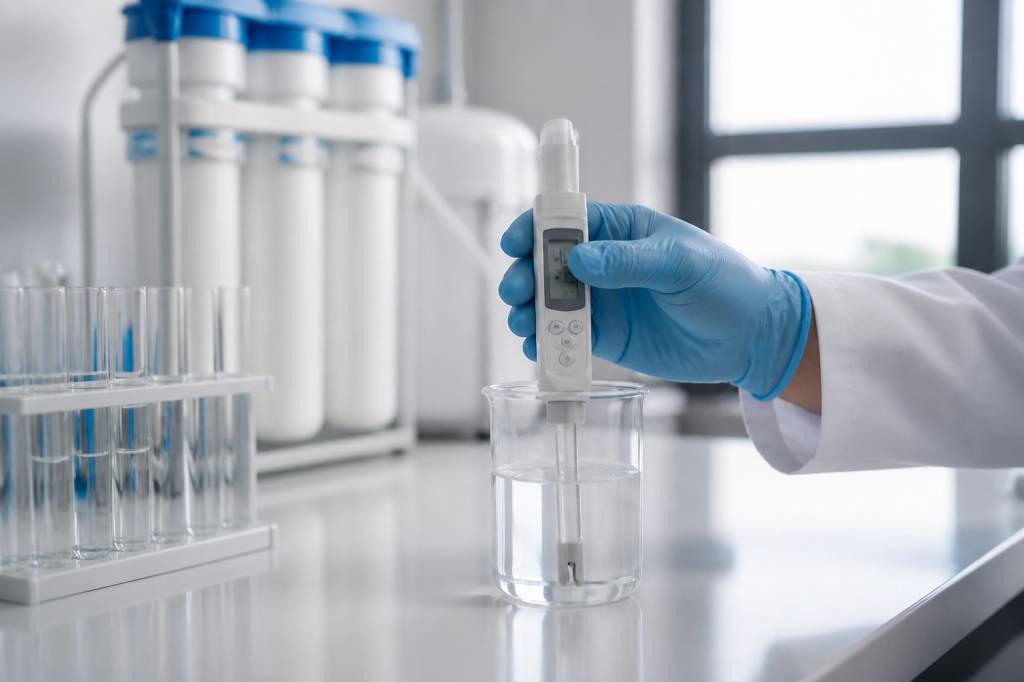
When people talk about water quality, pH often gets treated like a side note. It is not. pH can affect pipe corrosion, treatment performance, taste, and even how well a filtration system handles contaminants such as PFAS. If you are trying to remove “forever chemicals” from drinking water, understanding whether your water is acidic or alkaline can help explain why one system works brilliantly while another struggles.
That does not mean pH is a magic switch for PFAS removal. It is not. But it can influence the environment in which treatment happens, especially when filtration relies on adsorption, membrane performance, or resin chemistry. In practical terms: pH can shape efficiency, maintenance needs, and long-term reliability. And for anyone investing in PFAS filtration, those details matter.
What pH actually tells you about water
pH measures how acidic or alkaline water is on a scale from 0 to 14. A pH of 7 is considered neutral. Values below 7 are acidic, and values above 7 are alkaline, sometimes called basic. The scale is logarithmic, which means each whole number represents a tenfold change in hydrogen ion concentration. So water with a pH of 5 is not just “a little more acidic” than water at pH 6. It is much more acidic.
For drinking water, pH matters because it can influence corrosion, mineral solubility, disinfectant effectiveness, and the performance of some treatment media. Public water systems often aim for a pH range that balances safety and infrastructure protection. In the UK and elsewhere, water is generally managed to remain within a range that avoids aggressive corrosion and excessive scaling.
But when we shift the conversation to PFAS, pH becomes less about the contaminant itself and more about the treatment conditions around it. That distinction is important. PFAS are chemically resilient compounds, and their removal depends on the technology used, the water chemistry, and the type of PFAS present.
Why pH matters for filtration systems
Different filters respond differently to pH. Some technologies are relatively tolerant, while others can see reduced efficiency or faster wear when water is too acidic or too alkaline. pH can influence the charge of filter media, the stability of membranes, and the likelihood of scaling or corrosion in components.
Think of it like running a car in the wrong climate. The engine may still work, but it will not perform as designed, and parts may wear faster. Water filtration systems are similar. A unit can still treat water at an off-ideal pH, but lifespan, maintenance frequency, and pollutant removal can all be affected.
Here are the main ways pH can influence filtration:
Acidic water and filtration: what to watch for
Acidic water is typically more corrosive. That can be a problem long before you even reach the filter. Copper piping, fittings, tanks, and valves may degrade more quickly in low-pH water. Corrosion can release metals such as lead, copper, or iron into drinking water, which complicates the treatment picture. In other words, you may be trying to remove PFAS while also dealing with metal contamination caused by the water chemistry itself.
From a filtration perspective, acidic water can affect some media and system components. Certain resins and membranes have operating ranges that do not love low pH. Acidic conditions can also shorten the lifespan of pre-filters and protective parts if corrosion products build up or clog the system.
Does acidic pH directly stop PFAS removal? Not usually. But it can create a less stable treatment environment. If the water is aggressive, the system may need more frequent servicing, and that affects performance over time.
In household treatment, acidic water often shows up through practical clues: a metallic taste, blue-green staining, pinhole leaks in copper pipes, or a system that seems to clog or age faster than expected. Those signs should prompt testing, not guesswork. Water chemistry is rarely shy when something is off.
Alkaline water and filtration: helpful or problematic?
Alkaline water is not automatically better. A higher pH can reduce corrosion risk, but it can also increase scaling. When water contains calcium and magnesium, alkaline conditions can encourage mineral precipitation. That can coat membranes, block cartridges, and reduce flow through treatment systems.
For PFAS filtration, scaling matters because it can interfere with contact between water and the active treatment surface. If a membrane is coated with mineral deposits, or if activated carbon is choked by particulates and scale, PFAS removal can decline. In practice, the system may still be running, but not at its intended efficiency. That is the kind of failure that is easy to miss until water quality testing reveals the gap.
High pH can also influence some ion exchange systems. Ion exchange resins are designed to capture charged compounds from water, and their behavior depends on water chemistry. Extremely alkaline conditions may not always prevent PFAS removal, but they can alter competition from other ions and affect overall performance. More ions in the water generally means more competition for the resin, which can reduce capacity.
What pH means specifically for PFAS removal
PFAS are a large family of fluorinated chemicals. Many of the best-known compounds, including PFOA and PFOS, are persistent, mobile, and resistant to traditional treatment. The main point to understand is this: pH does not “neutralize” PFAS in drinking water. It does not break the carbon-fluorine bond. It does not make PFAS disappear.
Instead, pH can influence how well treatment methods capture PFAS. The most common technologies used for PFAS removal include activated carbon, ion exchange, and reverse osmosis. Each responds differently to water chemistry.
Activated carbon works by adsorption, meaning PFAS molecules stick to the surface of the carbon. Contact time, carbon quality, PFAS chain length, and competing organic matter all matter. pH can play an indirect role by affecting the overall chemistry of the water and the presence of other dissolved substances. While activated carbon is generally robust, poor water conditions can reduce its effective lifespan.
Ion exchange is often highly effective for PFAS, especially certain anionic types. Since many PFAS in water carry a negative charge, the chemistry of the resin and the surrounding ions matters a great deal. pH can influence competition among ions and the broader performance of the resin bed.
Reverse osmosis can remove a broad range of contaminants, including many PFAS, by forcing water through a semipermeable membrane. pH matters here mainly because membranes can be sensitive to extremes, and scaling or fouling can reduce efficiency. A membrane is not a fan of mineral crust, to put it mildly.
Which filtration technologies are most sensitive to pH?
Some systems are more pH-sensitive than others. That sensitivity is not necessarily a weakness; it is just part of how the technology works. Knowing this helps you match the right system to the right water.
In real-world water treatment, pre-treatment is often the unsung hero. A PFAS system may use sediment filtration, carbon, and a membrane or resin together. If pH is causing corrosion or scaling upstream, the “main” filter has to work harder. That is rarely efficient, and it can become expensive.
How to test pH before choosing a PFAS filter
If you are considering a PFAS treatment system, testing the water first is the smart move. pH should be part of that test panel, along with PFAS levels, hardness, alkalinity, iron, manganese, chlorine, dissolved solids, and other site-specific factors. A PFAS filter chosen without water analysis is a bit like buying shoes without checking the size.
For homeowners, a basic pH test can be done with a meter or high-quality test strips, but laboratory testing is more reliable when decisions involve treatment investment. If the water comes from a private well, testing becomes even more important because chemistry can vary significantly by location, season, and rainfall.
For utilities, industrial sites, or larger buildings, pH testing should be part of a broader compliance and treatment assessment. If the water is acidic, corrosion control may be needed before PFAS filtration. If the water is alkaline and scaling-prone, softening or antiscalant strategies may help protect membranes and resins.
What the ideal pH range looks like for filtration
There is no universal “best” pH for PFAS removal because it depends on the treatment technology and the water source. That said, many systems operate more predictably when water is near neutral, roughly around pH 6.5 to 8.5. This range tends to reduce corrosion risks while avoiding the more aggressive scaling often associated with higher alkalinity.
But here is the catch: “acceptable” and “optimal” are not the same thing. A system may technically work at pH 5.5 or pH 9.0, yet still suffer from premature wear or reduced treatment consistency. The best approach is to follow the manufacturer’s operating range and align the system with the actual water chemistry, not an idealised assumption.
In PFAS treatment, the right answer is usually the same one used in good environmental science: measure first, then engineer the solution.
Practical steps if your water is acidic or alkaline
If you already know your water pH is outside the neutral range, do not panic. It does not mean you cannot remove PFAS effectively. It means the treatment plan should be designed with water chemistry in mind.
Useful next steps include:
If you are working with a private well, corrosion control and PFAS filtration may need to be paired. If your supply is alkaline and scale-prone, system design should include protection against fouling. In both cases, the goal is the same: stable, long-term contaminant removal.
Why this matters for health and compliance
PFAS are under growing regulatory scrutiny because of their persistence and potential health risks. As standards tighten and more utilities move toward treatment, the technical details of filtration matter more than ever. pH may not be the headline issue, but it can determine whether a filter performs consistently enough to meet health goals and compliance targets.
That is particularly important where multiple water quality issues overlap. A system designed to remove PFAS may also need to control metals, maintain acceptable taste, and protect plumbing infrastructure. Water treatment is rarely a single-problem exercise. It is usually a chain of decisions, and pH sits quietly at several points in that chain.
So, acidic or alkaline water: does it matter for PFAS removal? Absolutely. Not because pH destroys PFAS, but because it shapes the conditions under which filtration succeeds or fails. Ignore it, and you risk reduced efficiency, higher maintenance, and avoidable surprises. Account for it, and you give your treatment system a far better chance of doing its job properly.