


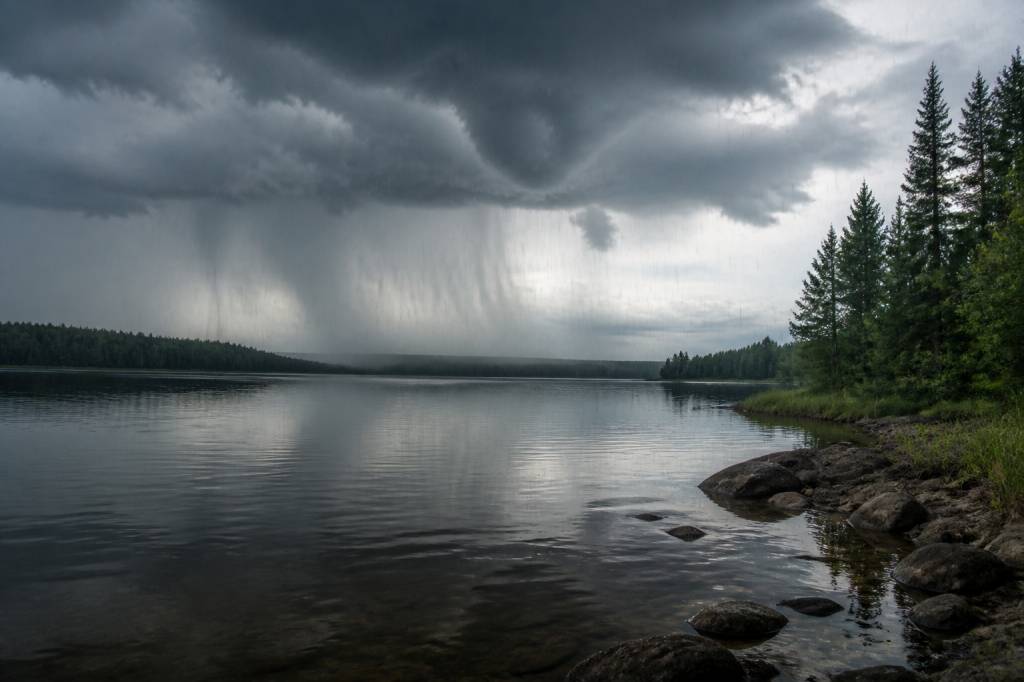
Acid rain is often pictured as a dramatic environmental threat: polluted clouds drifting over forests, lakes and cities. The reality is less visible but just as important. Air pollution can change the chemistry of rainfall, soil and surface water, creating a chain of effects that reaches drinking-water sources and aquatic ecosystems.
The process is not simply “dirty air falling as rain.” It involves several chemical reactions between pollutants, atmospheric moisture, soils, rocks and water. Understanding that chain helps explain why a lake can become acidic, why fish populations may decline, and why water treatment challenges can increase even when the original pollution source is many kilometres away.
Acid rain diagram: the pollution-to-water pathway
The simplified diagram below shows how emissions from combustion sources can eventually affect water quality:
Coal, oil and gas combustion
↓
Sulfur dioxide (SO₂) and nitrogen oxides (NOₓ) released into the atmosphere
↓
Reactions with oxygen, sunlight and water vapour
↓
Sulfuric and nitric acids formed in clouds
↓
Wet deposition: acid rain, snow, fog and hail
Dry deposition: acidic particles and gases settling onto land and water
↓
Soil and rock chemistry changes
↓
Lower alkalinity, increased metal mobility and altered freshwater conditions
This pathway can take place over hours or days. Wind may transport the pollutants far beyond the industrial facilities, power stations, traffic corridors or agricultural areas where they were released.
What causes acid rain?
Acid rain begins with air pollution, particularly sulfur dioxide and nitrogen oxides. These gases are produced when fossil fuels are burned at power plants, industrial facilities, transport networks and other combustion sources.
Sulfur dioxide can react in the atmosphere to form sulfurous and sulfuric acids. Nitrogen oxides can form nitric acid. Both compounds may dissolve in cloud droplets and precipitation. When that precipitation reaches the ground, it has a higher level of acidity than naturally clean rainwater.
Rain is naturally slightly acidic because carbon dioxide dissolves in water and forms weak carbonic acid. Normal rain generally has a pH close to 5.6, although local conditions can produce variation. Acid rain is more acidic because of sulfuric and nitric acids generated from pollution.
pH is measured on a logarithmic scale. A change from pH 6 to pH 5 represents a tenfold increase in hydrogen-ion concentration, not a small one-point difference. This matters because even modest changes in pH can influence the behaviour of metals, nutrients and aquatic organisms.
Wet and dry deposition: acid pollution does not need rain
The term “acid rain” is commonly used for acidic precipitation, but scientists often use the broader term acid deposition. This includes both wet and dry forms.
- Wet deposition: acidic rain, snow, sleet, fog and cloud water carry pollutants to the ground.
- Dry deposition: acidic gases and particles settle directly onto soil, vegetation, buildings and water surfaces between rain events.
Dry deposition can be particularly important in areas close to roads, industrial sites or power stations. A later rainfall event may wash accumulated pollutants from roofs, vegetation and urban surfaces into drains, streams and reservoirs. In this sense, the first heavy shower after a dry period can act like a chemical rinse for the landscape.
How acid rain changes soil and groundwater
The impact of acidic deposition depends strongly on local geology. Some soils and rock formations contain alkaline minerals, especially calcium carbonate, that can neutralise acidity. This natural buffering capacity protects streams and lakes from sudden pH changes.
Other areas have thin soils and granite, sandstone or other rocks with limited neutralising capacity. In these landscapes, acidic water can move more rapidly through the soil and reach freshwater systems with fewer chemical safeguards.
As acidity increases, hydrogen ions can displace other elements from soil particles. Calcium and magnesium, which are important nutrients for plants and aquatic organisms, may be leached from the soil. At the same time, metals such as aluminium can become more soluble.
Aluminium is naturally present in many soils, but it is often bound in relatively stable mineral forms. Under more acidic conditions, it can dissolve into soil water and enter streams. Dissolved aluminium can damage fish gills, interfere with salt and oxygen regulation, and reduce the ability of fish to reproduce.
Groundwater is not automatically protected from acid deposition. The soil may filter some contaminants, but it can also store and transform pollutants before they reach an aquifer. The final effect depends on soil depth, geology, rainfall, land use and the speed of groundwater movement.
What happens to lakes and rivers?
Freshwater ecosystems are sensitive to changes in pH and alkalinity. Alkalinity is the capacity of water to neutralise acids. A lake with high alkalinity may absorb acidic inputs without a dramatic fall in pH. A lake with low alkalinity can become vulnerable after years of repeated deposition.
Acidification can affect water quality in several connected ways:
- pH may fall below the range tolerated by sensitive fish, amphibians and invertebrates.
- Aluminium and other metals may become more mobile and toxic.
- Plankton and insect communities may change, reducing food availability for fish.
- Calcium levels may decline, affecting organisms that require calcium to build shells or external structures.
- Decomposition and nutrient cycling can be altered, changing the ecological balance of the water body.
Fish are not always killed by acidity alone. In many cases, the problem is the combined effect of low pH, dissolved metals, reduced food supply and reproductive stress. Eggs and young fish are often more sensitive than adults, meaning a lake may appear to contain fish while its population is quietly declining.
Acidic water can also affect drinking-water sources. Low pH may increase the corrosion of metal pipes and plumbing systems. This can release copper, iron, lead or other metals into water, depending on the materials present and the effectiveness of corrosion control.
Acid rain and drinking-water treatment
Water treatment plants are designed to manage a wide range of chemical and biological risks, but acidification can complicate the process. Operators may need to adjust pH and alkalinity to prevent corrosion, improve coagulation or protect downstream distribution systems.
Acidic source water can also alter the chemistry of natural organic matter. When water chemistry changes, treatment performance may change with it. The result can be greater demand for pH adjustment, enhanced monitoring and more careful control of disinfection processes.
This does not mean that every episode of acid rain creates an immediate drinking-water emergency. Modern treatment systems, regulatory controls and routine testing provide important safeguards. The concern is often cumulative: repeated acidic inputs can gradually affect catchment chemistry, infrastructure and treatment requirements.
A practical monitoring programme may include:
- pH and alkalinity measurements;
- conductivity and dissolved organic carbon;
- calcium, magnesium and sulphate concentrations;
- dissolved and total aluminium;
- iron, copper, lead and other metals where corrosion is a concern;
- seasonal comparisons following dry periods and heavy rainfall.
Where do PFAS fit into the picture?
PFAS and acid rain are different environmental issues. PFAS are a large group of manufactured chemicals used in applications such as stain resistance, firefighting foams, non-stick products and industrial processes. They are not created by the same atmospheric reactions that produce sulfuric and nitric acids.
However, water chemistry can influence how contaminants move through the environment. Changes in pH, dissolved organic matter, mineral surfaces and metal behaviour may affect the transport of PFAS and other pollutants through soils, sediments and treatment systems.
It is important not to overstate this relationship. Acid rain is not a universal explanation for PFAS contamination, and lowering pH does not destroy PFAS. Conventional acidification also does not provide a reliable PFAS treatment method.
PFAS removal generally requires targeted technologies, such as granular activated carbon, ion exchange or high-pressure membrane systems, selected according to the specific compounds and water conditions. Monitoring remains essential because treatment performance can vary between short-chain and long-chain PFAS, and because spent media must be managed responsibly.
The broader lesson is that water contaminants rarely behave in isolation. A catchment affected by atmospheric pollution, metals, nutrients, pesticides or PFAS may require an integrated assessment rather than a single-chemical solution.
Acid rain is not only a historic problem
In many regions, controls on sulfur emissions have significantly reduced acid deposition compared with the peak levels recorded during the twentieth century. Cleaner fuels, industrial pollution controls and regulations on power-plant emissions have made a measurable difference.
That progress should not be confused with complete recovery. Soils and lake sediments may retain a legacy of previous pollution. Some ecosystems recover slowly because their buffering capacity was depleted over decades. Nitrogen pollution from transport, industry and agriculture can also continue to contribute to acidification and nutrient imbalance.
Climate change adds another layer of complexity. Changes in rainfall intensity, drought frequency, wildfire activity and soil moisture can influence how pollutants are deposited and transported. A long dry period followed by intense rainfall may produce a sudden chemical pulse into streams, even if annual average deposition appears moderate.
How scientists track the impact
Researchers assess acid deposition using a combination of atmospheric monitoring, precipitation chemistry, soil surveys and freshwater sampling. Long-term datasets are especially valuable because a single rainstorm cannot show whether an ecosystem is recovering or deteriorating.
Scientists may measure:
- the concentration of sulphate, nitrate and ammonium in precipitation;
- pH and electrical conductivity in rain and surface water;
- alkalinity trends in lakes and rivers;
- metal concentrations, particularly aluminium;
- fish abundance, reproductive success and species diversity;
- changes in soil nutrients and forest health.
Catchment-scale studies are important because water quality at a sampling point reflects everything happening upstream. The chemistry of a lake can be shaped by atmospheric deposition, forestry, agriculture, wastewater, road runoff and geology at the same time.
What can reduce the risk?
The most effective strategy is to reduce emissions at their source. Sulfur dioxide controls, cleaner energy systems, improved industrial processes and lower-emission transport all reduce the pollutants that can form acid deposition.
At the catchment level, authorities can protect water quality by maintaining wetlands, limiting soil erosion, monitoring vulnerable lakes and controlling metal pollution. In some severely affected waters, carefully managed liming has been used to restore alkalinity. This can provide ecological relief, but it is a treatment for the symptoms, not a substitute for emission reductions.
For households and communities, the useful actions are practical rather than dramatic: support clean-air policies, reduce fossil-fuel use where possible, maintain private wells, test water when corrosion or unusual taste is suspected, and follow local advice after flooding or major pollution events.
Acid rain demonstrates a central principle of environmental science: air quality and water quality are connected. Pollution released from a chimney or vehicle exhaust may eventually appear in a stream, a forest soil or a drinking-water treatment plant. The journey is complex, but the solution starts with a clear understanding of the pathway—and with reducing pollution before it reaches the atmosphere.