


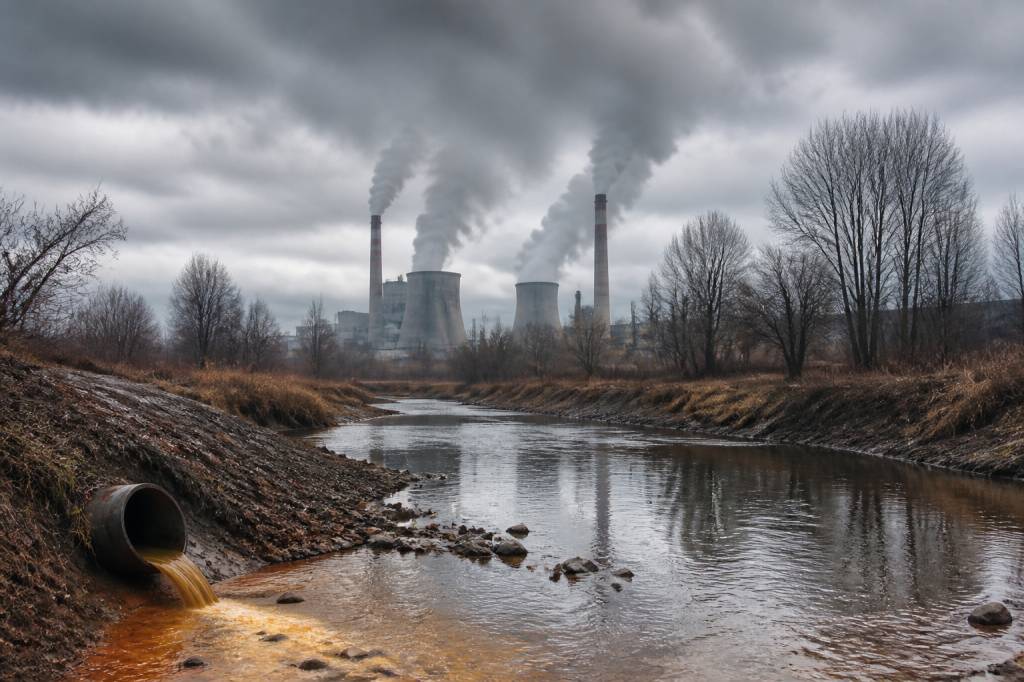
Acid deposition is one of those environmental problems that sounds abstract until you look at what it actually does. It falls from the sky as rain, snow, fog, or dry particles, and it can quietly alter ecosystems, corrode buildings, damage water supplies, and affect human health in ways that are often overlooked. If you live near industry, major roads, or power generation sites, you may already be exposed to the fallout, literally.
Although acid deposition is less visible than a chemical spill or an oil slick, its impacts can be broad and long-lasting. It changes the chemistry of soil and water, mobilises toxic metals, and contributes to respiratory stress through the pollutants that form acid rain in the first place. For communities that rely on lakes, rivers, or shallow groundwater, the effects can show up in drinking water quality as well. In other words, the problem is not just what falls from the atmosphere. It is what that deposition does once it reaches the ground.
What acid deposition actually is
Acid deposition refers to the transfer of acidic compounds from the atmosphere to the Earth’s surface. The most familiar form is acid rain, but the term also includes acid snow, fog, and dry deposition of acidic gases and particles. These pollutants mainly come from sulfur dioxide (SO2) and nitrogen oxides (NOx), which are emitted by coal- and oil-fired power plants, industrial facilities, vehicle exhaust, and some agricultural and combustion processes.
Once in the atmosphere, these gases react with water vapour, oxygen, and other chemicals to form sulfuric and nitric acids. These acids then return to the surface through precipitation or direct settling. The result is not necessarily “acid rain” in the dramatic sense people imagine. In many regions, the pH is only moderately lower than normal rainfall, but even small changes matter over time, especially when they occur repeatedly.
Natural rain is already slightly acidic, usually around pH 5.6, because it absorbs carbon dioxide from the air. Acid deposition becomes a problem when pollution pushes that acidity lower and adds extra chemical stress to soils, waterways, plants, and infrastructure.
How acid deposition affects human health
Acid deposition does not usually harm people by directly “burning” the skin or causing immediate illness. The health risk is more indirect, and that is precisely why it is easy to underestimate. The pollutants that cause acid deposition, especially sulfur dioxide and nitrogen oxides, are harmful in their own right. They irritate the respiratory system, worsen asthma, and contribute to the formation of fine particulate matter and ground-level ozone, both of which are linked to cardiovascular and lung disease.
People with asthma, chronic obstructive pulmonary disease, heart conditions, children, and older adults are typically the most vulnerable. Short-term exposure to SO2 can trigger coughing, wheezing, and chest tightness. Long-term exposure to NOx and associated particulate pollution increases the burden on the lungs and heart, especially in urban and industrial areas.
There is also an important secondary pathway: acid deposition can change what ends up in drinking water. When acidic water moves through soil or rock, it can dissolve metals such as lead, aluminium, cadmium, and mercury. Some of these metals are toxic even at low concentrations. That means the health impact is not only about air quality; it can also be about what comes out of the tap after pollutants have travelled through the environment.
In practical terms, this creates a chain reaction:
- Air pollutants form acid deposition
- Acidic water and particles land on soil and surface waters
- Soils release metals and nutrients that were previously bound up
- Water sources become more chemically unstable
- Communities may face higher exposure through drinking water and food chains
That chain reaction is one reason environmental health experts treat acid deposition as more than a weather issue. It is a pollution pathway with real public health consequences.
Why water contamination is one of the biggest concerns
Water is where acid deposition becomes especially complicated. Lakes, streams, reservoirs, and groundwater systems each respond differently depending on local geology, rainfall patterns, and surrounding land use. Some waters naturally buffer acidity well. Others, particularly in areas with thin soils or granite bedrock, are far more sensitive.
When acid deposition enters a watershed, it can lower pH and strip away the natural buffering capacity of soils and sediments. This makes water more corrosive. Corrosive water can leach metals from pipes, plumbing fixtures, and distribution systems, creating risks that go beyond the source water itself. If a water system already has aging infrastructure, the problem can be amplified.
Acidification also changes the mobility of contaminants in the environment. Metals that would normally remain locked in sediment or soil can become more soluble in acidic conditions. That matters because once these metals are in water, they can be consumed by people, absorbed by aquatic organisms, or move further downstream.
Some of the key water-related risks include:
- Lower pH in lakes and rivers, which stresses aquatic life
- Release of aluminium and other metals from soils into surface water
- Increased corrosion of pipes and plumbing materials
- Potential contamination of private wells in vulnerable areas
- Reduced effectiveness of natural filtration in soils and wetlands
Private well users should pay particular attention. Unlike municipal supplies, wells are not always protected by large-scale treatment systems or continuous monitoring. If rainfall chemistry shifts and local soils cannot buffer the acidity, well water can become chemically unstable without obvious warning signs.
The hidden pollution impacts on ecosystems and food chains
Acid deposition does not stop at the edge of a water body. It reverberates through ecosystems. Fish, amphibians, insects, and plants all respond to changes in pH and metal availability. In acidified lakes, for example, sensitive fish species can disappear, which disrupts predator-prey relationships and reduces biodiversity. If insects decline, birds that feed on them may also suffer. Environmental problems rarely stay neatly in one lane.
Soils are equally important. Healthy soil acts like a chemical buffer, but acid deposition can deplete essential nutrients such as calcium and magnesium. At the same time, it can increase the availability of toxic metals to roots. This weakens trees, reduces crop resilience, and can alter the productivity of forests and agricultural land over time.
There is also a food-chain dimension. Contaminants mobilised by acidification can accumulate in aquatic organisms. While the exact risk depends on local conditions and species, the broader issue is clear: pollution that enters water and soil rarely remains isolated. It moves through ecosystems, and eventually, it can enter human food systems.
For communities that depend on fishing, farming, or local water resources, acid deposition is therefore not an abstract environmental metric. It is a livelihood issue.
Where the problem is most severe
Acid deposition has been reduced in some countries due to stricter air pollution controls, but it has not disappeared. Regions near industrial centres, densely trafficked transport corridors, coal-burning facilities, and areas with high agricultural emissions can still experience significant deposition. Weather patterns also matter. Wind can carry pollutants far from their source, so a region may be affected even if it does not produce many emissions itself.
Historically, parts of North America and northern Europe were heavily affected by acid rain, especially in the late 20th century. Regulations helped reduce sulfur emissions, but nitrogen pollution remains a challenge in many places. In some rapidly industrialising regions, acid deposition is still an active environmental concern.
Local geography can make all the difference. A lake in a limestone-rich area may shrug off acidity fairly well. Another lake only a few miles away, sitting on thin, acidic soil, may show clear damage. This is why broad national averages can hide serious local problems.
How to tell if water may be affected
Acid deposition is not something most households can detect by smell or taste alone. Water can look clear and still be chemically aggressive. That makes testing essential, especially if you rely on a private well or live in an area with known industrial emissions.
Useful indicators to monitor include:
- pH levels in drinking water and nearby surface waters
- Alkalinity, which shows buffering capacity
- Metal levels such as lead, aluminium, iron, and manganese
- Signs of pipe corrosion, such as blue-green staining or metallic taste
- Changes in clarity or sediment after heavy rain
It is worth noting that low pH alone is not the whole story. Water with a pH that seems only mildly acidic can still be corrosive if alkalinity is low. That is one reason water chemistry should be assessed as a system, not just as a single number on a test report.
What can be done to reduce the risks
The most effective way to address acid deposition is to reduce emissions at the source. That means tighter controls on sulfur dioxide and nitrogen oxides from power plants, industrial boilers, vehicles, and other combustion sources. Cleaner energy systems, emissions scrubbers, catalytic converters, and improved industrial standards all play a role.
On the water side, treatment and monitoring are critical. Water utilities may add alkaline materials to neutralise acidity, adjust treatment processes to reduce corrosion, or increase monitoring for metals. In vulnerable watersheds, land management practices can also help preserve buffering capacity and slow the movement of acidified runoff.
For households, especially those on private wells, practical steps include:
- Testing water regularly for pH, alkalinity, and metals
- Using certified filtration or treatment systems where appropriate
- Inspecting plumbing for corrosion-related issues
- Retesting after nearby industrial changes, fires, or major storms
- Consulting local environmental or water authorities if results change suddenly
Filtration is not a one-size-fits-all fix. If water is acidic and corrosive, a standard carbon filter may improve taste but not solve the underlying chemistry. The right treatment depends on the contaminant profile and the source of the problem. That is why proper testing comes first. Guessing is not a water strategy.
Why acid deposition still deserves attention
It can be tempting to think acid rain is an old environmental issue that has been solved. In reality, progress has been uneven. Some regions have improved, while others continue to face pollution burdens that affect air quality, water chemistry, and ecosystem health. The lesson is not that acid deposition is a relic of the past. It is that pollution controls work, but only if they are maintained and adapted.
From a health perspective, the issue matters because acid deposition is tied to air pollutants that harm the respiratory and cardiovascular systems. From a water perspective, it matters because acidic inputs can mobilise toxic metals, corrode infrastructure, and destabilise drinking water sources. From an environmental perspective, it matters because soils, forests, lakes, and wildlife all respond to long-term chemical stress.
The bigger picture is straightforward: when air pollution changes water chemistry, the impacts can move from the atmosphere into homes, ecosystems, and food chains. That is why acid deposition should be seen not just as an environmental chemistry problem, but as a public health and water security issue.
If you are monitoring water quality, planning filtration, or simply trying to understand how air pollution affects the environment around you, acid deposition is a reminder that contaminants rarely stay in one place. They travel, they transform, and they often show up where people least expect them.