


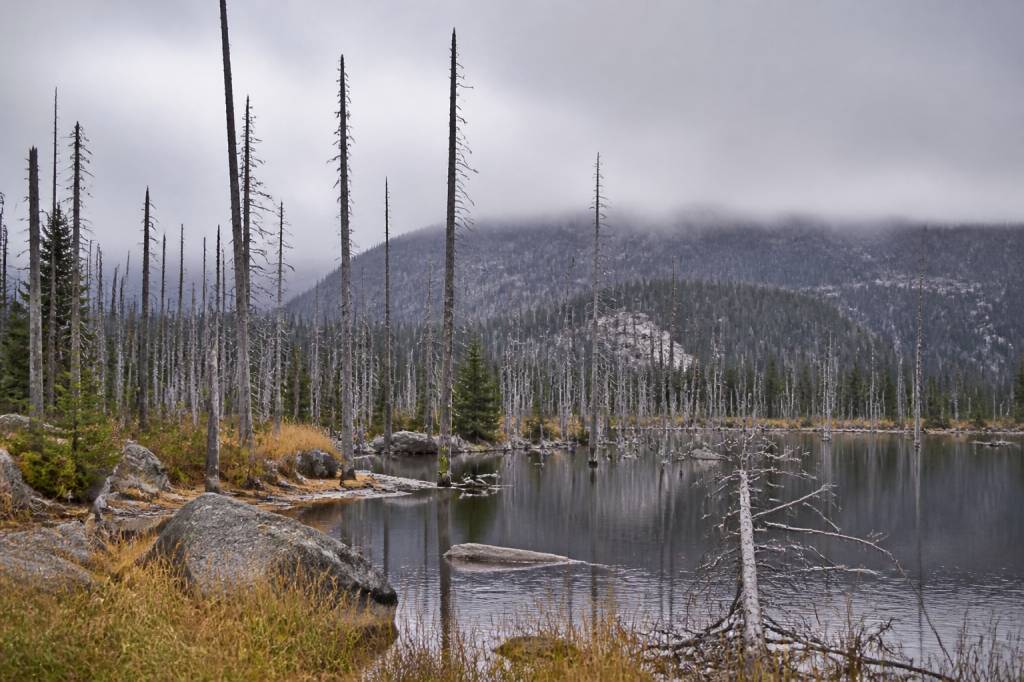
Air pollution does not stop at the edge of a city or factory site. Once released into the atmosphere, certain pollutants can travel hundreds or even thousands of kilometres before returning to the ground in rain, snow, fog, dust or dry particles. This process, known as acid deposition, can alter the chemistry of soils and freshwater systems, weaken forests and disrupt aquatic ecosystems.
Acid rain is the most familiar term, but it describes only one part of the problem. Acid deposition includes both wet deposition, carried by precipitation, and dry deposition, in which acidic gases and particles settle directly onto land, vegetation and water.
Although emissions of sulphur dioxide have fallen sharply in the UK and across much of Europe, acid deposition remains an important environmental issue. Sensitive upland lakes, peatlands and forest soils may take decades to recover. In some regions, nitrogen pollution continues to place pressure on ecosystems, while new contaminants—including PFAS—create additional challenges for water quality monitoring and treatment.
What causes acid deposition?
The main causes are emissions of sulphur dioxide (SO2) and nitrogen oxides (NOx). These pollutants are released when fossil fuels are burned, particularly in power stations, industrial facilities, road vehicles and shipping.
Ammonia (NH3) also plays a major role. It is released mainly from agriculture, especially from livestock manure, slurry storage and the use of nitrogen fertilisers. In the atmosphere, ammonia can react with acidic compounds to form fine particulate matter. When these particles are deposited, they add nitrogen to soils and water bodies and may contribute to acidification.
The chemistry is relatively straightforward, even if the consequences are not. In the atmosphere:
- Sulphur dioxide can be oxidised to sulphuric acid.
- Nitrogen oxides can form nitric acid.
- Ammonia can react with sulphuric and nitric acids to create ammonium-containing particles.
- Acidic gases and particles can return to the surface through rain, snow, fog or dry deposition.
Natural sources, including volcanic activity, wildfires and biological processes, also release sulphur and nitrogen compounds. However, human activity has historically been the dominant driver of widespread acid deposition in industrialised regions.
Acid rain is not the same as naturally acidic rain
Rain is naturally slightly acidic because carbon dioxide dissolves in water and forms weak carbonic acid. Clean rain typically has a pH of around 5.6. Acid deposition usually refers to precipitation that has become more acidic because of sulphuric and nitric acids produced from air pollution.
The pH scale is logarithmic. This means that water with a pH of 4 is not merely “a little more acidic” than water with a pH of 5—it has ten times the hydrogen ion concentration. A shift of even one pH unit can therefore represent a substantial chemical change.
However, pH alone does not tell the whole story. The impact of acid deposition depends on the amount of pollution deposited, the frequency of the deposition and the ability of local soils and rocks to neutralise acidity.
Why some lakes are more vulnerable than others
Watersheds with limestone or other calcium-rich rocks often have a strong buffering capacity. Minerals dissolve and neutralise incoming acids, helping to keep lake and river pH relatively stable.
By contrast, upland areas underlain by granite, sandstone or other weakly weathering rocks may have little natural protection. Thin soils and peatlands can be particularly sensitive. In these environments, acid deposition can rapidly mobilise aluminium and other metals from the soil.
This helps explain why a remote mountain lake can be more vulnerable than a water body located much closer to an emission source. Atmospheric pollution does not need to fall where it was produced. Prevailing winds can carry it to high-altitude and rural ecosystems, where the landscape may have limited capacity to absorb the chemical load.
How acid deposition changes water quality
Acid deposition affects water quality through several connected mechanisms.
Lower pH: Increased acidity can make lakes and streams unsuitable for species that require stable chemical conditions. Fish eggs and young aquatic organisms are often particularly sensitive.
Aluminium mobilisation: As soil becomes more acidic, aluminium minerals can dissolve and release aluminium into drainage water. Aluminium can damage fish gill tissue, interfere with salt regulation and reduce the ability of fish to absorb oxygen from water.
Nutrient imbalance: Acidification can remove essential nutrients such as calcium and magnesium from soils. At the same time, excess nitrogen deposition may act as a fertiliser, encouraging nutrient enrichment in ecosystems that evolved under nutrient-poor conditions.
Changes in dissolved organic carbon: Acidification and recovery can alter the amount and chemical form of organic carbon entering rivers and lakes. This can affect water colour, microbial activity and the treatment requirements for drinking water.
Metal transport: More acidic conditions may increase the mobility of metals in soils and sediments. Depending on the catchment, this can raise concentrations of aluminium, iron, manganese or other contaminants in surface water.
These changes matter for drinking water suppliers as well as wildlife. Water treatment facilities may need to adjust coagulation, filtration and pH correction processes when raw water chemistry changes. Acid deposition is not a PFAS issue, but it is part of the wider challenge of managing complex and changing contaminant mixtures in water supplies.
Effects on fish, insects and aquatic food webs
Freshwater ecosystems are finely connected. A change in water chemistry can affect organisms directly and indirectly, with consequences that move through the food web.
Some fish species, including salmonids, may experience reduced reproductive success when streams become more acidic. Acid-sensitive invertebrates such as mayflies, stoneflies and certain molluscs can decline, removing an important food source for fish and birds.
At lower pH levels, species diversity often falls. Acid-tolerant organisms may remain, but the ecosystem becomes less complex. A lake can still look clear and attractive while undergoing significant biological damage beneath the surface. In fact, unusually clear water is not always a sign of good ecological health; it may indicate that plankton and other organisms have been lost.
Acidification can also interact with other pressures, including warming temperatures, habitat loss, drought, agricultural runoff and invasive species. An ecosystem already stressed by several factors may be less able to recover from chemical disturbance.
Forests and soils are affected too
Acid deposition does not only damage lakes. Forest soils can lose base cations—nutrients such as calcium, magnesium and potassium—that plants need for healthy growth. Once these nutrients have been leached from the soil, natural replenishment may take many years.
Acidic conditions can also damage fine roots and reduce a tree’s resilience to drought, frost, disease and insect outbreaks. Nitrogen deposition may initially stimulate growth, but prolonged exposure can create nutrient imbalances and contribute to soil acidification.
Peatlands deserve special attention. They store large quantities of carbon and regulate water flow, but their chemistry is easily influenced by atmospheric inputs. Changes in vegetation and microbial activity can affect both carbon storage and the quality of water leaving the peatland.
Has acid rain been solved?
Not entirely—but major progress has been made.
The UK and many other European countries introduced controls on sulphur emissions through cleaner fuels, industrial regulation and technologies such as flue-gas desulphurisation. The European Union’s National Emission Reduction Commitments Directive and the UK’s Clean Air Strategy have also targeted nitrogen oxides, ammonia and other air pollutants.
According to the UK government’s air pollutant emissions statistics, emissions of sulphur dioxide have fallen dramatically since the 1990s. This has reduced sulphur deposition across much of the country. Yet recovery of ecosystems is slower than recovery of the atmosphere. Soils may remain depleted of buffering minerals, and biological communities may need decades to return to their former condition.
Nitrogen deposition remains a concern, particularly near intensive agriculture, roads and urban areas. Ammonia emissions are difficult to control because they arise from many diffuse sources rather than a small number of large industrial plants.
How scientists monitor acid deposition
Environmental monitoring combines measurements from the atmosphere, soils, water and living organisms. Researchers may track:
- Concentrations of sulphur dioxide, nitrogen oxides, ammonia and particulate matter in air.
- The pH and chemical composition of rainfall, snow and cloud water.
- Deposition of sulphate, nitrate and ammonium compounds.
- Stream and lake pH, alkalinity, conductivity and dissolved metals.
- Calcium, magnesium and other base cations in soil and surface water.
- Changes in fish populations, aquatic invertebrates, vegetation and tree health.
Long-term records are essential. A single water sample can show conditions on one day, but it cannot reveal whether a lake is recovering, deteriorating or responding to an unusual weather event.
In the UK, organisations including the Environment Agency, Forest Research and the UK Centre for Ecology & Hydrology contribute to monitoring and research. The UK Acid Waters Monitoring Network has provided valuable evidence on how sensitive freshwater systems respond to changing atmospheric pollution.
What can reduce acid deposition?
The most effective measures prevent pollution from entering the atmosphere in the first place. These include:
- Replacing high-sulphur fuels with cleaner energy sources.
- Improving industrial emission controls.
- Reducing vehicle emissions through cleaner engines, public transport and active travel.
- Expanding renewable electricity and improving energy efficiency.
- Using fertilisers more precisely and avoiding unnecessary nitrogen application.
- Improving manure storage and spreading practices to reduce ammonia losses.
- Protecting and restoring peatlands, forests and wetlands that support water quality.
Local restoration may also help ecosystems recover. Liming, which adds alkaline material to water or soil, has been used in some severely acidified catchments. However, liming is a treatment rather than a permanent solution. It must be carefully planned, monitored and combined with emission reductions.
What does acid deposition mean for water treatment?
For water companies and private water suppliers, changing catchment chemistry can influence treatment performance. More acidic source water may contain higher concentrations of dissolved metals or organic matter. Treatment processes must then be adjusted to maintain stable pH, remove unwanted compounds and protect distribution infrastructure.
This is especially relevant when several contaminants are present at once. PFAS, pesticides, metals, nutrients and natural organic matter each behave differently during treatment. A filter designed to remove particles may not remove dissolved PFAS, while activated carbon performance can be influenced by competing organic compounds.
The practical lesson is simple: protecting drinking water begins upstream. Air quality, land management and catchment protection are closely connected to the quality of water entering a treatment plant.
A pollution problem with a long memory
Acid deposition demonstrates how environmental damage can persist after emissions decline. The air may become cleaner within years, but soils, forests and freshwater ecosystems can retain the chemical signature of past pollution for much longer.
That long recovery period is a reminder that prevention is more efficient than repair. Reducing sulphur dioxide, nitrogen oxides and ammonia protects biodiversity, lowers treatment pressures and strengthens the resilience of water systems. It also reinforces a wider principle relevant to PFAS and other persistent contaminants: pollution control works best when it addresses the source, not only the water flowing downstream.
For readers who want to explore the evidence further, useful resources include the UK government’s air pollutant emissions statistics, the UK Centre for Ecology & Hydrology and the European Environment Agency’s air pollution assessments.