

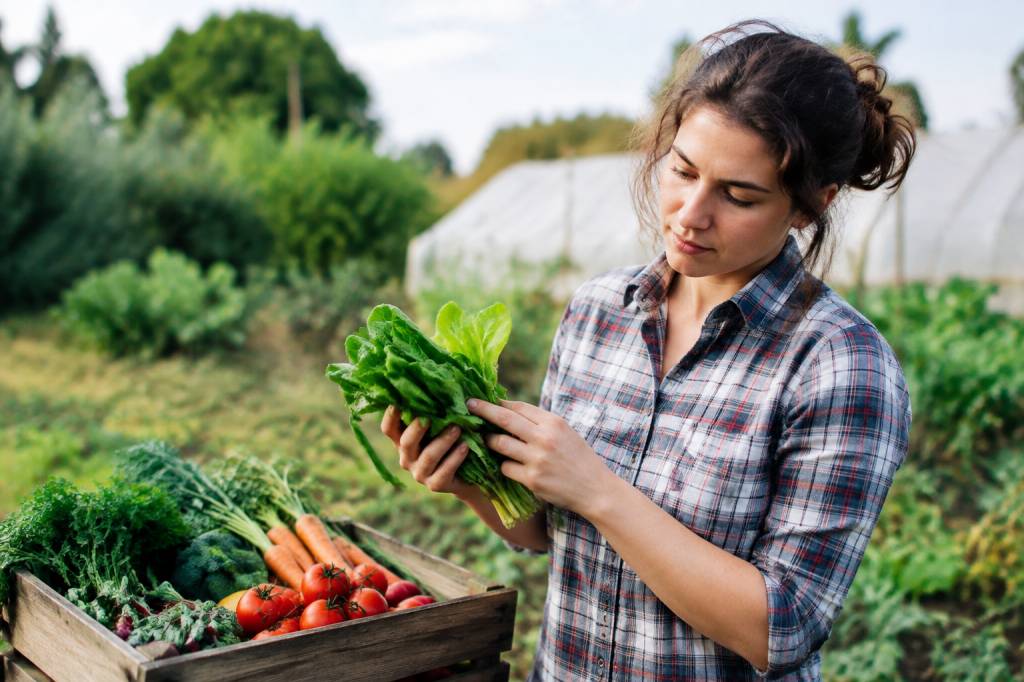
“Organic” is often taken to mean “grown without pesticides.” That sounds reassuring, but it is not quite right. Organic farms can use pesticides, and residues can sometimes be found on organic food. The difference lies in which substances are allowed, how they may be used and the farming system they are part of.
Understanding that distinction helps consumers make informed choices without assuming that organic food is either pesticide-free or unsafe. Here is what the label means, how residues are monitored and what practical steps can reduce exposure.
Can organic food contain pesticides?
Yes. Organic standards do not ban every pesticide. They restrict pesticide use and allow only certain products under defined conditions. In the UK, organic production is regulated, and farms and food businesses must meet standards covering how food is grown, processed and handled. Permitted substances are generally considered when other measures—such as crop rotation, resistant varieties and physical pest controls—are not enough.
Some permitted pesticides are derived from naturally occurring materials; others may be manufactured. “Natural” does not automatically mean harmless, and “synthetic” does not automatically mean dangerous. Risk depends on factors such as the substance, dose, route of exposure and how it behaves in the environment.
Organic certification is therefore best understood as a system of production with restrictions on inputs—not as a guarantee that no pesticide has ever been used or that no residue can be detected.
What is different about organic pesticide use?
Conventional farms can use a broader range of approved pesticides, including synthetic products, provided they comply with relevant rules and use restrictions. Organic farms are expected to prioritise prevention and non-chemical approaches. Depending on the crop and the problem, these can include rotating crops, encouraging natural predators, using nets or traps, and removing infected plants.
If these measures do not control a pest or disease, an organic producer may use a pesticide listed as permitted under the applicable organic standards. The decision is not simply “natural versus chemical”: organic growers still need to assess whether an input is allowed and use it according to the rules.
Approved substances and requirements can change over time. For current details, consumers can check guidance from the UK government or the certification body named on the product. Organic labels are backed by inspections, but the precise standards can differ between certification schemes and markets.
Why might residues appear on organic produce?
A residue test detects a substance in a food sample. Finding a residue does not, by itself, show that a product is dangerous or that a farm deliberately used a prohibited pesticide. There are several possible explanations:
-
Drift from nearby fields: Pesticide spray can move beyond the field where it was applied, particularly in windy conditions.
-
Environmental persistence: Some chemicals remain in soil or water after earlier use and can be taken up by crops.
-
Handling or storage: Produce may come into contact with residues during transport, storage or processing if controls fail.
-
Sampling and analytical limits: Modern laboratory methods can detect very small amounts. A detection is not the same as evidence of a harmful dose.
Organic farms are required to prevent contamination as far as possible and to investigate suspected non-compliance. If a prohibited substance is found, certification bodies can examine the circumstances and take action where necessary. The presence of a residue is a reason to investigate, not a complete explanation on its own.
Does a residue mean the food is unsafe?
Not necessarily. Food safety authorities assess pesticide residues against legal limits, known as maximum residue levels, or MRLs. These limits are set for particular pesticide-and-food combinations and are intended to ensure that residues remain within permitted levels when the pesticide is used correctly. Toxicological assessments also consider dietary exposure and the effects of consuming residues over time.
An MRL is not a line between “poisonous” and “completely harmless.” It is a regulatory limit based on how a pesticide is authorised and used, with consumer protection built into the assessment. A result above an MRL can indicate that rules were not followed, but the level of risk depends on the substance and the amount involved. Authorities assess findings and can take enforcement action where needed.
The UK Food Standards Agency publishes information from its pesticide-residue monitoring programme. These reports can help readers see how food is tested and how results are interpreted. It is worth looking at the context: a laboratory detection, a breach of a legal limit and a demonstrated health effect are three different things.
Is organic food always lower in pesticide residues?
Organic food is generally expected to have fewer residues from pesticides that are not permitted in organic production. However, no label can guarantee that every sample will test negative. Studies and monitoring results can vary according to the foods sampled, the chemicals tested for and the methods used.
Comparing one basket of organic produce with one conventional basket is not enough to establish a universal rule. Crops differ in how they are grown, how easily they retain residues and which pests affect them. Results also depend on farming practices and the local environment.
It is also important to keep the question in proportion. Eating fruit and vegetables is part of a healthy diet. For many people, replacing fresh produce with less varied or more heavily processed foods because of fear about residues would not be a helpful trade-off. If organic food fits your budget and preferences, it is a valid choice; if it does not, conventional produce remains a nutritious option.
What does “organic” say about the environment?
Organic farming rules can support practices such as crop rotation, soil management and limits on certain inputs. These approaches may benefit soil and wildlife in particular circumstances. But the label is not a guarantee of a specific environmental outcome for every product. Impacts also depend on the crop, the farm, transport, land use and the wider production system.
Nor does organic certification mean “chemical-free.” All living things are made of chemicals, and pesticides are only one part of the environmental picture. Fertiliser use, energy, water, habitat and farm management also matter. A useful label answers a defined question about production standards; it cannot answer every question about a food’s full environmental footprint.
For readers concerned about PFAS, organic certification should not be treated as a PFAS test or as a guarantee that food and water are free from these persistent chemicals. PFAS can enter the environment through multiple routes, and assessing them requires appropriate testing and monitoring. Organic status and PFAS contamination are separate issues.
How can consumers reduce residues at home?
You do not need specialist equipment to take sensible precautions. These steps can reduce dirt and some surface residues, although washing cannot remove every pesticide or contaminant:
-
Rinse produce under clean running water. Rub firm fruit and vegetables gently with your hands. A clean produce brush can help with items such as potatoes or cucumbers.
-
Wash before cutting or peeling. Otherwise, a knife can transfer material from the skin to the edible part.
-
Remove damaged outer leaves. This can reduce soil and surface residues on leafy vegetables, while still leaving plenty of nutritious food to eat.
-
Follow food-safety advice. Do not use soap, bleach or household cleaning products on food; they are not intended for consumption.
-
Vary what you eat. A varied diet reduces reliance on any single crop and provides a wider range of nutrients.
Peeling can lower some surface residues, but it can also remove fibre and nutrients. Whether to peel is a practical choice, not a requirement for making produce safe.
How to read the organic label
Look for a recognised organic logo or certification mark and, where available, the name or code of the certifier. In the UK, organic claims are regulated; food labelled organic must meet the relevant production and certification requirements. A vague phrase such as “grown naturally” is not necessarily equivalent to certified organic.
Labels can also help distinguish certification from marketing. “Pesticide-free” is a different claim from “organic,” and consumers should check what a particular claim means and whether it is independently verified. If a product’s wording is unclear, the certifier or retailer may be able to explain the standard behind it.
Making a practical choice
Can organic food have pesticides? Yes—but organic standards limit which pesticides may be used and place greater emphasis on prevention and non-chemical controls. Residues may still occur through permitted use or accidental contamination, and a detected residue does not automatically mean a health risk.
Choose organic if its production standards matter to you and it is accessible within your budget. Choose conventional produce when that is the practical option. In either case, washing food, eating a varied diet and relying on evidence-based monitoring are more useful than treating any single label as a complete guarantee.
The clearest takeaway is simple: organic is a meaningful production standard, not a promise of zero pesticides. Knowing the difference makes it easier to weigh food safety, environmental concerns and affordability without unnecessary alarm.