

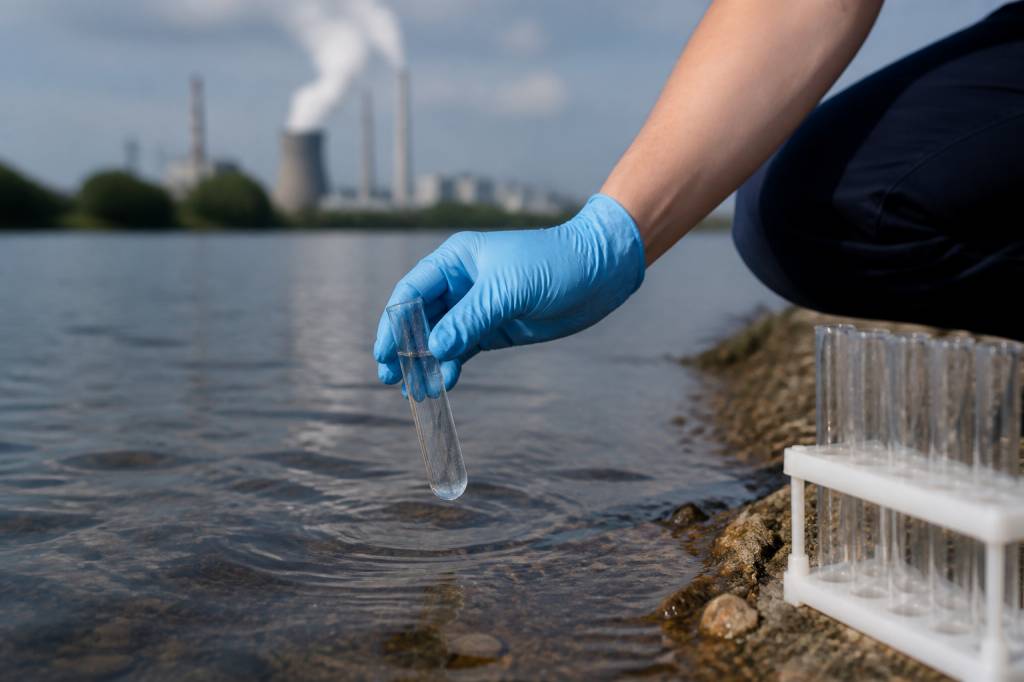
“PFAS” is often used as if it described a single chemical. It does not. The term refers to a large family of human-made substances valued for their resistance to heat, water, oil and chemical reactions. Those same properties make them useful in products ranging from non-stick cookware to firefighting foams—and exceptionally difficult to remove from the environment.
Thousands of PFAS compounds have been identified, although only a relatively small number have been widely studied. This creates a challenge for regulators, water companies, researchers and the public: a test may detect one well-known compound while missing dozens of others.
Understanding the main chemicals on a PFAS list, their potential health effects and the routes by which they reach water is an essential first step in reducing exposure.
What does PFAS mean?
PFAS stands for per- and polyfluoroalkyl substances. These compounds contain chains of carbon atoms bonded to fluorine. The carbon–fluorine bond is one of the strongest in organic chemistry, which explains why many PFAS resist heat, oil, water and degradation.
The group includes older, well-studied substances such as PFOA and PFOS, as well as newer replacement chemicals and thousands of less-studied compounds. Some are long-chain molecules, while others are short-chain alternatives or polymeric substances used in industrial processes and consumer products.
PFAS are sometimes called “forever chemicals” because many persist for years or decades in the environment. However, persistence varies between compounds. Some PFAS break down into other persistent PFAS, while others can travel long distances through rivers, groundwater, soil and the atmosphere.
Key compounds found on PFAS chemical lists
A PFAS chemical list is not necessarily a list of every substance in the family. It may refer to chemicals regulated in drinking water, compounds monitored in environmental surveys, or substances included in a laboratory testing method. The following examples are among the most important.
- Perfluorooctanoic acid (PFOA): Historically used in the production of fluoropolymers and associated with non-stick coatings and industrial applications. PFOA is highly persistent and has been detected in drinking water, soil, wildlife and human blood. It has been classified by the International Agency for Research on Cancer as carcinogenic to humans.
- Perfluorooctanesulfonic acid (PFOS): Formerly used in firefighting foams, stain-resistant treatments, metal plating and other applications. PFOS is persistent, bioaccumulative and capable of travelling through aquatic environments. It is restricted under international agreements, including the Stockholm Convention.
- Perfluorohexanesulfonic acid (PFHxS): Used in some industrial and surface-treatment applications. PFHxS is persistent and has been detected in people and environmental samples. It is also listed under the Stockholm Convention for global control.
- Perfluorononanoic acid (PFNA): A long-chain perfluoroalkyl carboxylic acid that can occur as an environmental contaminant and as a degradation product of certain precursor chemicals. PFNA has been associated with immune, developmental and metabolic effects in research studies.
- Perfluorohexanoic acid (PFHxA): A short-chain PFAS used in some industrial and surface-treatment applications. Short-chain does not mean harmless. These substances may be less likely to accumulate in human blood than long-chain PFAS, but they can be more mobile in water and therefore harder to contain.
- Perfluorobutanesulfonic acid (PFBS): Used as an alternative to PFOS in some applications. PFBS is generally eliminated from the body more quickly than PFOS, but its environmental mobility and potential biological effects remain important considerations.
- GenX chemicals: “GenX” is a trade name commonly associated with a technology using hexafluoropropylene oxide dimer acid and its ammonium salt to manufacture certain fluoropolymers. These substances were developed as alternatives to PFOA, but replacement does not automatically mean risk-free.
- ADONA: A newer processing aid used in some fluoropolymer production. It is another example of a replacement PFAS that requires independent assessment rather than being assumed safe because it is newer.
- Fluorotelomer substances: This is a broad group of precursor chemicals used in textiles, paper packaging, coatings and other products. Some can transform in the environment into persistent perfluoroalkyl acids such as PFOA or PFNA.
These names can look intimidating, but the basic message is straightforward: a focus on PFOA and PFOS alone may underestimate total PFAS contamination. Modern monitoring increasingly looks at a wider group of compounds and, where possible, at precursor chemicals and degradation products.
Why are PFAS a health concern?
Exposure to PFAS is widespread. People can encounter them through contaminated drinking water, food, indoor dust, consumer products and contact with contaminated soil. Exposure levels vary considerably according to location, occupation, diet and the products used in a household.
Scientific evidence is strongest for some compounds, particularly PFOA and PFOS. Studies have linked exposure to several potential health effects, including:
- Changes in cholesterol and other blood lipid levels.
- Reduced antibody response to certain vaccinations.
- Effects on liver function.
- Changes in foetal growth and birth weight.
- Pregnancy-related effects, including increased risk of hypertension or pre-eclampsia in some studies.
- Developmental and immune-system effects.
- Increased risk of certain cancers, particularly in relation to PFOA exposure.
The exact risk depends on the chemical, the concentration, the duration of exposure and individual factors such as age and health status. Laboratory studies, epidemiological research and toxicological assessments do not always produce identical results. That is why scientists continue to evaluate individual PFAS and the health effects of exposure to mixtures.
One important feature is that some PFAS remain in the body for long periods. PFOA and PFOS, for example, can have biological half-lives measured in years. Other short-chain substances may leave the bloodstream more rapidly, but this does not necessarily reduce environmental concern: repeated low-level exposure can maintain ongoing contact.
How do PFAS enter drinking water?
PFAS contamination can originate from many sources. Because the compounds are used in diverse industries and products, there is rarely a single universal pathway.
Firefighting foams
Aqueous film-forming foams, or AFFF, were widely used to extinguish fuel fires at airports, military bases, oil terminals, industrial sites and training grounds. Many historical formulations contained PFOS, PFOA-related substances or other fluorinated compounds.
When foam is released onto soil, PFAS can move downward into groundwater. Once groundwater becomes contaminated, the plume may travel towards private wells, rivers or public water-supply abstractions. A fire-training site can therefore affect water quality long after the foam has stopped being used.
Industrial manufacturing
Facilities producing or using fluoropolymers, textiles, electronics, metal plating, paper treatments and specialised coatings may release PFAS through wastewater, air emissions, spills or waste disposal. Manufacturing sites can also discharge precursor chemicals that later transform into persistent PFAS in the environment.
Landfill sites and waste treatment
PFAS are present in some consumer goods, industrial materials and firefighting equipment. When these products are discarded, the chemicals can migrate from landfill waste into leachate. Wastewater treatment plants may remove PFAS from the water phase only to transfer them into sewage sludge or other residual materials.
This is one reason PFAS management cannot stop at the treatment plant outlet. A contaminant may move from wastewater to sludge, from sludge to soil and eventually into groundwater. It has not disappeared; it has changed location.
Food packaging and consumer products
Grease-resistant food wrappers, takeaway containers, microwave popcorn bags, stain-resistant carpets, waterproof clothing and some cosmetics have historically used PFAS or related fluorinated treatments. These products can contribute to exposure through direct contact, household dust or disposal.
Food packaging is also relevant to water contamination because manufacturing, recycling and landfill processes can release PFAS into wastewater and the wider environment.
Airborne transport and atmospheric deposition
Some PFAS and precursor chemicals can travel through the atmosphere. They may later return to land and water through rainfall or dust deposition. This means contamination is not limited to the immediate area surrounding an industrial facility.
PFAS in rivers, groundwater and drinking water
PFAS behave differently depending on their chemical structure. Long-chain compounds such as PFOS and PFOA tend to bind more strongly to sediments and organic matter, although they can still migrate through groundwater. Short-chain PFAS are often more water-soluble and mobile.
Once present in a water source, PFAS can be difficult to remove using conventional treatment. Standard processes designed to control bacteria, suspended solids or nutrients may not significantly reduce dissolved PFAS.
Detection also depends on the method used. A targeted test may search for a defined list of 20 or 40 compounds. Another method may measure total organic fluorine or adsorbable organic fluorine, offering clues about the presence of broader fluorinated contamination. No single test provides a complete picture in every situation.
How are PFAS regulated in the UK?
Regulation is evolving as evidence develops. In England, drinking-water standards and monitoring requirements have traditionally focused on specific PFAS parameters, including limits for individual substances and groups. Scotland, Wales and Northern Ireland may apply their own regulatory frameworks and guidance, while UK-wide chemical controls interact with international agreements.
The UK Drinking Water Inspectorate provides guidance and regulatory information for public water supplies. The Environment Agency also publishes information relevant to contaminated land, pollution control and environmental risk. Requirements may change as regulators consider a wider range of PFAS and updated toxicological evidence.
For households concerned about a private well, the most useful step is to contact the relevant local authority, water regulator or environmental health service. A general water test may not include PFAS unless specifically requested, and laboratory methods vary in their detection limits.
Can water filtration remove PFAS?
Some treatment technologies can substantially reduce PFAS concentrations, but performance depends on the compound, the filter design, the contact time and maintenance.
- Granular activated carbon: Often effective for longer-chain PFAS such as PFOS and PFOA. Filters must be correctly sized and replaced before they become saturated.
- Reverse osmosis: Can remove a broad range of PFAS and is commonly used for point-of-use drinking-water treatment. It produces a concentrated waste stream that must be managed properly.
- Ion-exchange resins: Can provide strong removal for selected PFAS, including some short-chain compounds. Their effectiveness depends on water chemistry and resin type.
- Membrane and emerging technologies: Researchers are investigating foam fractionation, electrochemical destruction, advanced oxidation and other approaches. Some are promising, but not all are ready for routine household or municipal use.
Boiling water does not remove PFAS. In fact, evaporation can reduce the volume of water while leaving the contaminants behind, potentially increasing their concentration. A certified treatment system, appropriate to the local water test, is a more reliable approach.
What should readers look for on a PFAS test report?
Start by checking which compounds were analysed. A report listing “non-detect” does not mean that no PFAS are present; it means the chemicals tested were below the laboratory’s reporting limits.
Also review:
- The list of individual PFAS included in the method.
- The detection and reporting limits.
- Whether results are reported in nanograms per litre, often written as ng/L.
- The sampling location and date.
- Quality-control information and laboratory accreditation.
- Whether precursor or total-fluorine analysis was performed.
Results should be interpreted against the relevant national or regional standard, not against an internet list copied from another country. Regulatory limits differ because authorities use different assumptions about exposure, toxicity and acceptable risk.
Why a broader chemical list matters
PFAS regulation is moving from a narrow focus on a few legacy chemicals towards a group-based approach. This reflects a practical reality: replacing one restricted PFAS with a structurally similar compound may reduce one measured contaminant without solving the underlying problem.
A broader chemical list helps identify contamination sources, improves environmental monitoring and reduces the risk of regrettable substitutions. It also reminds consumers and water managers that a clean-looking river is not necessarily a chemically clean river.
For anyone investigating PFAS in local water, three actions are especially valuable: identify possible historical sources, request testing that covers an appropriate range of PFAS, and select treatment based on verified results rather than marketing claims. The chemistry is complex, but the principle is simple: measure carefully, interpret the data in context and prevent releases wherever possible.
Sources: UK Drinking Water Inspectorate; UK Environment Agency; UK Health Security Agency; United States Environmental Protection Agency; European Chemicals Agency; International Agency for Research on Cancer; Stockholm Convention on Persistent Organic Pollutants; World Health Organization, PFOS and PFOA in Drinking-water.