

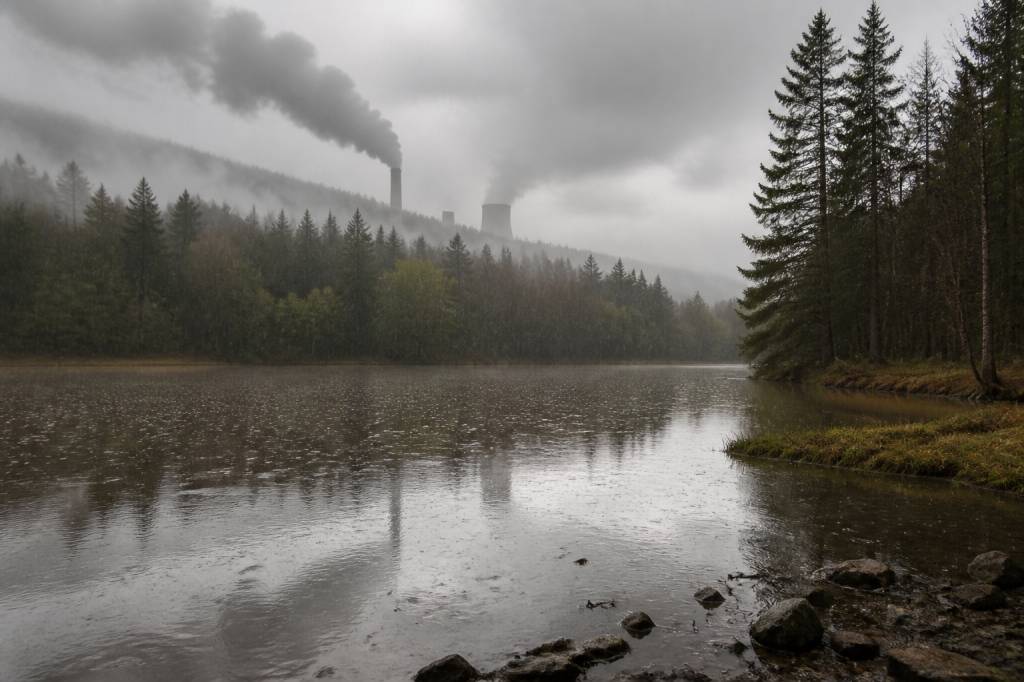
Acid rain is often associated with images of damaged forests, eroded statues and polluted lakes. But its effects on water quality are more complex than the name suggests. Acidic precipitation can alter the chemistry of rivers, lakes and groundwater, mobilise toxic metals from soils and sediments, and place additional stress on aquatic ecosystems.
Although air pollution controls have significantly reduced acid rain in many parts of Europe and North America, the problem has not disappeared. Some regions continue to experience acid deposition, while historical pollution remains stored in soils and catchments. Understanding how acid rain forms—and what happens after it reaches the ground—is essential for protecting drinking water and aquatic environments.
What is acid rain?
Rainwater is naturally slightly acidic. As it falls through the atmosphere, it absorbs carbon dioxide and forms a weak solution of carbonic acid. This usually gives clean rain a pH of approximately 5.6, although natural conditions can cause some variation.
Acid rain refers to precipitation that is significantly more acidic than normal because of air pollutants. The term includes more than rainfall. Acid deposition can occur as:
-
Wet deposition: acidic rain, snow, fog or mist.
-
Dry deposition: acidic particles and gases settling directly onto land, vegetation and water surfaces.
In scientific terms, acid deposition is generally linked to a measurable increase in sulfuric and nitric acids in the environment. The acidity itself is important, but the chemical reactions triggered by acid deposition often cause the most serious damage to water quality.
How does acid rain form?
The main causes of acid rain are emissions of sulfur dioxide (SO2) and nitrogen oxides (NOx). These pollutants are released when fossil fuels are burned, particularly coal and oil.
Major sources include:
-
Coal-fired power stations
-
Industrial boilers and manufacturing facilities
-
Metal smelting and mineral processing
-
Vehicle engines and heavy transport
-
Oil and gas combustion
-
Some natural sources, including volcanic eruptions and wildfires
Once emitted, sulfur dioxide and nitrogen oxides can travel long distances. Atmospheric reactions transform them into sulfuric acid, nitric acid and related compounds. These substances may return to the Earth’s surface days or even weeks later, sometimes far from the original source.
This long-range transport is one reason acid rain is not only a local pollution issue. A lake may become acidified even when there are no major industrial facilities nearby. Air currents can carry precursor pollutants across national borders, making regional cooperation essential.
The chemistry behind acidification
When acidic precipitation reaches a catchment, its impact depends on the geology, soil type and vegetation of that area. Some landscapes can neutralise acidity naturally, while others are highly vulnerable.
Rock and soil containing carbonate minerals, such as limestone, can buffer acidic water. In simple terms, these minerals react with acids and reduce their acidity. This is why lakes in limestone-rich regions may remain relatively stable even when acid deposition occurs.
By contrast, areas with thin soils and granite or other poorly buffering rocks have limited natural protection. Acidic water can move rapidly through the catchment and into streams and lakes, lowering their pH.
As acidity increases, hydrogen ions displace other elements from soil particles. Calcium and magnesium may be washed away, reducing the availability of nutrients needed by plants and aquatic organisms. At the same time, aluminium and other metals can become more soluble and mobile.
How acid rain affects rivers and lakes
The most direct effect on surface water is a fall in pH. However, pH is only one part of the picture. Acidification can change the entire chemical balance of a water body.
Freshwater species have different tolerances to acidity. Sensitive organisms, including some fish, amphibians and aquatic invertebrates, may be affected when pH changes only moderately. Eggs and young organisms are often particularly vulnerable.
Acidic water can damage fish in several ways. Low pH may interfere with their ability to regulate salts through their gills. It can also increase mucus production, making breathing more difficult. When aluminium is released from surrounding soils, it may accumulate on fish gills and prevent the efficient transfer of oxygen.
The result is not always an obvious fish kill. More commonly, acidification causes gradual ecological change. Sensitive species disappear first, followed by changes in food webs and habitat quality. A lake may still look clear and clean while supporting far less biodiversity than it once did.
Acidification can also affect plankton, aquatic insects and microorganisms. These organisms form the foundation of freshwater food chains. If they decline, fish and birds that depend on them may also be affected.
Aluminium: the hidden water-quality problem
One of the most important links between acid rain and water quality is aluminium mobilisation.
Aluminium is naturally present in many soils, but it is usually bound in relatively stable mineral forms. As soil becomes more acidic, aluminium can dissolve and enter streams, reservoirs and groundwater. This creates a risk for aquatic life and can complicate drinking-water treatment.
In acidic conditions, dissolved aluminium may be more biologically available. Fish can absorb it across their gills, where it interferes with ion regulation and respiration. Even when the water’s pH later improves, aluminium already released into sediments or transported downstream can remain an environmental concern.
Acidification may also mobilise other metals, including manganese, copper, lead and cadmium, depending on local geology and land use. These contaminants are not caused exclusively by acid rain, but acidity can increase their movement through soils and water systems.
What does acid rain mean for drinking-water quality?
Most public drinking-water systems monitor pH, metals and other indicators before water reaches consumers. Treatment can often remove or control contaminants associated with acidification. However, more complex source-water chemistry may increase operational challenges and costs.
Potential drinking-water impacts include:
-
Higher metal concentrations: acidic conditions can increase the release of aluminium, iron, manganese and other metals.
-
Corrosion: low-pH water can corrode pipes, tanks and plumbing components.
-
Lead and copper release: corrosive water may dissolve metals from household plumbing, particularly in older buildings.
-
Changes in treatment performance: pH affects coagulation, disinfection and filtration processes.
-
Increased monitoring requirements: utilities may need more frequent testing when catchments are vulnerable to acidification.
It is important not to confuse acid rain with acidic drinking water at the tap. Rainwater is diluted, and water suppliers commonly adjust pH and alkalinity during treatment. The risk depends on the entire pathway—from atmospheric deposition to catchment soils, reservoirs, treatment plants and distribution networks.
For households using private wells, the situation can be different. Groundwater chemistry varies considerably, and private supplies may not receive the same routine monitoring as public systems. A well in an area with acidic soils or metal-rich geology may require testing for pH, alkalinity, lead, copper, aluminium, iron and manganese.
Acid rain and groundwater
Groundwater is not automatically protected from acid deposition. In some catchments, acidic water infiltrates through soils and fractures in bedrock. The final effect depends on how long the water remains underground and which minerals it encounters.
Soils can temporarily retain or neutralise acidity, but this buffering capacity is not unlimited. After years of deposition, some soils may lose essential base cations such as calcium and magnesium. This process is sometimes described as soil depletion. Once the available buffering minerals are exhausted, more acidic water can reach streams and groundwater.
Groundwater can also transport dissolved metals over considerable distances. This makes catchment-scale monitoring important, particularly near industrial areas, mining regions and watersheds with low natural alkalinity.
Why some ecosystems recover slowly
Air pollution controls have reduced sulfur dioxide and nitrogen oxide emissions in many countries. The UK, for example, has made substantial progress through cleaner energy generation, industrial controls and vehicle standards. Yet improvements in rainfall chemistry do not immediately restore every damaged lake or forest.
Historical pollutants can remain stored in soils and sediments. As these reservoirs gradually release acidity and metals, streams may continue to show signs of chemical stress—a process known as delayed recovery.
Some ecosystems also lost nutrients during the most heavily polluted period. Forest soils may need decades to rebuild calcium and magnesium reserves. Aquatic communities may recover slowly, especially where local species have disappeared or where physical habitat has also been degraded.
In other words, cleaner air is essential, but it is not a reset button. Water quality recovery depends on geology, soil condition, climate, land management and the persistence of contaminants in the catchment.
How is acidification monitored?
Scientists and water managers use several indicators to assess acidification. Measuring pH alone is not enough because a water body may have a relatively stable pH while its buffering capacity is steadily declining.
Important measurements include:
-
pH and alkalinity
-
Sulfate and nitrate concentrations
-
Calcium, magnesium and other base cations
-
Dissolved and particulate aluminium
-
Electrical conductivity
-
Lead, copper, manganese and other metals
-
Biological indicators, such as fish, insect and amphibian populations
Long-term monitoring is particularly valuable. A single sample may provide a snapshot, but seasonal and multi-year data reveal whether a catchment is recovering, deteriorating or responding to extreme weather.
Can acid rain be prevented?
The most effective solution is to reduce sulfur dioxide and nitrogen oxide emissions at their source. Key measures include replacing coal with lower-emission energy sources, improving industrial pollution controls, increasing energy efficiency and reducing vehicle emissions.
Power stations can use flue-gas desulfurisation systems to remove sulfur dioxide. Vehicles can be fitted with technologies that reduce nitrogen oxides, while public transport and clean-energy alternatives can reduce the total number of combustion engines on the road.
In damaged lakes, temporary liming may be used to add alkaline material and raise pH. Liming can provide short-term protection for fish and other organisms, but it does not remove the original pollution source. Nor does it fully restore the chemistry of soil and sediment.
Protecting water quality therefore requires both prevention and monitoring. Effective policies should address air emissions, catchment management, drinking-water infrastructure and public reporting of environmental data.
What can households and communities do?
Acid rain is primarily an industrial and regulatory challenge, but individual and community choices still matter. Reducing energy consumption, supporting cleaner transport and using electricity generated from lower-emission sources can help reduce the pollutants that drive acid deposition.
People who rely on private wells should arrange periodic water testing, especially if they live in areas with acidic soils, old plumbing, mining activity or known industrial pollution. If testing identifies low pH or elevated metals, a qualified water professional should assess the source and recommend treatment. Simply installing a generic filter may not address the specific contaminant.
For water suppliers and land managers, useful steps include:
-
Monitoring source-water pH, alkalinity and metal concentrations
-
Mapping vulnerable soils and low-buffering geology
-
Inspecting infrastructure for corrosion risks
-
Protecting wetlands and catchment vegetation
-
Sharing clear, accessible water-quality information with the public
Acid rain demonstrates how closely air pollution and water quality are connected. A pollutant released from a power station or vehicle may travel through the atmosphere, enter a remote watershed and eventually change the chemistry of drinking-water sources and aquatic habitats.
The progress made in reducing acid deposition shows that environmental regulation can deliver measurable results. But recovery requires patience and continued surveillance. Cleaner air reduces future damage; careful water monitoring reveals the contamination that remains.