

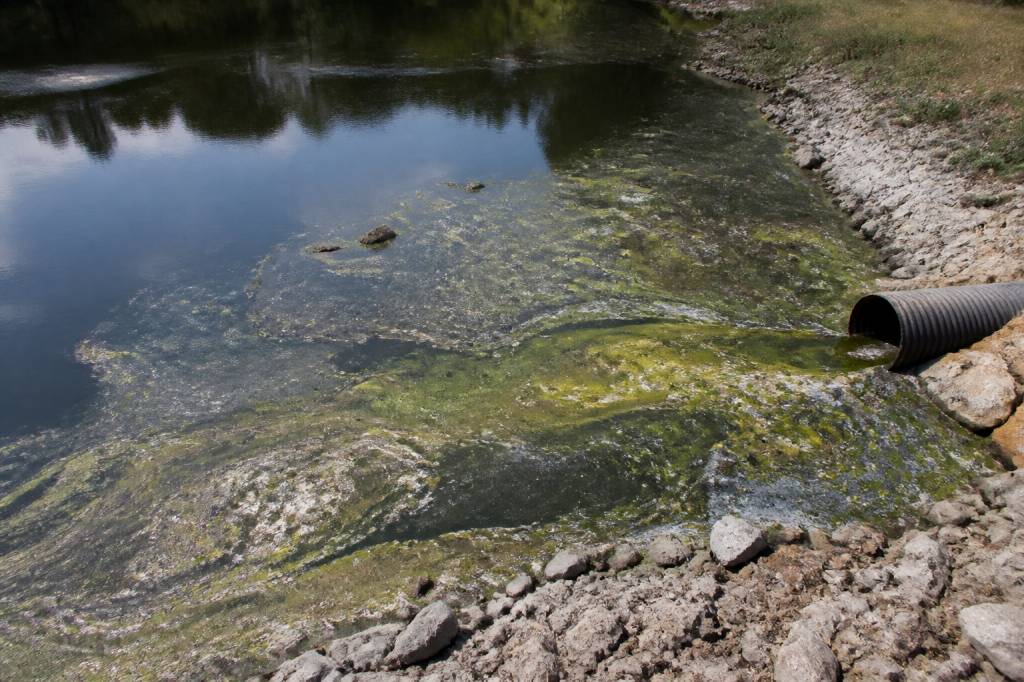
Anaerobic decomposition is one of those processes that rarely makes headlines, yet it quietly shapes the quality of water in wetlands, landfills, sewers, sediments, and overloaded treatment systems. It happens when organic matter breaks down in the absence of oxygen, usually by microbes that rely on alternative chemical pathways to keep functioning. The result can be useful in some contexts, such as biogas production, but it can also create serious water quality challenges. When PFAS are part of the picture, the stakes become even higher.
Why does this matter? Because water quality is not only about what enters a river, reservoir, or aquifer directly. It is also about what happens once organic waste starts decomposing in oxygen-poor conditions. Anaerobic environments can change nutrient cycling, release dissolved contaminants, mobilize metals, generate foul-smelling gases, and alter how persistent chemicals move through water systems. PFAS do not biodegrade in the usual sense, so they are not “broken down” by anaerobic decomposition. But the conditions created by anaerobic decay can still influence where PFAS end up, how they spread, and how difficult they are to remove.
What anaerobic decomposition actually is
Anaerobic decomposition is the breakdown of organic material without oxygen. In the absence of oxygen, microbes switch to other electron acceptors such as nitrate, sulfate, carbon dioxide, or iron and manganese compounds. This process is common in waterlogged soils, lake sediments, landfills, septic tanks, sludge digesters, and stagnant drainage systems.
In practical terms, anaerobic decomposition is slower and chemically different from aerobic decomposition. Instead of producing mostly carbon dioxide and water, it can generate methane, hydrogen sulfide, ammonia, and organic acids. If you have ever walked near a stagnant pond or a poorly managed landfill and thought, “Something is definitely unhappy here,” you were probably detecting the by-products of anaerobic activity.
These by-products matter for water quality because they influence oxygen demand, pH, redox conditions, and the behavior of dissolved pollutants. In a healthy, well-oxygenated system, many contaminants are more likely to stay in predictable forms. In an anaerobic system, chemistry gets messy fast.
How anaerobic conditions affect water quality
When decomposition happens without oxygen, several water quality changes can occur at once:
- Lower dissolved oxygen: Oxygen is already scarce in these environments, and decomposition can worsen hypoxia in nearby waters.
- Release of nutrients: Nitrogen and phosphorus can be liberated from organic matter and sediments, contributing to eutrophication if they reach surface waters.
- Formation of reduced compounds: Sulfides, ferrous iron, methane, and ammonia can accumulate, affecting taste, odor, and toxicity.
- Changes in pH and redox potential: These shifts can alter metal solubility and the mobility of some contaminants.
- Increased turbidity or blackwater conditions: Fine particles and dissolved organic matter can discolor water and complicate treatment.
One of the most important consequences is the change in redox conditions. Redox chemistry determines whether certain substances stay bound to solids or move into the water column. In plain English: anaerobic decomposition can change what is stuck in the mud into what is floating in the water.
This is especially relevant in sediments and landfill leachate, where organic waste decays over long periods. If the system is poorly managed, anaerobic decomposition can act like a slow release valve for multiple contaminants, including legacy pollutants and emerging chemicals.
Where PFAS fit into the picture
PFAS, or per- and polyfluoroalkyl substances, are a large class of synthetic chemicals known for their extreme persistence. They are used in products ranging from firefighting foams and stain-resistant textiles to food packaging and industrial applications. Their carbon-fluorine bonds are among the strongest in chemistry, which is why PFAS are often called “forever chemicals.” Unfortunately, this nickname is not marketing hype.
Anaerobic decomposition does not meaningfully destroy PFAS. That is the key point. These compounds are highly resistant to both aerobic and anaerobic biodegradation under typical environmental conditions. So if organic matter is decaying in a low-oxygen environment, PFAS present in the same waste stream or sediment are not going away. They remain in the system and may become more mobile depending on local chemistry.
That mobility matters because PFAS are often found in places where anaerobic decomposition is active: landfill leachate, sewage sludge, biosolids, septic systems, and contaminated sediments. These environments can act as PFAS reservoirs. When conditions shift, PFAS can move into groundwater, surface water, or treatment residuals.
Why landfills and sludge systems deserve special attention
Landfills are classic anaerobic environments. Organic waste decomposes slowly as oxygen is consumed early in the process. Over time, landfill leachate can contain high levels of dissolved organic carbon, ammonia, salts, metals, and PFAS. If PFAS-containing products are disposed of in landfill waste streams, they do not disappear. They leach.
Landfill leachate is particularly challenging because it is a chemically complex mixture. The high organic content can bind some contaminants, while the high ionic strength can increase the mobility of others. PFAS behavior in leachate depends on chain length, functional group, pH, and the presence of co-contaminants. Short-chain PFAS, for example, are often more mobile in water and harder to capture with conventional treatment technologies.
Sewage sludge and biosolids are another major concern. Wastewater treatment plants are very good at moving contaminants from water into solids, but that does not eliminate the problem. It often relocates it. During anaerobic digestion, organic matter is stabilized and biogas is produced, but PFAS typically remain in the sludge. If that sludge is later applied to agricultural land, the PFAS can enter soils and potentially migrate into drainage water, streams, and groundwater.
This creates a difficult question for water managers: are we cleaning water, or simply transferring contamination from one compartment to another? With PFAS, the answer is often “a bit of both,” which is not exactly comforting.
Can anaerobic decomposition change PFAS behavior?
While anaerobic decomposition does not break down PFAS in a meaningful environmental sense, it can still influence their distribution. There are several reasons for this:
- Organic matter breakdown: As solids decompose, PFAS previously associated with them may be released into pore water.
- Changing pH and salinity: These shifts can affect sorption and desorption processes.
- Redox-driven changes in sediment chemistry: Iron and manganese reduction can modify particle surfaces that normally help retain contaminants.
- Microbial transformations of precursor compounds: Some PFAS precursors can transform into more persistent end products under environmental conditions, although this is not the same as true degradation.
In some settings, anaerobic conditions may actually increase the risk of PFAS release by weakening the physical and chemical binding between contaminants and solids. Imagine a sponge slowly falling apart while still holding detergent residue. Eventually, the residue is going somewhere, and usually that somewhere is the water.
Research also suggests that precursor compounds can complicate PFAS monitoring. A water sample may appear to contain a modest level of measured PFAS, yet still hold additional precursor chemistry that can later transform into regulated compounds. This is why analytical monitoring needs to go beyond a narrow list of target substances whenever possible.
Impacts on drinking water and aquatic ecosystems
When anaerobic decomposition affects water quality, the consequences can extend from local nuisance issues to major public health concerns. In drinking water catchments, oxygen-depleted conditions and contaminant release can make treatment more complex. Water utilities may have to deal with taste and odor problems, elevated ammonia, increased dissolved organic carbon, and PFAS contamination at the same time.
For aquatic ecosystems, the effects can be just as serious. Low oxygen conditions stress fish and invertebrates. Nutrient release can fuel algal blooms. Hydrogen sulfide and ammonia can be toxic at elevated levels. PFAS add another layer of concern because they can bioaccumulate in some organisms and persist in food webs.
There is also a cumulative effect to consider. A wetland, for example, can be a natural water filter under the right conditions. But if it becomes overloaded with organic waste, experiences chronic oxygen depletion, and receives PFAS-laden runoff, its ability to function as a treatment buffer may decline. Nature is resilient, but it is not a magic sponge.
What monitoring should focus on
Managing these risks starts with monitoring the right variables. For sites where anaerobic decomposition is active, water quality assessments should ideally include both conventional indicators and PFAS-specific analysis.
- Dissolved oxygen: Essential for understanding whether anaerobic conditions are developing.
- Redox potential: Helps indicate the chemical state of the system.
- Ammonia, sulfate, methane, and sulfide: Useful markers of anaerobic decomposition intensity.
- DOC and turbidity: Indicators of organic loading and particle movement.
- PFAS panel testing: Should include a broader suite of compounds, not just the most commonly regulated ones.
- Precursor screening: Important where industrial or fire-training sources are suspected.
Sampling location matters as much as sampling frequency. In landfill settings, for example, leachate, downgradient groundwater, nearby surface water, and sediment should all be considered. In wastewater contexts, influent, sludge, biosolids, effluent, and receiving waters may each tell a different part of the story.
What can be done to reduce the risk
There is no single fix, but several strategies can reduce the impacts of anaerobic decomposition and PFAS contamination:
- Improve waste segregation: Keep PFAS-containing materials out of landfill streams where possible.
- Upgrade leachate treatment: Advanced filtration, adsorption, and membrane systems may help control PFAS in complex leachate.
- Manage sludge carefully: Biosolids application should be evaluated in light of local PFAS loading and groundwater vulnerability.
- Control organic loading: Reducing excess organic waste can limit severe anaerobic conditions in surface waters and drainage systems.
- Use advanced water treatment: Activated carbon, ion exchange, and reverse osmosis can remove many PFAS from drinking water, though each has trade-offs.
- Adopt source control policies: Preventing PFAS release is far more effective than trying to remove it after the fact.
In many cases, the smartest intervention is upstream. If PFAS are not entering the waste stream, landfill, or treatment plant in the first place, anaerobic decomposition has far less opportunity to redistribute them.
Why this topic matters for regulators and water professionals
For regulators, anaerobic decomposition is not just a waste management issue. It is a water quality and contaminant transport issue. Policies that address PFAS in isolation may miss the role of landfills, biosolids, sediment management, and wastewater infrastructure in moving these chemicals through the environment.
For water utilities and environmental engineers, understanding anaerobic conditions can improve risk assessment and treatment planning. A source water affected by low oxygen, high organic matter, and PFAS contamination will not behave like a clean upland reservoir. The treatment challenge is different, and so is the monitoring strategy.
This is why integrated management is so important. Chemical persistence, microbial decay, sediment chemistry, and hydrology all interact. If one part of the system is ignored, the problem tends to reappear somewhere else. PFAS are particularly good at exposing weak spots in environmental management because they are persistent, mobile, and difficult to remove once they spread.
A practical way to think about the problem
Anaerobic decomposition is not the villain of the story. It is a natural process, and in some controlled settings it serves useful purposes such as biogas generation and waste stabilization. The problem begins when it occurs in places where water quality is already under pressure and PFAS are present.
In those cases, anaerobic decomposition can act as a multiplier: more nutrient release, more chemical instability, more mobilization of pollutants, and more difficult treatment downstream. PFAS do not vanish in that process. They remain persistent, and the shifting chemistry around them can make them harder to manage.
That is the central lesson. When we talk about PFAS contamination, we cannot focus only on the chemicals themselves. We also have to understand the environmental conditions that help move them through soils, sediments, and waters. Anaerobic decomposition is one of those conditions, and it deserves far more attention than it usually gets.
For water professionals, policymakers, and communities living near affected sites, the message is straightforward: keep an eye on oxygen-poor systems, track the chemistry carefully, and treat PFAS as part of a broader contamination network rather than a standalone issue. Water quality problems rarely arrive one at a time, and this one is no exception.