

Why acid rain still matters for buildings
Acid rain is one of those environmental issues that sounds distant until you look at a weathered stone façade, a corroded metal roof, or a statue whose details have slowly blurred away. The process is not dramatic in the short term. That is exactly why it is so effective. Over years, and sometimes decades, acidic deposition can weaken building materials, accelerate maintenance costs, and shorten the life of structures that were never designed for this kind of chemical exposure.
For property owners, architects, conservation teams, and local authorities, the important question is not whether acid rain exists in a textbook sense. It is how it interacts with real materials under real weather conditions. The answer depends on the chemistry of the rain, the sensitivity of the surface, and the frequency of exposure. In other words: buildings do not all age the same way, and acid rain is one of the reasons why.
What acid rain is, and what causes it
Acid rain refers to precipitation that is more acidic than normal rain. Clean rain is already slightly acidic because it absorbs carbon dioxide from the atmosphere, forming weak carbonic acid. Acid rain becomes a problem when emissions of sulfur dioxide (SO₂) and nitrogen oxides (NOx) react in the air to produce sulfuric and nitric acids. These pollutants mainly come from burning fossil fuels in power plants, vehicles, industrial facilities, and some heating systems.
The term “acid rain” is commonly used as a shorthand, but the issue is broader. Acidic compounds can arrive through rain, snow, fog, or even dry particles that settle on surfaces and later react with moisture. That means a building can be affected even when the weather looks harmless. A dry day followed by evening dew can be enough to trigger chemical reactions on vulnerable materials.
So, what counts as acidic? Unpolluted rain typically has a pH around 5.6. Acid rain can fall well below that, depending on local emissions and atmospheric conditions. A small drop in pH may not sound dramatic, but in chemistry, those changes matter. Materials such as limestone, marble, concrete, and certain metals are particularly sensitive because their surfaces react with acids.
How acid rain damages buildings
The damage caused by acid rain is usually cumulative. It does not explode a wall or visibly melt a roof overnight. Instead, it slowly changes the surface chemistry of materials, making them weaker, more porous, or more prone to corrosion. Once that process begins, the material can hold more water, trap pollutants, and deteriorate even faster.
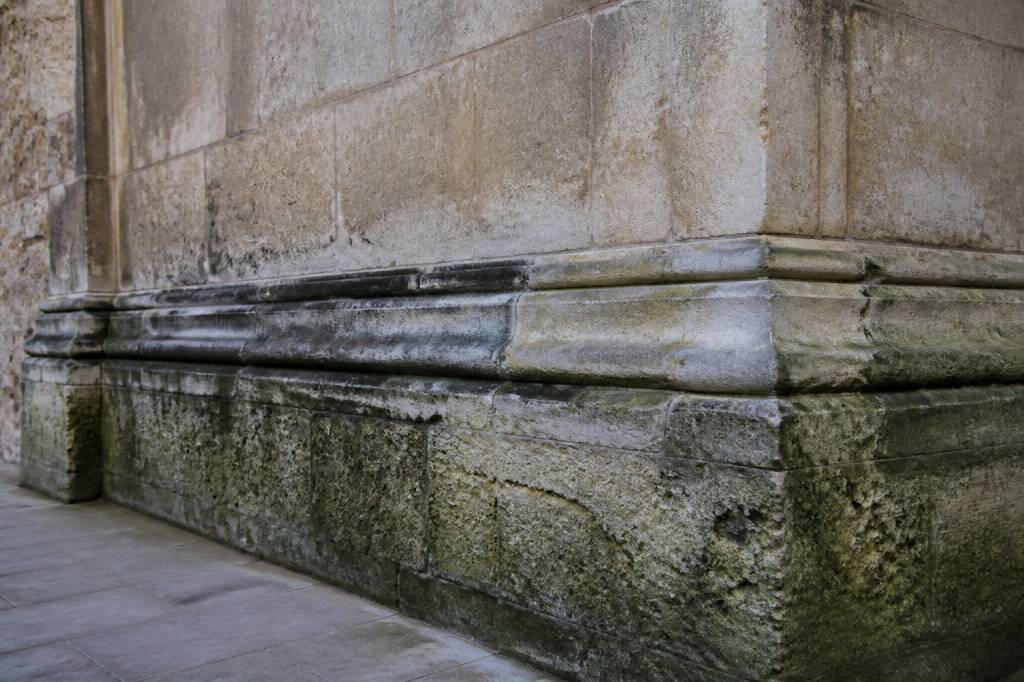
One of the best-known examples is the erosion of carbonate stone. Limestone and marble contain calcium carbonate, which reacts with acidic compounds. This reaction can dissolve the stone’s surface, wash away fine detail, and create a rough, weakened layer that is more likely to crumble. That is why historic monuments, churches, and older civic buildings often show the most obvious signs of acid rain damage.
Metal components are also at risk. Acidic moisture can accelerate corrosion on iron, steel, copper, and zinc. Once corrosion starts, it can spread under paint or protective coatings, reducing their effectiveness. Anyone who has seen rust creeping around window frames, fixings, or roof elements knows how quickly a minor issue can become an expensive repair.
Concrete is not immune either. While it is generally more durable than soft stone, acid exposure can gradually degrade the cement matrix and leach minerals from the surface. Over time, this can reduce strength, increase cracking, and make the structure more vulnerable to freeze-thaw damage. If water can enter more easily, the building enters a vicious cycle of deterioration.
Paints, sealants, and protective coatings can also be affected. Acidic pollutants may break down binders, dull finishes, and reduce the lifespan of coatings that are supposed to shield the underlying material. In practical terms, this means more repainting, more sealing, and more maintenance visits. Not ideal for budgets, or for anyone who enjoys scaffolding outside their window.
Materials that suffer most
Some materials are much more vulnerable than others. In general, the risk increases when the material contains reactive minerals or when its surface is already weathered, cracked, or porous.
-
Marble: highly sensitive because it is mainly made of calcium carbonate.
-
Limestone: especially vulnerable in carved or decorative elements.
-
Sandstone: can be affected depending on its mineral composition and cementing material.
-
Concrete: durable, but still vulnerable to long-term acid exposure.
-
Iron and steel: susceptible to corrosion, particularly where coatings have failed.
-
Copper and zinc: can corrode or lose protective patina more quickly in acidic environments.
By contrast, some materials perform better. Dense granite, certain engineered composites, and well-maintained modern cladding systems usually resist acid exposure more effectively. But no material is completely invincible. The quality of installation, drainage, ventilation, and maintenance matters just as much as the material itself.
Visible signs that a building is being affected
Acid rain damage can be subtle at first, which is why regular inspection is so important. If you know what to look for, early signs often appear long before serious structural issues develop.
-
Surface roughening or loss of fine detail on stonework
-
Black crusts or stained patches on façades
-
Rust streaks around metal fixings or railings
-
Paint blistering, flaking, or fading
-
Cracking or spalling on concrete surfaces
-
Powdery deposits or material loss when touched
-
Increased dampness where surface porosity has risen
One useful clue is that acid rain damage often appears more severe on exposed surfaces than on sheltered ones. A carved stone ledge that faces prevailing winds may erode faster than a similar surface protected by an overhang. This pattern helps distinguish atmospheric chemical damage from other causes such as poor construction or local water leaks.
Why historic buildings are especially vulnerable
Historic buildings are often constructed from natural stone and traditional lime-based mortars, both of which can be more susceptible to acidic deposition than many modern materials. They also tend to have delicate surfaces, carved details, and original elements that cannot simply be replaced without losing heritage value.
There is also a big difference between preserving a building and preserving its character. A modern repair product might stop water ingress, but if it changes the appearance or traps moisture, it can create new problems. That is why conservation work on heritage structures usually requires a careful balance between authenticity and durability.
In many cities, the impact of acid rain became more visible during the late 20th century, when industrial emissions were higher. Regulations have reduced pollution in many regions since then, but the legacy remains on buildings that were exposed for decades. Even today, polluted urban air and local industrial sources can continue to create problems, especially where old stone and metal surfaces are already weakened.
How the weather and environment make things worse
Acid rain does not act alone. Its effects are intensified by other environmental stressors. Pollution, moisture, frost, heat, wind, and biological growth can all work together to speed up deterioration. Buildings in exposed coastal areas face salt spray. Urban buildings face soot and particulate pollution. In colder climates, freeze-thaw cycles can expand tiny cracks created by acid exposure. In other words, the building is rarely fighting just one enemy.
Temperature also changes the chemistry. Warm, humid conditions can accelerate reactions on surfaces, while repeated wetting and drying can draw acidic compounds deeper into porous materials. If a façade stays damp for long periods, acids have more time to react. That is one reason why drainage and surface drying are so important in building protection.
How to prevent or reduce acid rain damage
Prevention is always cheaper than repair, especially when the damage involves heritage stonework or large exterior surfaces. The good news is that there are practical ways to reduce risk.
-
Improve drainage: water should move away from walls, ledges, and roof elements quickly.
-
Maintain protective coatings: repainting and resealing at the right interval helps limit exposure.
-
Use suitable materials: choose acid-resistant stone, metals, and finishes where exposure is likely.
-
Inspect regularly: early detection of corrosion or surface loss prevents larger repairs later.
-
Clean carefully: remove pollutants and crusts using methods appropriate to the material.
-
Reduce nearby emissions: lower SO₂ and NOx emissions at source through regulation and cleaner energy systems.
For existing buildings, routine maintenance is especially important. Clearing gutters, repairing flashing, checking sealants, and treating corroded metal early can prevent acidic moisture from concentrating in vulnerable areas. If a building already shows surface erosion, conservation specialists may recommend sacrificial layers, protective washes, or consolidants designed for specific stone types. The key is to match the treatment to the material, not to apply a one-size-fits-all fix.
For new construction, design choices can reduce long-term exposure. Deep eaves, well-planned drainage, ventilated façades, and thoughtful material selection all help. A building that sheds water efficiently is much less likely to hold onto acidic residues. That is a simple principle, but an important one.
Can policy make a difference?
Yes, and this is one of the clearest environmental success stories of the past few decades. Reductions in sulfur emissions in many countries have significantly lowered the severity of acid rain compared with the peak pollution years of the 1970s and 1980s. Environmental regulation, fuel switching, emission controls, and cleaner industrial processes have all played a role.
Still, the problem has not disappeared. Nitrogen oxides remain a concern, particularly in traffic-heavy urban areas. In regions with older industrial infrastructure or weak air-quality controls, building materials can still be exposed to acidic deposition. This is why emissions policy and building protection should be viewed together. Cleaner air does not only protect forests and lakes; it also protects the built environment.
Why regular monitoring pays off
One of the most practical lessons from decades of environmental monitoring is that small changes add up. A façade does not need to be visibly crumbling to be under stress. By the time loss of detail or structural deterioration becomes obvious, the building may already need expensive restoration.
Monitoring can be as simple as scheduled visual inspections and photographic records, or as advanced as surface chemistry analysis and material sampling. For high-value or historic buildings, a baseline survey is invaluable. Once you know the original condition, it becomes much easier to detect early warning signs. This is especially useful for buildings in cities where air quality fluctuates or near industrial zones where emissions can vary over time.
There is also a broader lesson here: environmental damage often looks like “normal ageing” until someone measures it. Acid rain is a perfect example. It works quietly, then suddenly becomes expensive.
What building owners should remember
If you manage a property, the most important steps are straightforward: know your materials, inspect exposed surfaces, keep water moving away from the structure, and act early when corrosion or erosion appears. Buildings that are maintained well are far more resilient than buildings that are simply left to weather the elements.
If you are dealing with a heritage property, specialist advice matters even more. The wrong cleaner, coating, or repair product can do more harm than the acid rain itself. For that reason, conservation work should always be based on the building’s actual material composition and exposure history.
Acid rain may not dominate the headlines as often as it once did, but its effects are still real, measurable, and costly. The good news is that the science is clear, the solutions are available, and the benefits of prevention are well established. In environmental terms, that is a rare and useful combination.