

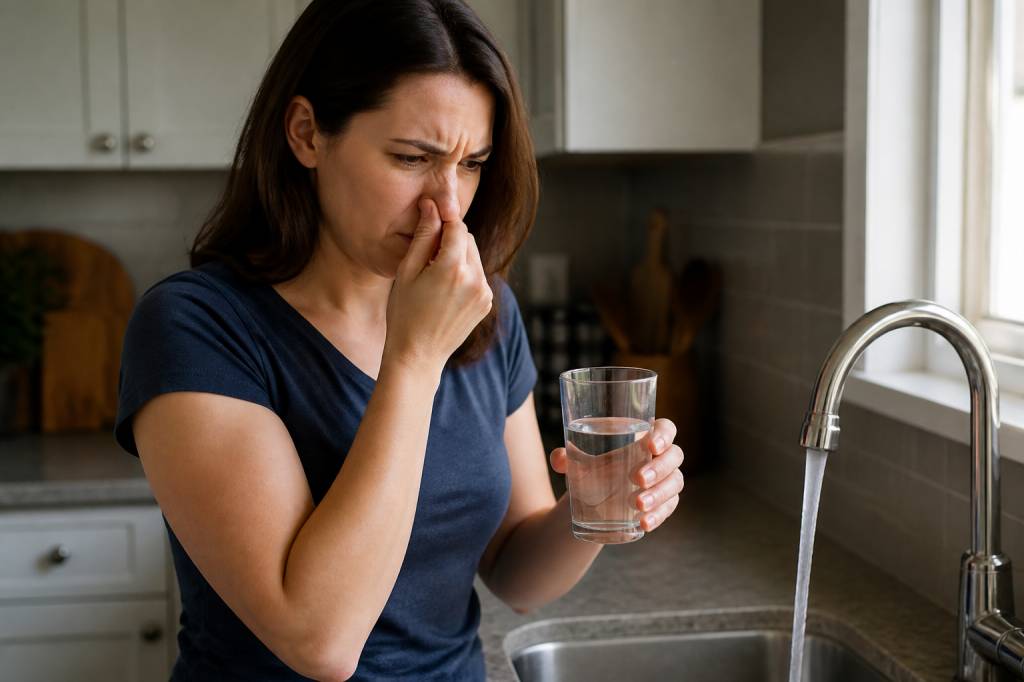
If your tap water smells like a swimming pool, you are not imagining it. That “chlorine smell” is usually a sign that disinfectants are present in the water supply, and in many cases that is intentional. Utilities add chlorine to kill bacteria, viruses, and other pathogens that can make water unsafe to drink. But while a faint chlorine odor can be normal, a strong smell can be unpleasant and sometimes raises a reasonable question: is the water safe, and what does that smell actually mean?
For households that care about water quality, this issue goes beyond taste and odor. Many people want to understand what is in their water, whether the smell reflects excessive treatment or a local plumbing problem, and which filtration options can reduce chlorine without compromising safety. That is especially relevant for homes already paying attention to contaminants such as PFAS, since a good filter should address the specific problem, not just improve the taste.
Why water smells like chlorine
Chlorine is widely used in municipal water treatment because it is effective, affordable, and leaves a residual disinfectant that helps protect water as it travels through pipes. In other words, the smell often means the system is doing part of its job. A light chlorine odor is common in treated tap water, especially in warmer weather or in areas where utilities increase disinfectant levels temporarily to maintain microbial control.
There are a few common reasons that water may smell more strongly than usual:
- Higher chlorine dosing: Water utilities may increase chlorine levels during maintenance, heavy rainfall, seasonal changes, or contamination events.
- Chloramine use: Some systems use chloramine, a combination of chlorine and ammonia. It usually has a milder smell than chlorine, but it can still affect taste and odor.
- Standing water in pipes: Water that sits in household plumbing can pick up a stronger chemical smell by the time it reaches the tap.
- Warm water: Hot water often releases chlorine smell more readily than cold water.
- Water heater issues: A water heater can sometimes intensify odors, especially if maintenance is overdue.
One practical clue: if the odor is stronger in hot water than cold water, the heater may be contributing. If the smell appears only after water has sat overnight, running the tap for a short time may reduce it.
Is chlorine in drinking water a health concern?
At regulated levels, chlorine in drinking water is generally considered safe and is used specifically to protect public health. Without disinfection, the risk of waterborne disease would be far higher. That said, “safe” does not always mean “pleasant,” and some people are more sensitive to chlorine exposure than others.
Short-term exposure to low levels of chlorine in tap water is not usually a health issue for most healthy adults. The bigger concerns are more nuanced:
- Taste and odor: Even when safe, chlorine can make water hard to drink, which can reduce hydration.
- Skin and eye irritation: People with sensitive skin may notice dryness or irritation, especially after showering in chlorinated water.
- Respiratory sensitivity: Some individuals report discomfort from chlorine odor, particularly in poorly ventilated spaces.
- Disinfection by-products: Chlorine can react with natural organic matter in water to form by-products such as trihalomethanes (THMs) and haloacetic acids (HAAs). These are regulated, but they are still part of the reason many households choose filtration.
It is worth emphasizing that the main public health issue is not the chlorine smell itself. The odor is a signal. The question is whether the level is typical for your area, whether the water has been treated appropriately, and whether additional filtration is needed for taste, odor, or specific contaminants.
For families with young children, pregnant people, or anyone with a chronic condition, it is reasonable to be more cautious about overall water quality. And for households trying to reduce PFAS exposure, chlorine odor is often just one more reminder that municipal water can contain more than meets the nose.
What chlorine smell can tell you about your water
A chlorine smell does not automatically mean your water is unsafe. In many cases it means your utility has preserved enough disinfectant residual to keep the water microbiologically stable. But a sudden change in smell deserves attention.
Ask yourself a few basic questions:
- Has the smell changed recently?
- Is it stronger in cold water, hot water, or both?
- Does it affect only one tap, or the whole house?
- Have there been utility notices, pipe work, or weather events in your area?
If only one faucet smells strongly, the issue may be local plumbing rather than the municipal supply. If all taps smell the same, the source is more likely the treated water itself. Either way, a water quality report from your utility is a useful starting point. In the UK, water companies publish compliance data and treatment information, which can help you identify whether chlorine or chloramine is used and whether levels are within expected ranges.
For those concerned about broader contamination, including PFAS, the presence of chlorine should not distract from the bigger question: what else is in the water? A good filter should address the full profile of concern, not just the most obvious smell.
Can chlorine smell be removed from water?
Yes, in many cases it can. The key is choosing a filtration method that actually targets chlorine and related compounds. Not all filters do.
Some common approaches work better than others:
- Activated carbon: Highly effective for reducing chlorine taste and odor. It is one of the most common and practical solutions for point-of-use filtration.
- Carbon block filters: Often more effective than loose granular carbon because water stays in contact with the media longer.
- Reverse osmosis (RO): Removes a wide range of contaminants and usually includes carbon pre-filtration to reduce chlorine, which can damage the RO membrane.
- Whole-house filtration: Useful if you want chlorine reduction at every tap, including showers and baths.
Boiling water is not a reliable solution for chlorine odor. It may reduce some chlorine by releasing it into the air, but it is not practical for regular use and does nothing for chloramine in many cases. In fact, boiling can concentrate some dissolved substances as water evaporates.
Letting water sit in an open container can also reduce free chlorine over time, but again, it is not a long-term strategy for daily drinking water. If you want consistent results, filtration is the better option.
Activated carbon: the simplest effective option
For most households, activated carbon is the first place to start. It works by adsorbing chlorine molecules as water passes through the filter media. The result is usually a noticeable improvement in both smell and taste.
Carbon filters are available in several formats:
- Pitchers: Affordable and easy to use, though they need frequent cartridge changes.
- Tap-mounted filters: Convenient for drinking and cooking water.
- Under-sink systems: Better flow rate and longer cartridge life.
- Whole-house units: Ideal if you want filtered water for showers, laundry, and every faucet.
If the smell is your main complaint, carbon can make a big difference. If you also want to reduce PFAS, you will need to check whether the specific carbon system is certified for those compounds. Not all carbon filters are equal, and a generic “improves taste” label is not enough.
Look for third-party certifications where possible. For chlorine reduction, certification to NSF/ANSI standards related to taste and odor is helpful. For PFAS, seek a system with verified reduction claims for the relevant compounds.
Reverse osmosis and broader contaminant removal
Reverse osmosis systems are often recommended when households want a more comprehensive treatment solution. RO uses a semi-permeable membrane to remove a wide range of dissolved contaminants, and the system typically includes activated carbon stages to remove chlorine before water reaches the membrane.
This matters because chlorine can degrade RO membranes over time. A proper system therefore combines chlorine removal with broader contaminant reduction. For households concerned about PFAS, this is often a strong option, since many RO systems are designed to reduce a broad spectrum of contaminants, including several PFAS compounds.
RO has trade-offs, of course. It is more expensive than a basic carbon filter, it produces wastewater, and it typically requires under-sink installation and regular maintenance. But if your goal is to reduce chlorine smell while also addressing more serious chemical contaminants, RO is worth serious consideration.
Whole-house filtration for showers, baths and everyday use
If the smell is noticeable not just in drinking water but also in showers or laundry, a whole-house system may be the best fit. Chlorine exposure is not limited to drinking. Warm shower water can release chlorine more readily, which is why some people notice strong odor in the bathroom even when the kitchen tap seems only mildly affected.
Whole-house carbon filters can reduce chlorine across the home, improving:
- Shower and bath water
- Skin and hair comfort
- Odor in hot water use
- General household water quality
This type of system can be especially useful for households with sensitive skin or anyone who wants to minimize the chemical smell in daily water use. However, it is important to size the system correctly and maintain it properly. A poorly maintained filter can lose effectiveness, and then you are paying for clean water that is only clean in theory.
How to choose the right filter for chlorine smell
The best filter depends on what you want to solve. A simple pitcher may be enough if you only need better-tasting drinking water. A more advanced system is appropriate if you want broader contaminant reduction.
Before buying, check these points:
- What does it remove? Make sure chlorine reduction is explicitly stated.
- Is it certified? Independent certification matters more than marketing claims.
- What is the maintenance schedule? Filters only work if cartridges are changed on time.
- What is the flow rate? A filter that is too slow may be impractical for daily use.
- Does it address PFAS too? If that is a priority, check verified reduction claims.
In practical terms, many households start with an under-sink carbon system or a pitcher, then upgrade if they want whole-home treatment. That is perfectly reasonable. You do not need a lab-grade setup to make meaningful improvements in water taste and odor. You do, however, need a system matched to your actual water quality concerns.
When to test your water
If the chlorine smell is persistent, unusually strong, or accompanied by other signs such as metallic taste, cloudiness, or staining, it may be time to test your water. Testing can help distinguish between a normal disinfectant residual and a broader water quality issue.
You may want to test for:
- Free chlorine or chloramine
- pH and hardness
- Metals such as lead or copper, especially in older homes
- PFAS, if your area has known or suspected contamination
Water testing is especially useful if you rely on a private supply, live in an older property, or have recently noticed a change in taste or smell. Think of the chlorine odor as a prompt, not a diagnosis.
A practical way to think about chlorine smell
A chlorine smell in water is common, and in many situations it simply reflects the reality of modern water treatment: disinfection is necessary. But common does not mean unimportant. Odor affects trust, drinking habits, and the perception of water quality. It can also signal that a filter or treatment system would improve daily life.
If your goal is better-tasting water, activated carbon is often the most straightforward fix. If you want broader protection, especially against contaminants such as PFAS, reverse osmosis or a certified whole-house system may be more appropriate. The right choice depends on your water, your household, and how much treatment you need.
In the end, the smell of chlorine should not be ignored, but it should be interpreted in context. Sometimes it is just the scent of a disinfectant doing its job. Sometimes it is a sign that your home could benefit from better filtration. And sometimes, it is a reminder that understanding your water is the first step toward improving it.