

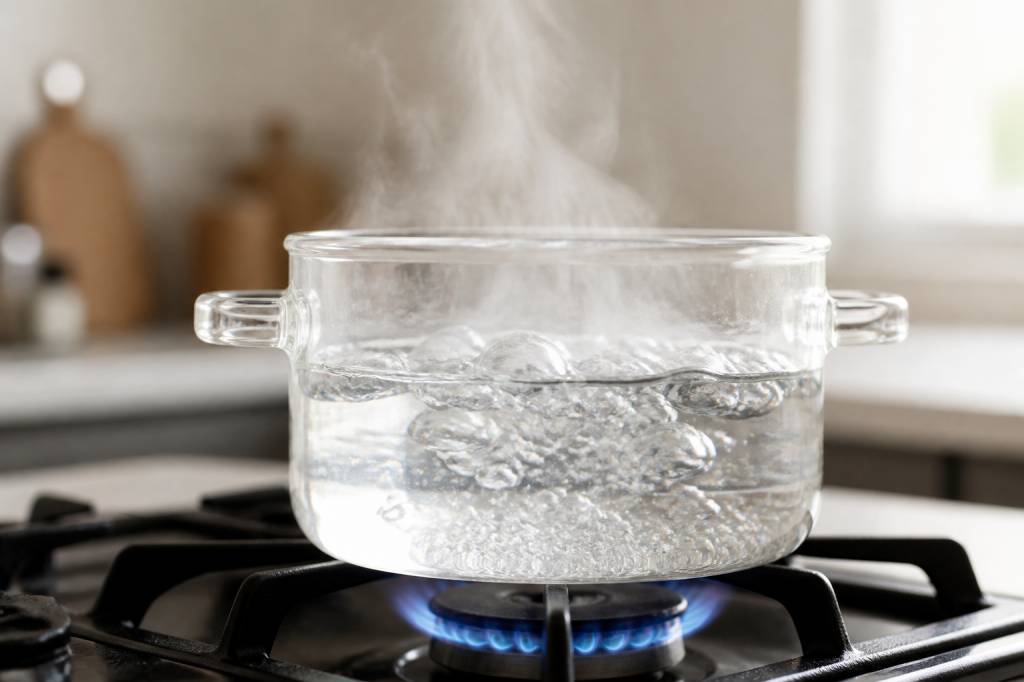
Does boiling water kill bacteria?
Yes — boiling water is one of the most reliable ways to kill harmful bacteria, along with viruses and many parasites. When water reaches a rolling boil, the heat damages the microbes’ structure and makes them unable to survive or reproduce. In practical terms, that means a properly boiled glass of water is much safer from biological contamination than untreated water.
That said, “safe” has limits. Boiling is effective against living pathogens, but it does not remove everything that can be in water. Heavy metals, nitrate, PFAS, pesticides, salts, and many chemical contaminants do not disappear when water boils. In some cases, boiling can actually make certain contaminants more concentrated as water evaporates. So while boiling is a valuable emergency tool, it is not a universal water treatment method.
If you’ve ever wondered whether that bubbling kettle is enough to make questionable water drinkable, the answer depends on what you’re trying to get rid of. Bacteria? Usually yes. Chemical pollution? Not necessarily.
How boiling works against microbes
Boiling water kills microorganisms by exposing them to high temperatures that denature proteins and disrupt cell membranes. Once that damage happens, bacteria cannot function, and most pathogens become harmless.
For most situations, bringing water to a rolling boil for one minute is enough at normal altitudes. At elevations above 2,000 metres, the recommended time is usually three minutes because water boils at a lower temperature and the heat effect is slightly reduced.
This matters because waterborne illness is not a theoretical risk. Contaminated water can carry pathogens such as E. coli, Salmonella, Campylobacter, Giardia, and Cryptosporidium. These organisms can cause gastrointestinal symptoms ranging from mild discomfort to severe dehydration. For households affected by boil-water advisories, boiling is often the first line of defence.
Boiling is especially useful in situations such as:
- Boil-water notices issued after flooding or pipe damage
- Camping, hiking, or travel in areas with uncertain water quality
- Private wells that may be contaminated by surface water runoff
- Emergency situations where no filtration system is available
What boiling water does not remove
This is where things get more complicated. Boiling is excellent at inactivating biological contaminants, but it does not remove dissolved chemicals. If the contaminant is already in the water as a dissolved substance, heat alone will not make it disappear.
For example, boiling does not remove:
- PFAS, including persistent compounds such as PFOA and PFOS
- Lead and other heavy metals
- Nitrate and nitrite
- Arsenic
- Industrial solvents
- Most pesticides
- Excess minerals and salts
In fact, because some water evaporates during boiling, the concentration of these dissolved contaminants can rise slightly. That means the water may end up cleaner microbiologically, but not necessarily safer overall.
This distinction is important in environmental health. A lot of people assume that if water has been boiled, it must be “purified.” That is a reasonable assumption in an old-fashioned kitchen context, but it does not reflect modern contamination concerns. A kettle is not a chemical treatment plant.
What about PFAS in boiled water?
PFAS are a good example of why boiling is not enough. These substances are often called “forever chemicals” because they break down extremely slowly in the environment and can persist in water, soil, and living organisms for years. They are associated with industrial uses, firefighting foams, and a range of consumer products.
Boiling water does not destroy PFAS. Since these compounds are chemically stable, heat from normal boiling temperatures is not sufficient to break them down. If your water supply is affected by PFAS contamination, you need a treatment method that is specifically designed to remove them, such as activated carbon, ion exchange, or reverse osmosis, depending on the contamination profile.
That’s an important point for households trying to make sense of conflicting advice. A pot of boiled water may be fine after a boil notice caused by microbial contamination, but if the concern is PFAS, the issue is completely different. Boiling can kill bacteria; it does not solve chemical pollution.
Is boiled water safe to drink?
Usually, yes — if the concern is bacteria, viruses, or parasites and the water has been boiled properly. But safety depends on the source of contamination.
Here’s the short version:
- If the water is contaminated with microbes, boiling makes it safer.
- If the water contains chemical pollutants, boiling may do nothing, or even make the problem worse by concentrating them.
- If the water comes from a visibly dirty source, boiling does not remove sediment, dirt, or chemical residues.
So, is boiled water safe to drink? It can be — but only for the specific risks boiling actually addresses. That is why public health guidance always matters. A boil-water advisory is not the same as a chemical contamination alert.
There is also a practical consideration: if water has a strong chemical smell, unusual colour, or known industrial contamination, boiling should not be treated as a fix. In those cases, it is better to use bottled water or a verified treatment system until the issue is identified.
How long should you boil water?
The standard advice is simple: bring water to a rolling boil for at least one minute. This is enough to kill most disease-causing microorganisms at sea level and in most low-altitude areas.
At higher altitudes, water boils at a lower temperature, so the recommended time increases to three minutes. If you’re unsure, longer is generally safer for microbial threats, though it still will not help with chemical contaminants.
A few practical tips can make boiling more effective:
- Use a clean pot or kettle
- Bring the water to a full, rolling boil, not just a few bubbles
- Let it cool naturally before transferring it to a clean container
- Store boiled water separately from untreated water to avoid recontamination
Recontamination is easy to overlook. You can boil water perfectly and then contaminate it again with a dirty ladle, a poorly cleaned bottle, or an unwashed storage container. Water treatment is only as good as the container it ends up in.
When boiling water is the right response
Boiling is a sensible response when public health authorities issue a boil-water advisory or when you suspect microbial contamination. It is a low-tech, low-cost method that can protect against many common waterborne illnesses.
Examples include:
- A burst water main after heavy rain
- Floodwater entering a private well system
- Temporary loss of disinfection at a local treatment plant
- Travel in areas where tap water safety is uncertain
In these situations, boiling is often recommended because it is quick and accessible. If you have electricity or gas and can heat water safely, it may be the simplest immediate safeguard.
But it is worth repeating: emergency boiling guidance is usually aimed at biological contamination. It is not a general-purpose answer to every water quality issue.
When boiling water is not enough
If your concern is chemical contamination, boiling is not the solution. This includes PFAS, lead, arsenic, industrial run-off, and many other pollutants that require targeted treatment.
Situations where boiling may be the wrong tool include:
- Your area has known PFAS contamination in the water supply
- You live in an older home with lead plumbing or lead service lines
- Your well water has tested positive for nitrate or arsenic
- There is a suspected chemical spill upstream
For households dealing with these risks, treatment options should be selected based on the specific contaminant. That means testing first, then choosing a system that can actually remove the pollutant of concern. In water safety, guesswork is expensive — and sometimes risky.
For PFAS specifically, look for systems with verified performance data. Activated carbon can reduce many PFAS compounds, while reverse osmosis can provide more comprehensive removal. The best choice depends on the exact contamination, the household’s water use, and maintenance requirements.
Does boiling improve water taste or smell?
Sometimes. Boiling can reduce some unpleasant odours related to chlorine, and it may make water taste different by changing dissolved gas levels. But if the taste or smell comes from contamination, boiling is not a reliable fix.
For example, if water tastes metallic due to dissolved metals, boiling will not remove the metals. If there is a chemical odour linked to industrial contamination, boiling is not a remedy. In some cases, it may even make the smell more noticeable as water concentrates.
That’s why taste and smell are poor indicators of safety. Clear water can still contain contaminants, and unpleasant-smelling water can sometimes be microbiologically safe. Water quality testing is the only way to know what’s actually in it.
Can you boil bottled water or filtered water?
Yes, but it is usually unnecessary if the water is already treated and sealed properly. Boiling bottled water is rarely needed unless you suspect the bottle has been compromised or the water has been stored in unsafe conditions.
For filtered water, the answer depends on the filter. Some systems are designed to remove bacteria and some chemical contaminants; others only improve taste and reduce chlorine. Boiling filtered water will kill microbes if they are present, but it does not enhance the filter’s ability to remove dissolved pollutants.
If you use a home filter, it’s smart to understand exactly what it is certified to remove. “Filtered” sounds reassuring, but the term covers a wide range of technologies and performance levels.
What should you do during a boil-water advisory?
If local authorities issue a boil-water advisory, follow the instructions carefully. These advisories are usually based on confirmed or possible microbial contamination in the public supply.
General guidance often includes boiling tap water for drinking, preparing food, brushing teeth, and making ice. However, the exact instructions can vary, so it is best to follow the wording provided by your water supplier or public health authority.
Useful steps include:
- Boil water for at least one minute before drinking
- Use boiled or bottled water for food preparation if advised
- Discard ice made from unboiled tap water
- Sanitise food contact surfaces if contamination is suspected
If the notice is about chemicals rather than microbes, boiling will not be the answer. The official guidance should tell you whether the issue is biological, chemical, or both.
The bottom line for households thinking about water safety
Boiling water is effective at killing bacteria and many other microorganisms, which makes it a useful emergency measure. But it is not a cure-all. It does not remove PFAS, lead, nitrate, or many other chemical contaminants, and in some cases it can make them more concentrated.
That distinction is especially important in today’s water landscape, where environmental contamination is increasingly complex. A kettle can help with microbes. It cannot solve industrial pollution.
If you are unsure what is in your water, testing is the first step. If the concern is bacteria after flooding or a boil notice, boiling is a sensible response. If the issue is PFAS or other chemical contamination, you need a treatment method specifically designed for that risk.
Water safety is not about relying on one simple trick. It is about matching the solution to the problem. And when it comes to contaminants, that is where the details matter most.