

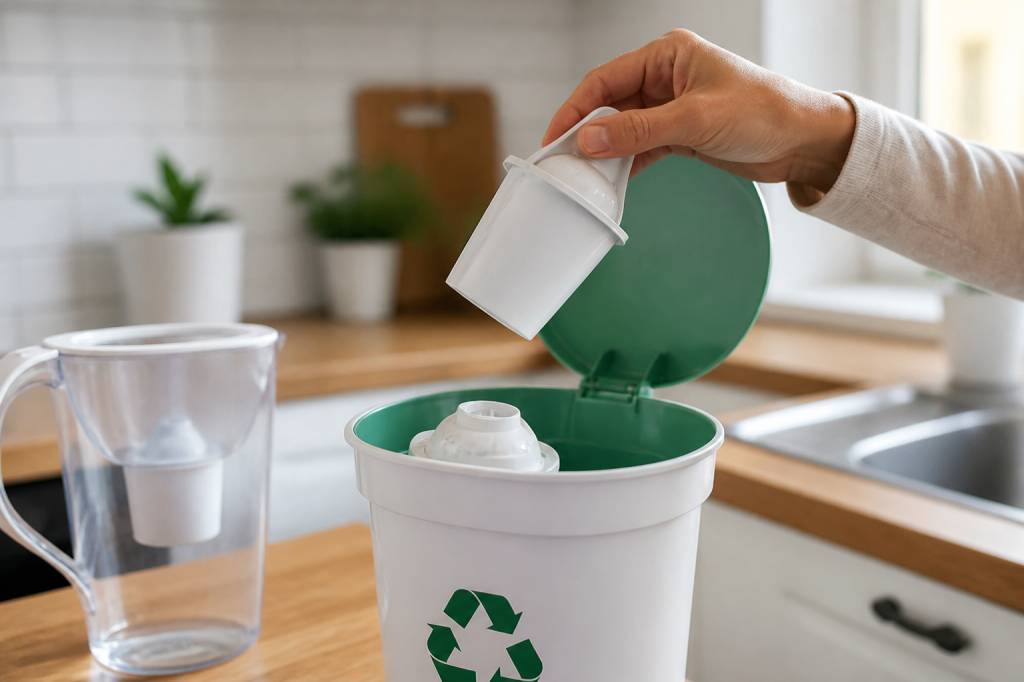
Why Brita water filter recycling matters
Brita filters are designed to improve the taste and quality of tap water, and they do that job well for many households. But once a filter has reached the end of its life, it becomes a small but steady waste stream that is easy to overlook. A single cartridge may seem insignificant. Multiply that by millions of users, and the environmental footprint becomes harder to ignore.
For a blog focused on water quality, environmental health, and filtration, this is more than a household waste question. It is part of a larger conversation about how we use filtration, what happens to spent filter media, and whether “cleaner water” at the tap can be paired with responsible end-of-life management. If a product is designed to reduce contaminants, shouldn’t its disposal avoid creating another problem?
That is where Brita water filter recycling enters the picture. The idea is simple: rather than sending used cartridges straight to landfill, recover as much material as possible and keep plastics and filter components in circulation. In practice, the details are a little more complicated, but the environmental case is strong.
What is inside a Brita filter cartridge?
To understand recycling, it helps to know what you are actually throwing away. Brita filter cartridges typically contain a combination of plastic housing, ion exchange resin, and activated carbon. These materials work together to reduce chlorine taste and odour, and in some systems they can also reduce metals such as lead or copper, depending on the filter type and local water conditions.
The outer shell is usually made from plastic, while the internal filtration media are not as straightforward to recycle through normal household collection streams. That is important, because many people assume a “plastic” product can go into the curbside bin. Unfortunately, mixed-material cartridges are rarely accepted by standard municipal recycling systems.
So what happens if they are placed in ordinary recycling? In many areas, they are sorted out as contamination and diverted to landfill or energy recovery. That means the best outcome is often decided long before the bin lorry arrives: it depends on whether you use a dedicated take-back or recycling scheme.
Can Brita water filters actually be recycled?
Yes, but usually not through conventional household recycling. Brita has offered recycling programmes in some markets, and the availability depends on your country, retailer participation, and the specific product line. In the UK, consumers are often directed to return filters through designated collection points, mail-back schemes, or retailer-led programmes where available.
This is a key point: Brita filter recycling is not always as simple as putting the cartridge in your blue bin. If the product page or packaging mentions recycling, check the instructions carefully. Some schemes require the filters to be returned in bulk, while others accept individual cartridges. In some cases, you may need to dry the filters before sending them back. Yes, even recycling has paperwork and instructions now.
The reason dedicated schemes matter is that they can separate and process the materials more effectively. The plastic casing can sometimes be recovered, while the spent filter media may be handled through specialist routes. That is much better than sending a cartridge to landfill, where plastics persist and resources are wasted.
How Brita recycling schemes usually work
Although details vary by region, Brita recycling programmes generally follow a similar pattern:
- Customers collect used cartridges over time.
- They use a retailer drop-off point, mail-back envelope, or local collection scheme.
- The cartridges are consolidated and sent to a specialist recycler.
- Materials are separated where possible for reuse or recovery.
Some schemes are more accessible than others. A collection point in a supermarket is convenient; a mail-back scheme requires a bit more planning. But if the alternative is “bin it and forget it,” the dedicated route is clearly preferable.
It is worth noting that not every cartridge is treated the same way. Brita sells several filter formats, and recycling options may differ for pitcher filters, faucet filters, and larger systems. Before you assume one-size-fits-all, check the label or the manufacturer’s website for the exact recycling guidance for your model.
What should you do with a used Brita filter?
If you have a spent Brita cartridge on the counter and you are not sure what to do with it, start with the following steps:
- Check the packaging or Brita’s official recycling information for your country.
- Look for a local collection point, retailer drop-off, or return-by-post programme.
- Empty and rinse the filter if the instructions recommend it.
- Let the cartridge dry if required, especially before mailing multiple filters.
- Store used cartridges in a clean, dry place until you can send them off.
If there is no accessible recycling route in your area, dispose of the filter according to local waste guidance rather than putting it in curbside recycling without checking first. It is better to send it to general waste than to contaminate an entire recycling load.
A practical tip: keep a small box under the sink for spent filters. That turns disposal into a routine rather than a chore. Once you have several cartridges, you can process them together. Sustainability tends to work better when it fits real life, not just idealised behaviour.
Why filter recycling is part of a bigger environmental issue
Brita water filter recycling is not only about waste management. It is also about how we think about filtration as a response to water quality concerns. Many households use filters because they dislike the taste of chlorine, are worried about limescale, or want another barrier against contaminants. In areas with older plumbing or variable municipal water quality, that choice can feel sensible and immediate.
But filtration has an environmental footprint. Filters need materials, manufacturing, transport, and disposal pathways. If that whole system is not managed well, the environmental benefits of cleaner water at the tap can be reduced by plastic waste elsewhere.
This is especially relevant in a PFAS context. Consumers increasingly want reassurance that their drinking water is safe from “forever chemicals,” and many are turning to point-of-use solutions as one part of the answer. Yet PFAS are only one part of the story. A filter product that performs well but creates long-term waste still leaves an environmental debt behind.
Does recycling change the performance of the next filter you buy?
No, not directly. Recycling used cartridges does not make a new Brita filter more effective. But it does support a more circular approach to consumption, which matters when products are designed for repeated replacement. Every cartridge that is recovered is one less item sitting in landfill for decades, and one more example of a manufacturer and consumer sharing responsibility beyond the point of sale.
That said, recycling should not be used as a licence to overbuy. If your filter is replaced earlier than necessary, or if you are using multiple systems when one would do, the environmental logic weakens. The most sustainable filter is the one you use efficiently, maintain properly, and dispose of responsibly.
In other words: good filtration should solve a water problem, not become a disposal problem.
Brita filter recycling and consumer behaviour
One of the most interesting parts of any recycling scheme is how people respond to it. Convenience is crucial. If a recycling option is too complicated, too far away, or poorly explained, participation drops quickly. That is why clear instructions on packaging matter so much.
Consumers are more likely to recycle spent filters when the process is simple and visible. Retail take-back schemes work because they integrate disposal into an existing shopping routine. Mail-back programmes can work too, but only if they are easy to access and clearly explained.
There is also a trust factor. People want to know that if they make the effort to return a filter, it will actually be recycled. Transparency matters. If a manufacturer encourages returns, it should explain what happens next, what materials are recovered, and where the waste goes if parts cannot be reused.
How to tell whether a recycling claim is meaningful
Not all recycling claims are equal. Some are robust and backed by a functioning collection system. Others are more aspirational. To judge whether a Brita filter recycling message is meaningful, look for a few signs:
- Clear instructions for consumers, not vague sustainability language.
- A real collection route, such as retailer drop-off or mail-back.
- Specific information about the materials recovered.
- Regional availability that matches the country where you live.
- Evidence that the scheme is active, not just listed on a marketing page.
If you cannot find any practical next step, the claim may be more branding than infrastructure. And in environmental reporting, infrastructure is the part that counts.
Where Brita recycling fits within a lower-waste home
Recycling used filters is a useful step, but it is only one part of a broader low-waste approach to water treatment at home. If you are serious about reducing waste, consider the full lifecycle of your filtration choices:
- Choose the right filter system for your actual water needs.
- Replace cartridges only as recommended.
- Use refillable bottles and jugs to reduce disposable plastic.
- Check whether your filter model has a dedicated recycling route before buying.
- Support brands that provide clear end-of-life information.
In many households, a Brita system is already a step away from single-use bottled water. That is positive. But there is still room to improve the end-of-life side of the equation. If a reusable pitcher leads to fewer plastic bottles, and used cartridges are then collected for recycling, the overall environmental profile becomes much stronger.
What about PFAS and water filters?
For readers concerned about PFAS, it is worth separating two issues that are often mixed together. First, some water filters are used to reduce contaminants, including certain PFAS compounds, depending on the technology and certification. Second, the filter itself must be disposed of responsibly.
Not every Brita filter is designed or certified to reduce PFAS, so consumers should not assume that all pitcher filters provide that level of protection. If PFAS reduction is your goal, check for specific performance claims, independent certification, and compatibility with your water quality concerns. A filter that improves taste is not automatically a PFAS solution.
That distinction matters because the market is crowded with confusing promises. A practical approach is to ask three questions: What does the filter remove? Is that claim independently verified? And what happens to the spent cartridge afterward?
What consumers can do right now
If you already use Brita filters, you do not need to overhaul your routine overnight. Start with the basics:
- Find the official recycling guidance for your exact filter model.
- Use any available take-back or return programme consistently.
- Keep used cartridges in one place so they do not end up in the general bin by accident.
- Share the recycling option with family members, housemates, or colleagues if your office uses filters too.
- Ask local retailers whether they offer collection points if you cannot find one online.
Small habits matter here. The more routine recycling becomes, the less likely it is that used filters will be treated as ordinary household waste.
Why the future of water filtration should include end-of-life design
In environmental policy, the phrase “end-of-life” often sounds technical, but it is really about responsibility. A product should not be judged only on how well it works when it is new. We should also ask how it is made, how long it lasts, and what happens when it is discarded.
Brita water filter recycling is a good example of this principle in action. It shows that consumer filtration can move beyond a simple buy-use-bin model. When recycling pathways are available and used properly, the system becomes less wasteful and more accountable.
That does not solve every issue in drinking water management, and it does not replace the need for stronger regulation, cleaner source water, or better public infrastructure. But it is a practical step that households can take today.
If more people think carefully about where their filters go after use, the environmental impact of home water treatment becomes easier to justify. Clean water should not come with a blind spot at the bottom of the cartridge.